THE CLASSIC COLLECTION✦Love Letters of Nathaniel Hawthorne, Volume 2 (of 2)CLASSIC FREE BOOKS
Love Letters of Nathaniel Hawthorne, Volume 2 (of 2)
Nathaniel Hawthorne
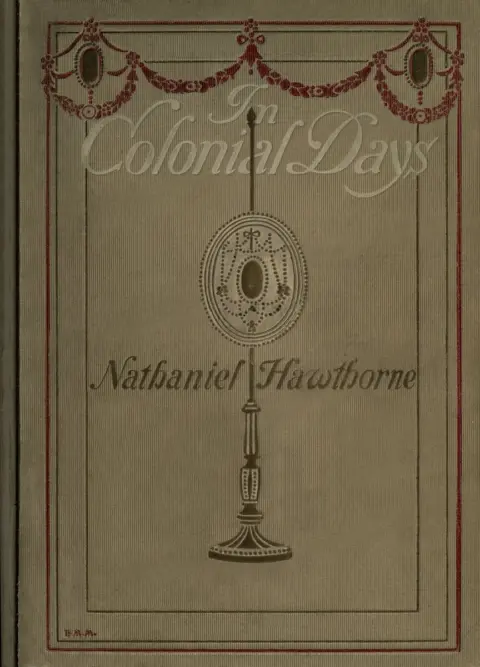
THE CLASSIC COLLECTION · 1896
"In Colonial Days" by Nathaniel Hawthorne is a collection of historical tales written in the late 19th century. The book captures the essence of colonial New England, exploring themes of history, memory, and the supernatural through various legends and anecdotes surrounding the Province House in Boston. The opening portion sets the stage for a deep dive into the past, centered around the happenings in a once-grand estate that witnessed significant events in American history. The opening of the book introduces the reader to the Province House and an elderly narrator's attraction to the historical significance of this location. He recounts his experience visiting the house, describing its architecture and evoking a sense of nostalgia for the times when loyalists and British governors held sway. Through a conversation with an elderly patron at the bar, a legend is teased about an enigmatic masked ball that took place there, hinting at supernatural elements and the ghostly figures linked to the colonial past. This sets the stage for the intertwining of history and legend, creating an atmosphere rich with intrigue as the reader anticipates the stories of the characters and events that will unfold.
Introduction adapted from the source catalogue; source summaries may be automatically generated.
Free to read · English · 20,582 words · No account needed
MAKE TIME FOR A GOOD BOOK
On by default. Untick to stop anonymous reading totals. Each page counts after 10 seconds in view. How this works.
Anonymous counting is on unless you have switched it off.
“’Twould drive me mad,—that awful face!” said Hutchinson, who seemed fascinated by the contemplation of it.
“Be warned, then!” whispered Alice. “He trampled on a people’s rights. Behold his punishment,—and avoid a crime like his!”
The Lieutenant-Governor actually trembled for an instant; but, exerting his energy,—which was not, however, his most characteristic feature,—he strove to shake off the spell of Randolph’s countenance.
“Girl!” cried he, laughing bitterly, as he turned to Alice, “have you brought hither your painter’s art,—your Italian spirit of intrigue,—your tricks of stage effect,—and think to influence the councils of rulers and the affairs of nations by such shallow contrivances? See here!”
“Stay yet awhile,” said the Selectman, as Hutchinson again snatched the pen; “for if ever mortal man received a warning from a tormented soul, your Honor is that man!”
“Away!” answered Hutchinson fiercely. “Though yonder senseless picture cried, ‘Forbear!’ it should not move me!”
Casting a scowl of defiance at the pictured face (which seemed, at that moment, to intensify the horror of its miserable and wicked look), he scrawled on the paper, in characters that betokened it a deed of desperation, the name of Thomas Hutchinson. Then, it is said, he shuddered, as if that signature had granted away his salvation.
“It is done,” said he; and placed his hand upon his brow.
“May Heaven forgive the deed,” said the soft, sad accents of Alice Vane, like the voice of a good spirit flitting away.
When morning came there was a stifled whisper through the household, and spreading thence about the town, that the dark, mysterious picture had started from the wall, and spoken face to face with Lieutenant-Governor Hutchinson. If such a miracle had been wrought, however, no traces of it remained behind; for within the antique frame nothing could be discerned, save the impenetrable cloud which had covered the canvas since the memory of man. If the figure had, indeed, stepped forth, it had fled back, spirit-like, at the day-dawn, and hidden itself behind a century’s obscurity. The truth probably was that Alice Vane’s secret for restoring the hues of the picture had merely effected a temporary renovation. But those who, in that brief interval, had beheld the awful visage of Edward Randolph, desired no second glance, and ever afterwards trembled at the recollection of the scene, as if an evil spirit had appeared visibly among them. And as for Hutchinson, when, far over the ocean, his dying hour drew on, he gasped for breath, and complained that he was choking with the blood of the Boston massacre; and Francis Lincoln, the former Captain of Castle William, who was standing at his bedside, perceived a likeness in his frenzied look to that of Edward Randolph. Did his broken spirit feel, at that dread hour, the tremendous burden of a people’s curse?
Your reading position is saved on this browser. Take it to another device with a library code. Reading pages adapt to text, rather than matching a printed edition.
Nathaniel Hawthorne
Nathaniel Hawthorne

Rebecca Harding Davis & Thomas De Quincey & Charles Dickens & Nathaniel Hawthorne & Edward Bulwer Lytton, Baron Lytton & Edgar Allan Poe & Harriet Elizabeth Prescott Spofford
Nathaniel Hawthorne
BEHIND THE BOOK
This eBook is for the use of anyone anywhere in the United States and most other parts of the world at no cost and with almost no restrictions whatsoever. You may copy it, give it away or re-use it under the terms of the Project Gutenberg License included with this eBook or online at www.gutenberg.org. If you are not located in the United States, you will have to check the laws of the country where you are located before using this eBook. Read the source licence.
The original source file, including credits and licence, is retained by this library. Request an original-format copy at no charge. Please include the book title and Project Gutenberg identifier #64944.
KEEP YOUR CURIOSITY GOING
Cécile Tormay

Moritz Busch
Coulson Kernahan
John L. Ransom

Maurice Baring
Frances Wright