Through Colonial Doorways
Anne Hollingsworth Wharton
THE CLASSIC COLLECTION · 1911
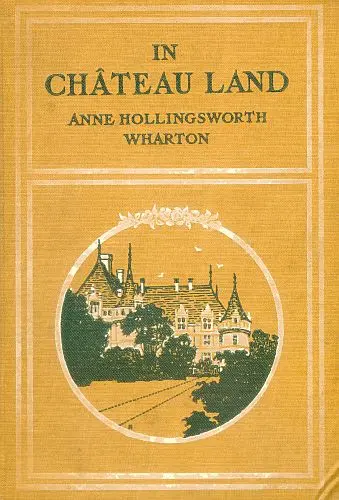
"In Château Land" by Anne Hollingsworth Wharton is a travel narrative written in the early 20th century. This work recounts a journey through the picturesque landscapes and historical sites of France, particularly focused on its celebrated châteaux. The narrative follows the experiences of the main character and her companions as they navigate the various sights and cultural elements they encounter, showcasing the charm of both the locations and their interactions. At the start of the narrative, the protagonist writes a letter to her friend, sharing her delight in traveling from the stunning Italian landscape of Lake Como to explore châteaux in France. This opening segment sets the tone for a leisurely, introspective journey filled with vivid descriptions of the natural beauty surrounding them and the delight in everyday moments shared with fellow travelers. The reader is immersed in the enchantment of the sights and sounds of Italy, as well as the excitement of exploring new realms, suggesting a blend of leisurely travel with engaging anecdotes about historical figures and locations that shaped the cultural landscape of France.
Introduction adapted from the source catalogue; source summaries may be automatically generated.
Free to read · English · 76,731 words · No account needed
MAKE TIME FOR A GOOD BOOK
On by default. Untick to stop anonymous reading totals. Each page counts after 10 seconds in view. How this works.
Anonymous counting is on unless you have switched it off.
While listening to this genealogical disquisition our eyes turned to a most attractive looking tea table which was set forth with superb silver, and thin slices of bread and butter and cake. With appetites sharpened by our long ride through the fresh air, I fear that we all gazed longingly at that tempting regale, and for Miss Cassandra, Lydia and I positively trembled. With her strong feeling that the world was made for herself and those whom she loves, it would not have surprised us to see the good lady sit down at this hospitable looking table and invite the rest of the party to join her. Lydia adroitly led the conversation toward Chambord and the afternoon tea which our chauffeur had promised us there, adding, gracefully, "It is very kind of the Marquise to allow us to go through her beautiful chateau while the family is in residence." "Yes," assented Miss Cassandra, "but how much more hospitable if she would invite us to drink tea with her!" After admiring the beautifully decorated ceiling and the handsome leather hangings, we left the dining room and its temptations for what was a much greater attraction to the men of the party, the fine suits of armor in the Salle des Gardes.
Although Cheverny cherishes its Bourbon traditions, like the proverbially happy nation and happy woman it has no history to speak of, having even escaped the rigors of the French Revolution. In the past, as to-day, this chateau seems to have been a homelike and peaceful abode, its long facade and pavilions having looked down through many centuries upon a smiling garden and a vast lawn, which shut it in from the world beyond even more effectually than its great gates.
From Cheverny our way lay across a stretch of open, level country and then through the forest of Chambord, which includes 11,000 acres of woodland. By the time we reached the chateau, we were, as Miss Cassandra expresses it in classic phrase, "faint yet pursuing" for lack of the refreshment to which we were not made welcome at Cheverny. Our chauffeur, being accustomed to famished pilgrims, conducted us at once to a garden cafe quite near the chateau, from whence we could study its long facade while enjoying our tea and patisserie. And what a huge monument is this chateau of Chambord to the effete monarchy of France, built up from the life-blood and toil of thousands! It impressed us as more brutally rich and splendid than any of the palaces that we had seen, rising as it does in its great bulk so unexpectedly from the dead level of the sandy plain, with no especial reason for its existence except the will of a powerful sovereign. It is not strange that the salamander of Francis I appears upon so many of the chateaux of France, for to this art-loving, luxurious, and debonnaire King she owes Chambord, Fontainebleau, St. Germain and the smaller chateaux of Azay-le-Rideau, Anet and Villers-Cotterets. Although Francis I brought from Italy, to beautify his palaces, Leonardo Da Vinci, Primaticcio, Benvenuto Cellini, Florentin Rosso and other foreign artists, it has been decided by those who know more about the matter than we do, that Chambord owes more to its first architect, Maitre Pierre le Nepvue, dit Trinqueau, than to anyone else. It seemed to us that this master hand was happier in the construction of Chenonceaux, Blois and some of the other chateaux of France, than here at Chambord, but this is a matter of individual taste. Vast, palatial, magnificent Chambord certainly is, and much more attractive on the north facade, where the chateau is reflected in the waters of the Cosson, than from the cafe where we were seated. The long line of buildings in the south front is somewhat monotonous, even broken as it is by the several towers, and the great central lantern, which appears to the best advantage from this side. Rich as is all the ornamentation of Chambord, it is skyward that it breaks forth into the greatest exuberance of Renaissance decoration. We reached the central lantern, with the single fleur-de-lis atop, by one of the remarkable staircases for which the palaces of Francis I are so famous. This staircase, which is formed by two spirals starting from different points, and winding about the same hollow shaft in the centre, is so constructed that persons can go up and down without meeting. Mr. Henry James considered this double staircase "a truly majestic joke," but in days when courts lived and moved and had their being in intrigues, schemes and plots, it doubtless had its uses.
Your reading position is saved on this browser. Take it to another device with a library code. Reading pages adapt to text, rather than matching a printed edition.
Anne Hollingsworth Wharton
Anne Hollingsworth Wharton
BEHIND THE BOOK
This eBook is for the use of anyone anywhere in the United States and most other parts of the world at no cost and with almost no restrictions whatsoever. You may copy it, give it away or re-use it under the terms of the Project Gutenberg License included with this eBook or online at www.gutenberg.org. If you are not located in the United States, you will have to check the laws of the country where you are located before using this eBook. Read the source licence.
The original source file, including credits and licence, is retained by this library. Request an original-format copy at no charge. Please include the book title and Project Gutenberg identifier #27881.
KEEP YOUR CURIOSITY GOING
Wilfrid Scawen Blunt
Wilfrid Scawen Blunt

E. W. (Edgar Watson) Howe
Francis Greenleaf Allinson & Anne C. E. (Anne Crosby Emery) Allinson
Cyrenus Cole

John Martineau