THE CLASSIC COLLECTION✦An outlaw’s diary: the CommuneCLASSIC FREE BOOKS
An outlaw’s diary: the Commune
Cécile Tormay
THE CLASSIC COLLECTION · 1912
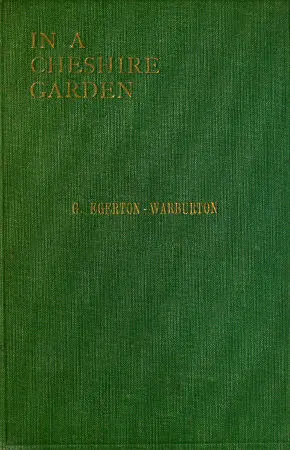
"In a Cheshire Garden: Natural History Notes" by Geoffrey Egerton-Warburton is a collection of natural history observations written in the early 20th century. The work reflects on the flora and fauna found in the author's garden in Warburton, Cheshire, providing detailed notes on the plants, birds, and overall ecology of the area. The narrative combines personal anecdotes with scientific observations, capturing the beauty and changing landscape of this English garden. The opening of the book introduces the reader to the setting: a garden in a semi-urban Cheshire village, carefully tended by the author, who serves as the rector of Warburton. He observes the encroaching industrialization of the area, hinting at a longing for the rural tranquility that may soon be lost. The author describes the varied vegetation of the garden, including flowering plants and trees, and shares personal reflections on his experiences with both common and rare plants, emphasizing the richness of local biodiversity and his deep connection with the natural world surrounding him.
Introduction adapted from the source catalogue; source summaries may be automatically generated.
Free to read · English · 27,269 words · No account needed
MAKE TIME FOR A GOOD BOOK
On by default. Untick to stop anonymous reading totals. Each page counts after 10 seconds in view. How this works.
Anonymous counting is on unless you have switched it off.
I may say in bringing these notes to a conclusion that they have in substance been taken from a diary, and that I have not had to depend upon my memory for what they contain, as I used to put down in this diary at the moment any happenings connected with Natural History that I noticed and wished to remember. When after several years I came to look through the entries, the idea occurred to me that possibly some of the matter might have an interest for others; I may very likely, of course, be mistaken in this, all the more so, perhaps, because these notes do represent what to me has been a source of very great interest. I have had to live for many years an unexciting life, in an out-of-the-way country place, with little society, and with few opportunities of getting away for a holiday; and yet with the garden itself, and the little world it embraces, in making the acquaintance of its inhabitants and watching the doings of their daily life, I can safely say I do not know what it is to be dull. Of course, I do not pretend that Natural History has supplied all the interests I have had outside my work, for I am thankful to say there is hardly anything in the world that doesn't interest me, but it certainly is the case that the tom-tits and the robins and the other birds have always been to me as human friends, and have continually provided me with amusement and pleasure.
Aviary, Outdoor--at Warrington, 68.
Barn Owls, 82.
Bats in Old Church, 95.
Birds as friends, 11, 112.
Power of recognizing one another, 40, 41.
Blackbirds, 17, 22-25, 64, 65, 83, 84.
Blackcaps, 31.
Black Tern, 93.
"Blueback" Cheshire for Fieldfare, 22.
"Blue-cap" Cheshire for Tomtit, 38.
"Blue rock" local name for Stockdove, 94.
Bohemian Waxwing, 94.
Brambling, 67-68.
Bullfinch, 70.
Canary, 104.
Cat, changing its home, 106.
Extreme old age, 103.
Uncanny spirit, 104.
Chiffchaffs, 33.
Chaffinches, 64-67.
Coal-tits, 38, 41-43.
Contrivances for baffling sparrows on the Food-stand, 59-64.
"Coot" Cheshire for Waterhen, 90.
Corncrakes, 89.
Creeper, Tree-, 56.
Crossbills, 71.
Crows, Carrion-, 74.
Hooded-, 94.
Cuckoos, 81.
Dogs, their intelligence, their love of home, 108-110.
Dogs and cats compared, 103.
Earthquake and Pheasants, 89.
Eclipse, a bat flying about while it lasted, 95.
Fieldfares, 22.
Figs self-sown, 6.
Flycatchers, Spotted-, 48-51.
Pied-, 51.
Food for birds, 39.
Food receptacles, 40.
Food-stand, 59-64.
Fox, 97.
Frosts in spring, 3.
Garden-warbler, 34.
Golden-crested wrens, 32.
Golden plover, 91.
Goldfinches, 57.
"Goldfinch" Cheshire for Yellow-hammer, 71.
Greater Spotted woodpecker, 79.
Great Tits, 37, 38, 41.
Greenfinches, 57.
Gulls, 93.
Hares, 101.
Hawfinches, 58.
Hawks, Hobby, 94.
Kestrel, 84.
Sparrowhawk, 84.
Hedgehog, 96.
Hedgesparrows, 35.
Heron, 87.
Hobby, 94.
Holly berries sometimes left untouched, 14.
Hooded crow, 94.
House martins, 54.
House-sparrows, 58-66.
Jackdaws, 74.
Jays, 73.
"Jitty" Cheshire for Lesser Redpole, 68.
Kestrel, 84-87.
Kingfishers, 80.
"Kit" Cheshire for Redwing, 22.
Larks, 76.
Larks and Sparrow Hawk, 84.
Linnet, Green-, see Greenfinch.
Red-, Goldfinch.
"Longwings" Cheshire for Swift, 77.
Magpies, 73.
Marsh-tits, 41-43.
Martins, House-, 54.
Sand-, 55.
Your reading position is saved on this browser. Take it to another device with a library code. Reading pages adapt to text, rather than matching a printed edition.
BEHIND THE BOOK
This eBook is for the use of anyone anywhere in the United States and most other parts of the world at no cost and with almost no restrictions whatsoever. You may copy it, give it away or re-use it under the terms of the Project Gutenberg License included with this eBook or online at www.gutenberg.org. If you are not located in the United States, you will have to check the laws of the country where you are located before using this eBook. Read the source licence.
The original source file, including credits and licence, is retained by this library. Request an original-format copy at no charge. Please include the book title and Project Gutenberg identifier #40249.
KEEP YOUR CURIOSITY GOING
Cécile Tormay

Moritz Busch
John L. Ransom
Frances Wright
Cécile Tormay

Mabel Potter Daggett