
The Writing of News A Handbook with Chapters on Newspaper Correspondence and Copy Reading
Charles G. (Charles Griffith) Ross
THE CLASSIC COLLECTION · 1922
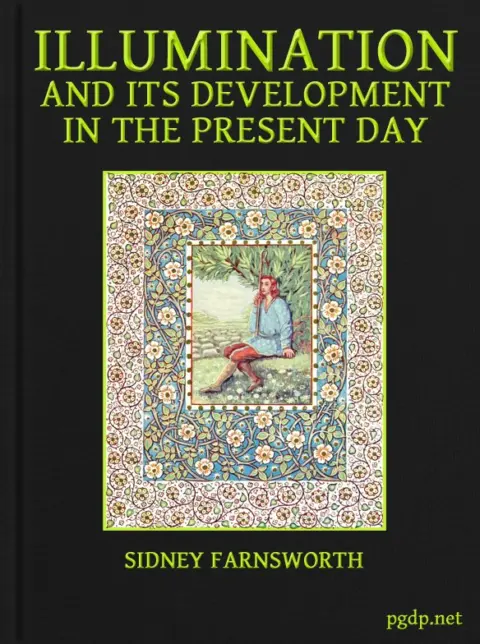
"Illumination and Its Development in the Present Day" by Sidney Farnsworth is a guidebook on the art of illumination, written in the early 20th century. The work aims to blend historical context with practical techniques for students interested in this artistic craft. Farnsworth emphasizes the significance of mastering calligraphy as a foundation for illumination, highlighting its evolution from early writing methods to contemporary applications. The opening of the book provides an introduction to illumination, detailing its historical roots, the progression from ancient writing styles, and the imperative connection between writing and decoration. It discusses various writing instruments and materials used throughout history, and sets the stage for a comprehensive exploration of the techniques involved in producing illuminated manuscripts today. Farnsworth expresses a desire to inspire students to appreciate the artistry of illumination and to encourage them to master its fundamental principles, ensuring that this traditional art form remains relevant and enriched in modern practice.
Introduction adapted from the source catalogue; source summaries may be automatically generated.
Free to read · English · 53,012 words · No account needed
MAKE TIME FOR A GOOD BOOK
On by default. Untick to stop anonymous reading totals. Each page counts after 10 seconds in view. How this works.
Anonymous counting is on unless you have switched it off.
The following books may be of interest to the student who is desirous of further information concerning the colours and methods of working employed by the mediæval artist: Mrs. Merrifield’s Ancient Practice of Painting, the Schedula Diversarum Artium of Theophilus, and The Book of the Art of Cennino Cennini. Mrs. Merrifield’s book contains a number of translations of the early manuscripts that describe the technical methods employed by the mediæval artists. The treatise of Theophilus has been translated into English by R. Hendrie, and the best translation of Cennini’s book is that by Mrs. Herringham. Materials of the Painter’s Craft, and Processes, Pigments, and Vehicles, by Dr. A. P. Laurie, are books that deal with this subject in a very interesting and helpful manner.
As the study of Heraldry is very important to the illuminator, the following books are mentioned: Complete Guide to Heraldry, by A. C. Fox-Davies, English Heraldry, by Charles Boutell, and Heraldry, by W. H. St. John Hope. The Stall Plates of the Garter, 1348-1485, also by W. H. St. John Hope.
Didron’s Iconography of Christian Art, and Emblems of the Saints, by F. C. Husenbeth, are books that are most useful to the illuminator when doing work that is ecclesiastical in character.
The list of books that is detailed here is necessarily incomplete, but the student will find that by studying these he will be referred to others, and so will be able to continue the study.
Address, illuminated, 171-7
Advertisement, design for, 192
Advertisements, lettering for, 72, 192, 196-9
Air bubbles in raising preparation, 158
Alcuin Bibles, 89
Alfred the Great, 90
Alizarin crimson, 127
Alphabet, its development, 32
the Roman, 32, 70-83
from the Book of Kells, 66
Alphabets for study, 60-9
Altar tablets, 169
Aluminium leaf, 147
paint, 147
Ambrosian Iliad, 85
Anglo-Celtic illumination, 87, 102
Armenian Bole, 143-4
Arsenic, sulphide of, 115
Art paper, 232
Arzica, 120, 121
Athelstan’s Psalter, 90
Æthelwold, Benedictional of, 91
Aureolin, 124
Azurite, 115
Azzuro della magna, 121
oltre marino, 121
Babylonian characters, 25
Backgrounds, diaper, 95
Barium sulphate, 130
Beauty, 222
Bedford Book of Hours, 98
Benedictional of Æthelwold, 91
Biacca, 121, 142
Bianco Sangiovanni, 121
Bible of Robert de Bello, 95
Bible History, moralised, 95
Bichromate of potash, 208
Binding MSS., a simple method of, 225-231
Black pigments, 129
Blocks, line, 178-9
half-tone, 180
three-colour, 180-1
Blood, dragon’s, 116, 120
Blue pigments, 127
Body-colours, 135
Bole, Armenian, 143, 144
Book, the illuminated MS., 216-24
printed, illumination of, 232-37
printed, decoration of, 238-47
Book-hands, the study of, 60-9
Bookplate, 201
Borders, 245
Bridget, St., 87
British Museum publications, 106
Bronze gilding, 185-6
powder, 146
Brown pigments, 129
Brushes, 154, 155
Brush-formed lettering, 73, 110, 111, 208-12
Bubbles in raising preparation, 158
Building up letters, 71, 109-11
Burnisher, agate, 148, 151
Burnt sienna, 127
Burnt umber, 129
Byzantine illumination, 85-6
Cadmium yellows, 124
Calligraphy, its development, 23
Cambrensis, Giraldus, 87
Camel-hair mop, 148, 151
Capitals, square, 33
rustic, 33
Capital letters, 65, 66, 67, 110
Carbolic acid, 133
Carlovingian illumination, 89
writing, 40
Carmine, 127
Celtic and Anglo-Celtic illumination, 87, 102
Cennino Cennini, 120, 142
Cerulean Blue, 127
Ceruse, 118
Chalk, 115, 121
Your reading position is saved on this browser. Take it to another device with a library code. Reading pages adapt to text, rather than matching a printed edition.
BEHIND THE BOOK
This eBook is for the use of anyone anywhere in the United States and most other parts of the world at no cost and with almost no restrictions whatsoever. You may copy it, give it away or re-use it under the terms of the Project Gutenberg License included with this eBook or online at www.gutenberg.org. If you are not located in the United States, you will have to check the laws of the country where you are located before using this eBook. Read the source licence.
The original source file, including credits and licence, is retained by this library. Request an original-format copy at no charge. Please include the book title and Project Gutenberg identifier #48157.
KEEP YOUR CURIOSITY GOING
Charles G. (Charles Griffith) Ross
Hannah Webster Foster

Emily Lawless
Edwin Hamlin Carr

Charles De Lano Hine
Andrew Ure