THE CLASSIC COLLECTION✦The claims of decorative artCLASSIC FREE BOOKS
The claims of decorative art
Walter Crane
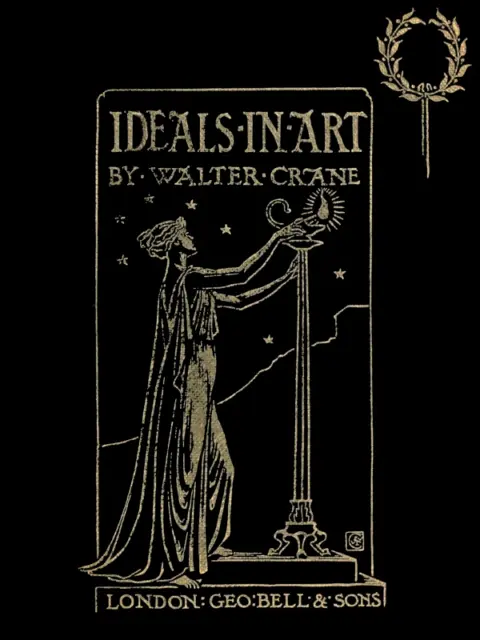
THE CLASSIC COLLECTION · 1905
"Ideals in Art: Papers Theoretical, Practical, Critical" by Walter Crane is a collection of essays written in the early 20th century. The work reflects Crane's thoughts and observations as an artist and designer, discussing the intersection of art with social, economic, and aesthetic issues of his time. The essays cover various topics, including the Arts and Crafts movement, the teaching of art, and the social implications of artistic expression, aiming to elevate the understanding of beauty in art and its relation to life. The opening of this collection establishes Walter Crane's objectives in discussing the revival of handicrafts and the broader implications of art in society. He emphasizes the historical context of the Arts and Crafts movement, covering its rise from earlier decorative art traditions. The text showcases his reflections on how social and economic conditions affect artistic expression and beauty, drawing attention to the need for genuine and sincere design in a modern world dominated by industrialization. Crane suggests that understanding art must encompass its historical evolution as well as its social responsibilities, setting a critical tone for the essays that follow.
Introduction adapted from the source catalogue; source summaries may be automatically generated.
Free to read · English · 45,302 words · No account needed
MAKE TIME FOR A GOOD BOOK
On by default. Untick to stop anonymous reading totals. Each page counts after 10 seconds in view. How this works.
Anonymous counting is on unless you have switched it off.
Frescoes by Ford Madox Brown in the Town Hall, Manchester 118, 119
View in Bournville 123
Cottages at Bournville, designed by Alex. W. Harvey 123
Interior, 1a, Holland Park, designed by Philip Webb 131
Ranworth Rood Screen, Norfolk (from Drawings by W. T. Cleobury) 133, 134, 135, 137, 138, 139, 141, 143
Lucas van Leyden, “The Annunciation” 145
Carpaccio, “The Dream of St. Ursula” 147
Cottage in the Garden City, Letchworth, Herts, designed by Lionel F. Crane 149, 150, 151
Stoneywell Cottage, designed by Ernest W. Gimson 153, 155
Old English Farmhouse Interior (from a Sketch by Walter Crane) 157
Combe Bank, Sevenoaks, the Saloon, decorated by Walter Crane 159
Printed Cretonne Hangings, designed by Walter Crane 160, 161
Wall-papers, designed by Walter Crane 163, 164, 165, 167, 168, 169
Greek Drapery (Temple of Nike Apteros, Athens) 173
Types of Artistic Dress 177
Types of Children’s Dress 179
Types of Working Dress 181
Hungarian Peasant Costumes 182, 183
A Contrast. Modern and Mediaeval Simplicity 187
Decoration of Westminster Bridge, by the Students of the Royal College of Art (from a Coloured Drawing by G. E. Kruger) 195
Suggestion for a Temporary Gatehouse at Temple Bar, by Walter Crane 197
Temporary Street Decoration 199, 201
Royal Mantle from the Treasury of Bamberg 205
Chasuble from the Cathedral of Anagni 206
Sicilian Silk Patterns (XIVth century) 207, 208, 209, 210, 211, 212, 213, 214
Embroidered Tabard in the Archaeological Museum at Ghent 215
Details from the Embroidered Tabard 216, 217, 218
Robe of Richard II (from the picture at Wilton House) 219
The Lions of England, designed by Walter Crane 220
Heraldic Lion, designed by Walter Crane 221
The Lions of England (from the Tomb of William de Valence, Earl of Pembroke, Westminster Abbey) 222
Equestrian Figure with Heraldic Trappings (from the Tomb of Edmund Crouchback, Earl of Lancaster, Westminster Abbey) 223
Binding in black morocco, with Medallions and Coat of Arms, by Thomas Berthelet 227
Binding in black morocco, with Arms of Edward VI, by Thomas Berthelet 229
Binding in stamped calf, with emblematical designs 231
Binding of oak boards covered with stamped calf, by John Reynes 233
Binding in brown calf, inlaid, by the Wotton Binder 235
Appartamenti Borgia, Vatican, showing Pinturicchio’s “Salutation,” etc. 238
Detail from Pinturicchio’s “Salutation,” with enrichments in Gesso 239
Palermo, Cappella Reale (from a Water-colour Sketch by Walter Crane) 241
The Double Cube Room, Wilton House 243, 245
Method of Working with the Brush in Gesso 249
Filling for Picture Frame in Gesso Duro, designed by Walter Crane 250
Design for a Bell-pull, modelled in Gesso, by Walter Crane 251
Gesso Panel, design for the Art Workers’ Guild, by Walter Crane 253
The Dance (Frieze Panel in Gesso), designed by Walter Crane 254
Picture Frame in Oak with Gesso filling, designed by Walter Crane 255
Treatment of Form in Gesso Decoration, by Walter Crane 256
System of Modelling with the Brush in Gesso 257
Gesso Decoration at 1a, Holland Park, by Walter Crane, the woodwork by Philip Webb 258, 259, 260, 261
Panel in Gesso, tinted with lacquers and lustre paint, designed by Walter Crane 262
Your reading position is saved on this browser. Take it to another device with a library code. Reading pages adapt to text, rather than matching a printed edition.
Walter Crane
Walter Crane
Walter Crane
Walter Crane
BEHIND THE BOOK
This eBook is for the use of anyone anywhere in the United States and most other parts of the world at no cost and with almost no restrictions whatsoever. You may copy it, give it away or re-use it under the terms of the Project Gutenberg License included with this eBook or online at www.gutenberg.org. If you are not located in the United States, you will have to check the laws of the country where you are located before using this eBook. Read the source licence.
The original source file, including credits and licence, is retained by this library. Request an original-format copy at no charge. Please include the book title and Project Gutenberg identifier #57852.
KEEP YOUR CURIOSITY GOING

David Patterson (Spirit) Hatch

David Patterson (Spirit) Hatch

David Patterson (Spirit) Hatch

Ralph Waldo Emerson

Maurice Baring

Oscar Wilde & James McNeill Whistler