THE CLASSIC COLLECTION✦The claims of decorative artCLASSIC FREE BOOKS
The claims of decorative art
Walter Crane
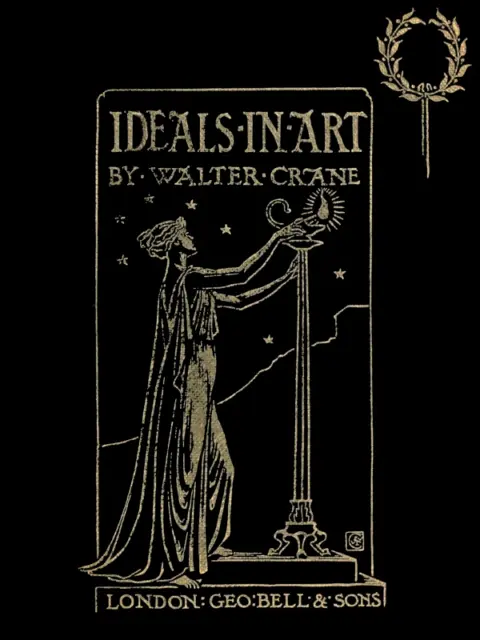
THE CLASSIC COLLECTION · 1905
"Ideals in Art: Papers Theoretical, Practical, Critical" by Walter Crane is a collection of essays written in the early 20th century. The work reflects Crane's thoughts and observations as an artist and designer, discussing the intersection of art with social, economic, and aesthetic issues of his time. The essays cover various topics, including the Arts and Crafts movement, the teaching of art, and the social implications of artistic expression, aiming to elevate the understanding of beauty in art and its relation to life. The opening of this collection establishes Walter Crane's objectives in discussing the revival of handicrafts and the broader implications of art in society. He emphasizes the historical context of the Arts and Crafts movement, covering its rise from earlier decorative art traditions. The text showcases his reflections on how social and economic conditions affect artistic expression and beauty, drawing attention to the need for genuine and sincere design in a modern world dominated by industrialization. Crane suggests that understanding art must encompass its historical evolution as well as its social responsibilities, setting a critical tone for the essays that follow.
Introduction adapted from the source catalogue; source summaries may be automatically generated.
Free to read · English · 45,302 words · No account needed
MAKE TIME FOR A GOOD BOOK
On by default. Untick to stop anonymous reading totals. Each page counts after 10 seconds in view. How this works.
Anonymous counting is on unless you have switched it off.
Anagni, chasuble from the Cathedral of, 206.
Animal forms in decoration, 203–224.
Architecture, importance of, in art training, 44, 50.
Art, influence of economic questions in, 23;
value of sound traditions in, 29;
social function of, 32;
the teaching of, 35–56;
sympathetic atmosphere a necessity for, 36–40;
connection between architecture and, 44;
essential unity of, 44, 48;
the imitative and imaginative sides of, 48;
advantage of architectural over pictorial training in, 50;
methods of art teaching, 58–68;
academic methods of teaching, 58–65;
dominated by the sculptor’s art and aims, 64;
modern possibilities of teaching, 66–68;
Tolstoi’s views on, 69–75;
the social and ethical bearings of, 88–101;
influence of, in the church, 93;
not the monopoly of the rich, 95–97;
refining influence of, 97, 98;
change in the conditions of the practice of, 99, 100.
“Art Nouveau, L’,” 128, 129.
Art Workers’ Guild, the, 18, 31;
device for, 251, 253.
Arts and Crafts Exhibition Society, the: formation of, 20;
first exhibition of, 21;
objects and principles of, 22.
Assyrian reliefs, object and value of, 90.
Bacchus, visit of, to Icarius, Romano-Greek relief, 106.
Bamberg, Royal mantle from the Treasury of, 205.
Barron, O., 200.
Bell, R. A., 159.
Bellamy’s “Looking Backward,” quoted, 83.
Berthelet, Thomas, bindings by, 227, 229.
Birmingham, scheme for frescoes illustrating local history at, 120.
Blake, William, 5, 6.
Bland, J. P., specimen of calligraphy by, 65.
Blickling, ceiling at, 158.
Book-covers, designing of, 225–236.
Borgia apartments, decoration of the, 238, 239, 240, 248; model of, at South Kensington, 240, 248.
Bournville, 121, 148;
views in, 123.
Brown, Ford Madox, 12;
frescoes in the Manchester Town Hall by, 118, 119, 120.
Building Acts, the, 126;
local bye-laws, 152.
Burges, William, 17.
Burne-Jones, Sir E., 20, 162, 175, 240.
Butterfield, William, 17.
Calvert, Edward, 7, 8, 9.
Carpaccio’s “Dream of St. Ursula,” 144, 147.
Crane, Lancelot, figure composition by, 37.
Crane, Lionel F., design for a collective dwelling by, 116; cottage at Letchworth designed by, 148–151.
Central School of Arts and Crafts, the, 28, 29.
Chesterton, G. K., his “G. F. Watts” criticised, 273–281.
Cleobury, W. T., 133–139, 141, 143.
Cobden-Sanderson, T. J., 230.
Collective dwellings, 115–117.
Commercialism, evil effects of, 84, 85, 94.
Cretonne, printed, 160–162.
Crivelli’s “Annunciation,” 142.
Crouchback, Edmund, Earl of Lancaster, figure from the tomb of, 223.
Dalpeyrat, M. Louis, 27.
Day, Lewis F., 18, 203.
“Decorative,” meaning of the word, 267.
Decorative art, development of, in the nineteenth century,
2 et seq.;
modern revival of, 15 et seq.;
relation of the easel picture to, 265.
“Denoline,” 252.
Dress, absence of beauty in modern, 81–83;
progress of taste in, 171–191;
influence of the pre-Raphaelites on, 175;
types of artistic, 177;
types of children’s, 179;
types of working, 181;
modern and mediaeval, 185, 187.
Dunkley, Miss L. M., designs for embroidery by, 45, 46.
Eastlake, C. L., his “Hints on Household Taste,” 17.
Egyptian hieroglyphics, 89, 90, 103;
decorative art, 112.
Enamelling, modern revival of, 26, 27.
Exhibition of 1851, the, 3.
“Fifteen, the,” 18.
Fisher, Alexander, 27.
Flats, effects of living in, 114, 115.
Flaxman, John, 9.
Fylfot, the, 104.
Garden City Association, the, 121, 148.
Genoa, Doria Palace, gesso decorations in, 248.
Gesso, origin of, 247;
fine examples of, 248;
methods of working in, 249;
Gesso Duro, 249;
“Denoline,” 252;
system of modelling in, 257.
Gilding, use of, in decoration, 237–246.
Gimson, Ernest W., cottage designed by, 152, 153, 155.
Graining, 130.
Greece, the artistic sense of, 90, 91.
Greek, ornament, 104–107, 215;
drapery, 173.
Harvey, Alex. W., cottages designed by, 123, 148.
Your reading position is saved on this browser. Take it to another device with a library code. Reading pages adapt to text, rather than matching a printed edition.
Walter Crane
Walter Crane
Walter Crane
Walter Crane
BEHIND THE BOOK
This eBook is for the use of anyone anywhere in the United States and most other parts of the world at no cost and with almost no restrictions whatsoever. You may copy it, give it away or re-use it under the terms of the Project Gutenberg License included with this eBook or online at www.gutenberg.org. If you are not located in the United States, you will have to check the laws of the country where you are located before using this eBook. Read the source licence.
The original source file, including credits and licence, is retained by this library. Request an original-format copy at no charge. Please include the book title and Project Gutenberg identifier #57852.
KEEP YOUR CURIOSITY GOING

David Patterson (Spirit) Hatch

David Patterson (Spirit) Hatch

David Patterson (Spirit) Hatch

Ralph Waldo Emerson

Maurice Baring

Oscar Wilde & James McNeill Whistler