THE CLASSIC COLLECTION✦My diaries, being a personal narrative of events 1888-1914, Part 2 (1900-1914)CLASSIC FREE BOOKS
My diaries, being a personal narrative of events 1888-1914, Part 2 (1900-1914)
Wilfrid Scawen Blunt
THE CLASSIC COLLECTION · 1914
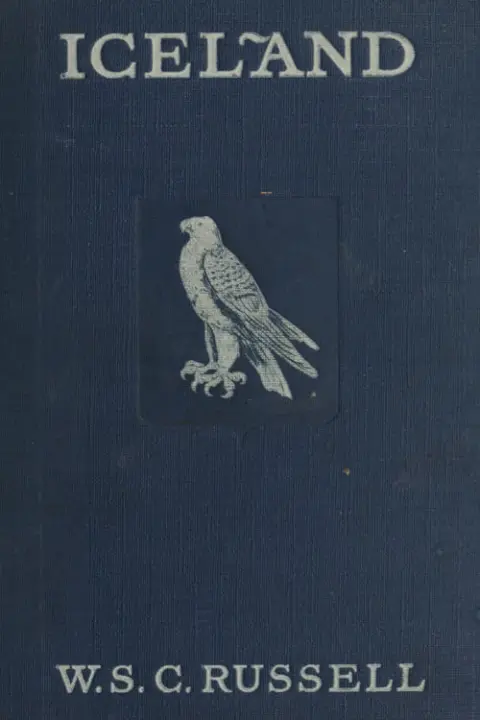
"Iceland: Horseback Tours in Saga Land" by W. S. C. Russell is a travel narrative written in the early 20th century. This work explores the landscapes, history, and culture of Iceland, as observed through the author's extensive travels across the country during the early 1900s. The author shares his fascination with the Icelandic people, their traditions, and the enchanting scenery that defines the land, while most likely weaving in historical insights. The opening of the book sets the stage for an exploration of Iceland's unique geographical and cultural landscape. It begins with a foreword detailing the author's motivations for writing, emphasizing the lack of authoritative English accounts of Iceland and expressing a desire to share his experiences. The first chapter, titled "Historical," delves into the history of Iceland, tracing its discovery and settlement by influential Viking leaders from Norway. Russell paints a vivid picture of the land's natural beauty and the character of its people, setting the tone for an adventurous journey filled with horseback riding through Iceland's rugged terrain. This introductory section effectively invites readers to engage with the author's narratives, promising insights into the rich tapestry of Icelandic heritage and the landscapes that inspired it.
Introduction adapted from the source catalogue; source summaries may be automatically generated.
Free to read · English · 94,396 words · No account needed
MAKE TIME FOR A GOOD BOOK
On by default. Untick to stop anonymous reading totals. Each page counts after 10 seconds in view. How this works.
Anonymous counting is on unless you have switched it off.
[2] Fell is an isolated mountain while fjall is the termination applied to a mountain showing that it is a portion of a group or a range.
[3] Fljót and á each mean river but there is the same distinction between them as between river and brook. Fljót is a large river with broad lake-like expansions and á is an ordinary stream.
[4] Swinestye is ironical for Swinefell, Swine Hill, the home of Flosi, the man who did the burning.
[5] With the exception of the last records, 1854 and 1913, this data is compiled from the letters of Von Troll, Upsala, Sweden, 1777.
[6] Through fires placed under deceitful ashes.
[7] This was Baron Axel Klinckowström, of Stockholm, a member of our
scientific corps.
[8] About seventy-five per cent. of the molluscs that lived at this period of the world’s history are represented by living species to-day.
[9] Heimskringla, Vol. I, Chap. LXXX.
[10] Ibid.
Accent:—The stress is always on the first syllable.
Vowels:—The vowel sounds vary considerably from the modern English and much resemble the old Anglo-Saxon. Some changes have taken place in these sounds since the classical period of the Icelandic literature which was in the eleventh, twelfth and thirteenth centuries.
The following key will assist the reader to pronounce the Icelandic terms
in this volume.
a is pronounced like A in far.
á ” ” OU ” loud.
e ” ” E ” let.
é ” ” YE ” yellow.
i ” ” EE ” meek.
í ” ” I ” pit.
o ” ” OA ” road.
ö ” ” U ” murmur.
ý ” ” EE ” meet.
ae ” ” I ” prize.
au ” ” OI ” coin.
ey ” ” AY ” hay.
ei ” ” AY ” hay.
Consonants:—The alphabet was taken from the Latin with the addition of two characters Þ thorn and ð ith. The two have the sound of TH in thin; the first is initial and the second may be in any syllable if it is not initial, as ð in Seyðisfjörðr, pronounced say-this-fur-thur.
The consonants have practically the same values as in English except the following, which should be noted:—
f before L or N has the sound of B, thus,—
Krafla is pronounced as if spelled Krabla.
Hrafn, (raven,) is pronounced as if spelled Hrabn.
h is given its breathing sound.
h before VI has the sound of Q, thus,—
Hvitá is pronounced as if spelled Quee-tow, O like O in cow.
ll when L is doubled the first L has the sound of T, thus, fell is
pronounced fetl.
ð is sounded like TH in thin.
There is a tendency among the uneducated people to lisp or to smother their words behind closed lips. When spoken by an educated person the language is musical and pleasing.
Your reading position is saved on this browser. Take it to another device with a library code. Reading pages adapt to text, rather than matching a printed edition.
BEHIND THE BOOK
This eBook is for the use of anyone anywhere in the United States and most other parts of the world at no cost and with almost no restrictions whatsoever. You may copy it, give it away or re-use it under the terms of the Project Gutenberg License included with this eBook or online at www.gutenberg.org. If you are not located in the United States, you will have to check the laws of the country where you are located before using this eBook. Read the source licence.
The original source file, including credits and licence, is retained by this library. Request an original-format copy at no charge. Please include the book title and Project Gutenberg identifier #57659.
KEEP YOUR CURIOSITY GOING
Wilfrid Scawen Blunt
Wilfrid Scawen Blunt

E. W. (Edgar Watson) Howe
Cécile Tormay

Moritz Busch
John L. Ransom