THE CLASSIC COLLECTION✦An outlaw’s diary: the CommuneCLASSIC FREE BOOKS
An outlaw’s diary: the Commune
Cécile Tormay
THE CLASSIC COLLECTION · 1911
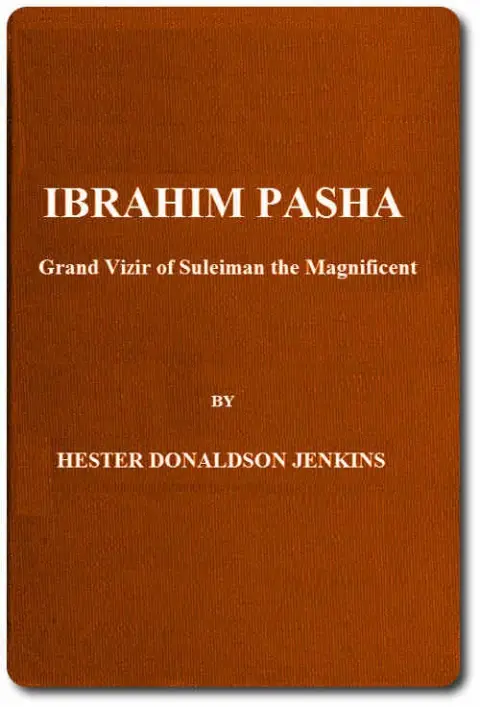
"Ibrahim Pasha: Grand Vizir of Suleiman the Magnificent" by Hester Donaldson Jenkins is a historical account written in the early 20th century. The book focuses on the life and career of Ibrahim Pasha, who rose from humble beginnings as a slave to become the grand vizir of the Ottoman Empire during the reign of Suleiman the Magnificent. It provides insight into Turkish society, administration, and international relations during a pivotal period of the empire's history. The opening of the work sets the stage for Ibrahim Pasha's remarkable ascent, detailing his origins as a Christian child captured by Turkish corsairs and later transformed into a trusted companion of Suleiman. Jenkins elaborates on Ibrahim's early education and the bond he formed with the future sultan, which ultimately facilitated his rapid rise through the ranks of Ottoman society. The text highlights the complexities of Turkish slavery and the social dynamics of Ibrahim’s time, establishing a backdrop that underscores the unique blend of personal ambition and political intrigue that characterized his journey to power as grand vizir.
Introduction adapted from the source catalogue; source summaries may be automatically generated.
Free to read · English · 35,991 words · No account needed
MAKE TIME FOR A GOOD BOOK
On by default. Untick to stop anonymous reading totals. Each page counts after 10 seconds in view. How this works.
Anonymous counting is on unless you have switched it off.
[57] Cf. also Cantimir, “Suleiman gave Ibrahim his sister in marriage.” Jorga on the other hand says that Ibrahim married a daughter of Iskender Chelebi, but I have seen no such statement elsewhere, except the following ambiguous statement in Solakzadeh: “Between Iskender and Ibrahim Pasha the relation of father and son existed.” P. 478. Abdurrahman Sheref writes in his Tarih Osmanieh, “Some historians say that Ibrahim was brother‐in‐law to the Sultan.” Petchevi and the Venetian Baillies Bragadino and Pietro Zen, while giving detailed accounts of the wedding feast say nothing of the bride.
[58] For accounts see Petchevi, op. cit., vol. i, pp. 79 et seq.; Solakzadeh, op. cit.; Marini Sanuto, op. cit., vol. 36, pp. 505 et seq., with references passim. Also von Hammer, op. cit., vol. v, pp. 52 et seq., and Cantimir, op. cit.
[59] “Ed in quella ne sono distesi molti pavioni, tra li qual quello del Gran signor, uno che fo de Uson Cassan, che fu quello quando l’ebbe la rotta da sultan Machmet, l’altro del signor Sophi, che fu aquistado da sultan Selim, l’altro del sultan Elgauri, conquistado pur per el ditto sultan Selim. Quanto siano di richezza e di magnificentia et bellezza bisogneria con el penello in longo tempo farla, et si haveria fatica per la gran superbia et valuta è in quelli.” Marini Sanuto, op. cit., vol. xxxvi, p. 505.
[60] Tutta la terra. Marino Sanuto, op. cit., vol. xxxvi, p. 505.
[61] Marino Sanuto, vol. xli, p. 526.
[62] Until the introduction of tables from the West, and to this day in certain houses, Turkish meals are served on large trays placed on stools.
[63] Von Hammer says that Ali also tells this story, but that the other Turkish historians omit it. Op. cit., vol. v, note, p. 145.
[64] Petchevi, Tarih Osmanieh, p. 93.
[65] Souheila, in his History of Egypt (Misr), says that Suleiman originally planned to go himself to Egypt, but that the grand vizir said, “If it be the glorious command of the just king, we are sufficient for the service,” whereupon he was appointed chief of the expedition.
[66] Petchevi, Sadullah Säid, and Solakzadeh who was present on the expedition, and following them, Djelalzadeh and Abdurrahman Sheref. As I have been unable to obtain a copy of Djelalzadeh, I am obliged to depend on Von Hammer’s quotations from his history.
[67] “In Aleppo and Damascus, with justice and equity he destroyed the standards of revolt raised by villains.” Soleyman Nameh, by Sadullah Säid Effendi.
“In the province of Aleppo were some who wished redress, from whom he removed oppression and tyranny.” Solakzadeh, op. cit. Cf. also von Hammer, op. cit., vol. v, p. 57.
[68] Sadullah Säid, op. cit.
[69] Sadullah Säid.
[70] Sadullah Säid, Solakzadeh.
[71] Solakzadeh.
[72] Solakzadeh.
[73] Solakzadeh, Petchevi.
Your reading position is saved on this browser. Take it to another device with a library code. Reading pages adapt to text, rather than matching a printed edition.
BEHIND THE BOOK
This eBook is for the use of anyone anywhere in the United States and most other parts of the world at no cost and with almost no restrictions whatsoever. You may copy it, give it away or re-use it under the terms of the Project Gutenberg License included with this eBook or online at www.gutenberg.org. If you are not located in the United States, you will have to check the laws of the country where you are located before using this eBook. Read the source licence.
The original source file, including credits and licence, is retained by this library. Request an original-format copy at no charge. Please include the book title and Project Gutenberg identifier #51299.
KEEP YOUR CURIOSITY GOING
Cécile Tormay

Moritz Busch
John L. Ransom
Frances Wright
Cécile Tormay

Mabel Potter Daggett