
The Poor Man
Stella Benson
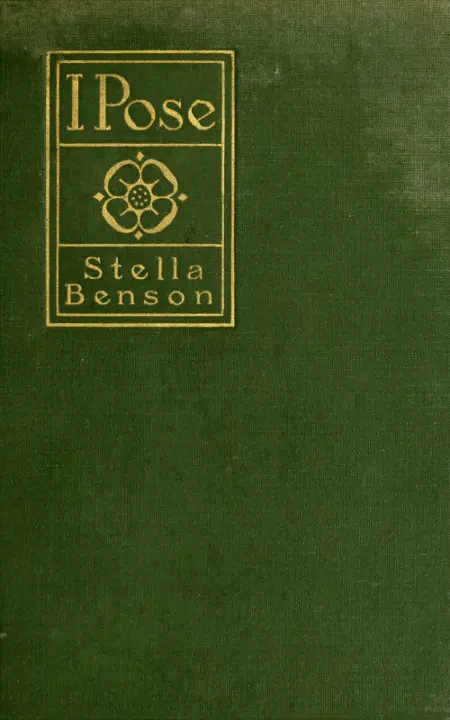
THE CLASSIC COLLECTION · 1916
"I Pose" by Stella Benson is a novel written in the early 20th century. The narrative follows the experiences of an earnest yet hapless gardener who, at 23, navigates life's challenges and absurdities in a boarding house in London. Central themes appear to include the exploration of identity, personal aspirations, and the often farcical nature of social connections, as the gardener interacts with characters such as the pragmatic girl Courtesy and a passionate suffragette. The opening of the novel introduces the gardener, who experiences a series of minor yet comical crises, including the breaking of a boot-lace. He is portrayed as a deeply introspective figure, often lost in his own thoughts and theories about life, love, and art. When he encounters Courtesy, a somewhat oblivious yet kind young woman who helps him with his boot, it sparks a mixture of indignation and admiration in him. As the gardener embarks on a whimsical journey, he later crosses paths with a fervent suffragette who ignites both his curiosity and a new set of complications in their shared tale of exploration and growth. This initial chapter sets the stage for a blend of humor and social commentary, as the gardener fumbles through his interactions while crafting a narrative that reflects both his romantic ideals and the stark realities of his existence.
Introduction adapted from the source catalogue; source summaries may be automatically generated.
Free to read · English · 76,249 words · No account needed
MAKE TIME FOR A GOOD BOOK
On by default. Untick to stop anonymous reading totals. Each page counts after 10 seconds in view. How this works.
Anonymous counting is on unless you have switched it off.
Miss Brown looked surprised. The poor suffragette’s attempts at polite interchange of fatuities never seemed to meet with the usual fate of such efforts. Her trivialities somehow always fell upon silence; if she ventured on the throwing of a light bridge over a gap in the conversation, it seemed to snap communication instead of furthering it. She was, of course, unlucky, but she was also, it must be admitted, too earnest in intention for petty intercourse. She tried too hard.
The buggy, commending its springs to the mercy of Providence, charged
the drive of Park View.
On the door-step, carefully posed, Albert was reading a very large book. He started laboriously as the buggy approached, and placed the book under his arm, taking care that the title should be visible. An emaciated child, with manners too old, and clothes too young, for his years.
“I have dot bissed you at all, Ah-Bargaret,” said Miss Brown’s genial nephew. “I have been too idterested id by dew book od Chebistry. I ab quite sorry you have cob back.”
“Chemistry,” retailed Miss Brown to the lady novelist. “A child of ten. And—did you notice, he was so deep in his book, he got quite a start when we arrived.”
Albert, at Park View, met with that appreciation of his poses which we all hope to meet in heaven.
“Albert, you are to move into the back room,” said Miss Brown.
“Why?” asked Albert.
“To make room for this lady.”
“Priceless child,” said the lady novelist in brackets.
“Because she needs somewhere to rest,” said Miss Brown in a voice of
tentative reproof.
“But so do I.”
“I had better move into the back room myself, then,” sighed his aunt.
The suffragette began those hopeless protests which make the burden of an obligation so heavy. It is so very much easier as well as more blessed to give than to receive, that the wonder is that generosity should retain the name of a virtue. Up to a certain point we are all altruists, because it is too much trouble to be otherwise.
Albert, who, having gained his point, was once more comparatively genial, prepared to bring the suffragette to his feet.
“I expect you are wudderig what is the dabe of the book I ab readig,” he suggested to her as she stepped shakily from the buggy.
“No, I was not,” she replied gently. “I’m afraid science bores me.”
“Wha-t a lot you biss,” observed the child. “You probably spedd your precious time id dancig, ad dressig yourself up, ad bakig berry. How buch better——”
“Albert,” said his aunt, “this lady is tired and waiting to pass.”
Your reading position is saved on this browser. Take it to another device with a library code. Reading pages adapt to text, rather than matching a printed edition.
Stella Benson

Stella Benson
Stella Benson
Stella Benson
BEHIND THE BOOK
This eBook is for the use of anyone anywhere in the United States and most other parts of the world at no cost and with almost no restrictions whatsoever. You may copy it, give it away or re-use it under the terms of the Project Gutenberg License included with this eBook or online at www.gutenberg.org. If you are not located in the United States, you will have to check the laws of the country where you are located before using this eBook. Read the source licence.
The original source file, including credits and licence, is retained by this library. Request an original-format copy at no charge. Please include the book title and Project Gutenberg identifier #60346.
KEEP YOUR CURIOSITY GOING
Coulson Kernahan

Maurice Baring
Frances Wright
Cécile Tormay

Frederic Jesup Stimson

W. H. P. (William Henry Pope) Jarvis