
The Poor Man
Stella Benson
THE CLASSIC COLLECTION · 1916
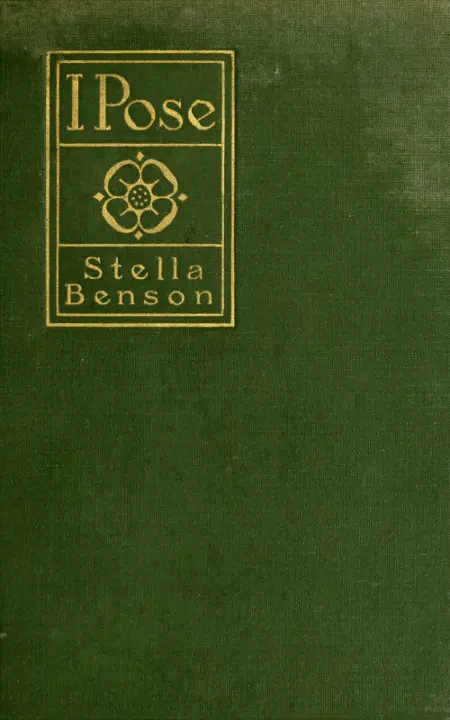
"I Pose" by Stella Benson is a novel written in the early 20th century. The narrative follows the experiences of an earnest yet hapless gardener who, at 23, navigates life's challenges and absurdities in a boarding house in London. Central themes appear to include the exploration of identity, personal aspirations, and the often farcical nature of social connections, as the gardener interacts with characters such as the pragmatic girl Courtesy and a passionate suffragette. The opening of the novel introduces the gardener, who experiences a series of minor yet comical crises, including the breaking of a boot-lace. He is portrayed as a deeply introspective figure, often lost in his own thoughts and theories about life, love, and art. When he encounters Courtesy, a somewhat oblivious yet kind young woman who helps him with his boot, it sparks a mixture of indignation and admiration in him. As the gardener embarks on a whimsical journey, he later crosses paths with a fervent suffragette who ignites both his curiosity and a new set of complications in their shared tale of exploration and growth. This initial chapter sets the stage for a blend of humor and social commentary, as the gardener fumbles through his interactions while crafting a narrative that reflects both his romantic ideals and the stark realities of his existence.
Introduction adapted from the source catalogue; source summaries may be automatically generated.
Free to read · English · 76,249 words · No account needed
MAKE TIME FOR A GOOD BOOK
On by default. Untick to stop anonymous reading totals. Each page counts after 10 seconds in view. How this works.
Anonymous counting is on unless you have switched it off.
The engine was approaching the climax of its daily task. It faltered. Looking out of the window, Mr. Wise described its arrival at the foot of a pronounced hill. The engine gazed up the perspective of its duty, and panted prophetically, as pants an uncle before a game of stump-cricket.
“This hill is always a surprise to the engine,” said Mr. Wise. “Every day it has two or three tries, and yet it never learns the knack.”
The suffragette’s fingers tore at the arm of her chair. It was not only too hot to travel, it was also much too hot to cease to travel. She felt a crisis approaching.
Her window had stopped artistically opposite a little slice of distant world, carved out between the trunks of two great cotton trees. Union Town, perceptibly diminished since its last appearance, languished again around its bay. Against the white water you could see the cathedral and the factory chimneys, the spires of God and the spires of mammon.
The suffragette, as she looked, saw the cathedral spire cock suddenly awry and bend over, like a finger in three joints.
“The heat,” she thought. “I believe I’m dying.”
Almost at once after that the train suffered a great spasm, as though yearning for the top of the hill.
“She’s going to try again,” said Mr. Wise.
The suffragette’s head cocked suddenly awry, she bent over in three joints like a finger, and slid off her chair in a faint.
A prostrated suffragette is a contradiction in terms. This one became a child, lying in ungraceful angles, in need of its mother.
“By Jove!” said Mr. Wise. Miss Brown, after lifting up her skirt carefully, knelt upon her petticoat.
An ebony ticket-inspector rushed into the compartment.
“Ull right! Ull right!” he shouted. “Ull ovah! Nobuddy killed!”
“Certainly not,” said Mr. Wise. “Why should they be? Only a faint.”
“Earthquake, sah, earthquake!” yelled the inspector. “Jes’ look at the steeple daown in taown!”
There was no steeple to look at.
“My—what an eventful journey!” said the lady novelist.
“Poor little thing,” said Miss Brown to the suffragette, in almost human tones. “Better now, better now?”
The suffragette began to struggle a little. Even had she been in her grave, I think pity would have aroused a spark of militant protest in her bones.
“Tell her to make an effort,” said the lady novelist, who had never in her forty years been guilty of physical weakness. “Pretend not to notice her. Probably hysteria.”
Your reading position is saved on this browser. Take it to another device with a library code. Reading pages adapt to text, rather than matching a printed edition.
Stella Benson

Stella Benson
Stella Benson
Stella Benson
BEHIND THE BOOK
This eBook is for the use of anyone anywhere in the United States and most other parts of the world at no cost and with almost no restrictions whatsoever. You may copy it, give it away or re-use it under the terms of the Project Gutenberg License included with this eBook or online at www.gutenberg.org. If you are not located in the United States, you will have to check the laws of the country where you are located before using this eBook. Read the source licence.
The original source file, including credits and licence, is retained by this library. Request an original-format copy at no charge. Please include the book title and Project Gutenberg identifier #60346.
KEEP YOUR CURIOSITY GOING
Coulson Kernahan

Maurice Baring
Frances Wright
Cécile Tormay

Frederic Jesup Stimson

W. H. P. (William Henry Pope) Jarvis