
The Poor Man
Stella Benson
THE CLASSIC COLLECTION · 1916
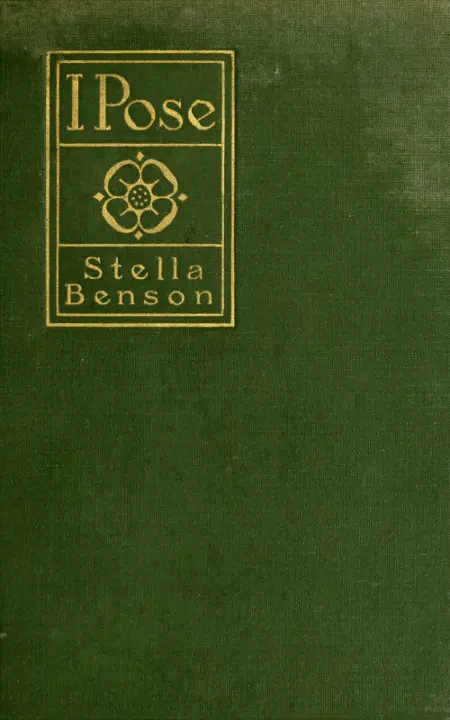
"I Pose" by Stella Benson is a novel written in the early 20th century. The narrative follows the experiences of an earnest yet hapless gardener who, at 23, navigates life's challenges and absurdities in a boarding house in London. Central themes appear to include the exploration of identity, personal aspirations, and the often farcical nature of social connections, as the gardener interacts with characters such as the pragmatic girl Courtesy and a passionate suffragette. The opening of the novel introduces the gardener, who experiences a series of minor yet comical crises, including the breaking of a boot-lace. He is portrayed as a deeply introspective figure, often lost in his own thoughts and theories about life, love, and art. When he encounters Courtesy, a somewhat oblivious yet kind young woman who helps him with his boot, it sparks a mixture of indignation and admiration in him. As the gardener embarks on a whimsical journey, he later crosses paths with a fervent suffragette who ignites both his curiosity and a new set of complications in their shared tale of exploration and growth. This initial chapter sets the stage for a blend of humor and social commentary, as the gardener fumbles through his interactions while crafting a narrative that reflects both his romantic ideals and the stark realities of his existence.
Introduction adapted from the source catalogue; source summaries may be automatically generated.
Free to read · English · 76,249 words · No account needed
MAKE TIME FOR A GOOD BOOK
On by default. Untick to stop anonymous reading totals. Each page counts after 10 seconds in view. How this works.
Anonymous counting is on unless you have switched it off.
“I never take the same view,” barked Mrs. Rust. “Show me the boy’s
room.”
So the gardener saw that poisonous hair advance along a shaft of sunlight that intruded through the broken shutter.
“Your jug and basin are broken,” said Mrs. Rust. “Disgraceful.”
“Oh, there are several things broken in this town,” he said feverishly. “Windows and necks and a heart or two.”
Mrs. Rust sat deliberately on a chair and burst into tears.
“I was buying mangoes,” she sobbed stormily, “from a black man with bleached hair. And the whole of a shop-front fell out on him. One brick hit my toe. I looked at the man through a sort of cage of fallen things. It was as if—one had trodden on red currants.”
“What did you do?” panted the gardener. “How fine to live in a world where things happen.”
“I ran away,” said Mrs. Rust shakily. “I didn’t pay for the mangoes.”
“I would rather have had this happen,” said the gardener after a pause, “and have broken my leg, than have had an ordinary day to meet me on Trinity Island.”
After another pause, he added: “But I have lost the suffragette. And that is another matter.”
“Was she killed?” asked Mrs. Rust, steeling herself against the commonplace duty of condolence.
“Certainly not,” replied the gardener. “She is a militant suffragette.”
“Good,” said Mrs. Rust.
“How good the world is,” said the gardener, “to provide such excellent material. The sea, and the earthquake, and a fighting woman to love. Just think—an earthquake—on my first day. I am a man of luck.”
“You have broken your leg,” Mrs. Rust informed him.
“I have,” admitted the gardener rather fretfully. “But then everything
has its price.”
“A good many other people have come off much worse,” said Mrs. Rust. “I’m not complaining, mind, but any other woman would say you were disgracefully selfish. A lot of people are dead, and a lot of other people’s people are dead....”
“The longer I live ...” said the gardener, from the summit of his twenty-three years, “the surer I am that we make a fuss which is almost funny over death. We run after it all over the world, and then we grumble at it when it catches us up from behind. It’s an adventure, of course, but then—so is—shaving every morning. Compare death with—love, for instance.”
He felt ashamed of this after he had said it, and tried to cover it with a little laugh which shook him, and changed into a yelp. After breathing hard for a little while he went on.
Your reading position is saved on this browser. Take it to another device with a library code. Reading pages adapt to text, rather than matching a printed edition.
Stella Benson

Stella Benson
Stella Benson
Stella Benson
BEHIND THE BOOK
This eBook is for the use of anyone anywhere in the United States and most other parts of the world at no cost and with almost no restrictions whatsoever. You may copy it, give it away or re-use it under the terms of the Project Gutenberg License included with this eBook or online at www.gutenberg.org. If you are not located in the United States, you will have to check the laws of the country where you are located before using this eBook. Read the source licence.
The original source file, including credits and licence, is retained by this library. Request an original-format copy at no charge. Please include the book title and Project Gutenberg identifier #60346.
KEEP YOUR CURIOSITY GOING
Coulson Kernahan

Maurice Baring
Frances Wright
Cécile Tormay

Frederic Jesup Stimson

W. H. P. (William Henry Pope) Jarvis