
The Poor Man
Stella Benson
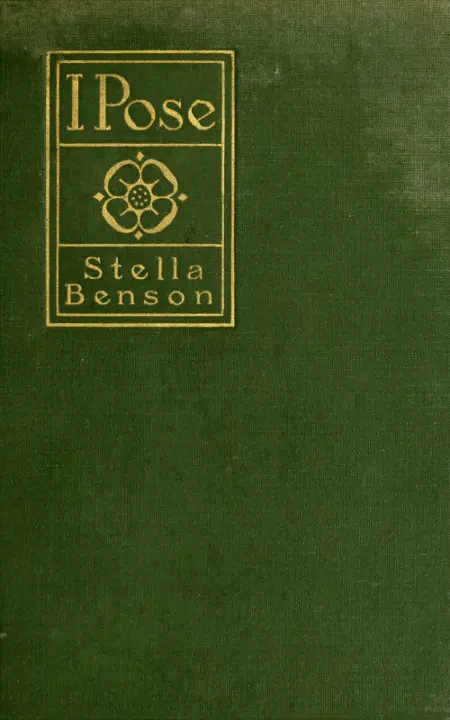
THE CLASSIC COLLECTION · 1916
"I Pose" by Stella Benson is a novel written in the early 20th century. The narrative follows the experiences of an earnest yet hapless gardener who, at 23, navigates life's challenges and absurdities in a boarding house in London. Central themes appear to include the exploration of identity, personal aspirations, and the often farcical nature of social connections, as the gardener interacts with characters such as the pragmatic girl Courtesy and a passionate suffragette. The opening of the novel introduces the gardener, who experiences a series of minor yet comical crises, including the breaking of a boot-lace. He is portrayed as a deeply introspective figure, often lost in his own thoughts and theories about life, love, and art. When he encounters Courtesy, a somewhat oblivious yet kind young woman who helps him with his boot, it sparks a mixture of indignation and admiration in him. As the gardener embarks on a whimsical journey, he later crosses paths with a fervent suffragette who ignites both his curiosity and a new set of complications in their shared tale of exploration and growth. This initial chapter sets the stage for a blend of humor and social commentary, as the gardener fumbles through his interactions while crafting a narrative that reflects both his romantic ideals and the stark realities of his existence.
Introduction adapted from the source catalogue; source summaries may be automatically generated.
Free to read · English · 76,249 words · No account needed
MAKE TIME FOR A GOOD BOOK
On by default. Untick to stop anonymous reading totals. Each page counts after 10 seconds in view. How this works.
Anonymous counting is on unless you have switched it off.
He vaulted the railing of the race-course, and the railing of the garden. “What a bore!” he said. “Then I must stop too.”
“Why?” she asked.
Very far off, the launch was nestling at the side of the Caribbeania.
“For reasons I cannot be bothered to repeat to you.”
She veiled herself in a cloud of smoke.
“You know,” he added, “this is a repetition of the Elizabeth Hammer episode. Pure hysteria. Darling.”
There was an appreciable pause.
“Why, you’re right. So it is,” said the suffragette.
“Come on,” shouted the gardener. “We can catch it yet.”
“If I come,” she said, “it will be strong, not weak.”
“Of course,” said the gardener. “Come on.”
“It would be much easier to stay here.”
“Oh, much,” panted the gardener. “Come on, come on.”
So they ran, and on the way back they discovered how interminable the main street was, and how relentless is the sun of the West Atlantic. But when they reached the wharf, the launch was still clinging to the liner.
“A guinea,” shouted the suffragette, who was experiencing the joys of very big-game hunting, “to the boatman who can get us up to the Caribbeania before she starts.”
She spoke in the voice of one accustomed to speaking in Trafalgar Square, and everybody understood her. A boat practically cut the feet from under them before she had finished speaking, and in it they splashed furiously out into the bay.
“We shall catch it,” said the gardener, rowing energetically with one finger. “I’m a man of luck.”
He was posing as one who would not utter a reproach. It was a convenient pose for all concerned. When they were about half-way, the suffragette said, “You know—it takes a little courage to admit hysteria.”
“Of course it does, my dear,” said the gardener. “I wouldn’t have done it for the world.”
Presently they were within bare shouting distance of the whale which had threatened to make Jonahs of them. A liner’s farewells are like those of a great many women I know, very elastic indeed.
“You’ll do it,” shouted a voice from the high boat-deck.
They did it. The Captain shook his finger at them from the bridge.
“What happened?” asked Courtesy, meeting them on the main deck with a shawl to put round the suffragette. Some women seem to think that a shawl, or a hot bath, or a little drop of sal-volatile are equal to any emergency under the sun.
“She didn’t know that was the last launch,” said the gardener, still posing as the magnanimous defender.
“Yes, I did,” said the suffragette.
Your reading position is saved on this browser. Take it to another device with a library code. Reading pages adapt to text, rather than matching a printed edition.
Stella Benson

Stella Benson
Stella Benson
Stella Benson
BEHIND THE BOOK
This eBook is for the use of anyone anywhere in the United States and most other parts of the world at no cost and with almost no restrictions whatsoever. You may copy it, give it away or re-use it under the terms of the Project Gutenberg License included with this eBook or online at www.gutenberg.org. If you are not located in the United States, you will have to check the laws of the country where you are located before using this eBook. Read the source licence.
The original source file, including credits and licence, is retained by this library. Request an original-format copy at no charge. Please include the book title and Project Gutenberg identifier #60346.
KEEP YOUR CURIOSITY GOING
Coulson Kernahan

Maurice Baring
Frances Wright
Cécile Tormay

Frederic Jesup Stimson

W. H. P. (William Henry Pope) Jarvis