
The Poor Man
Stella Benson
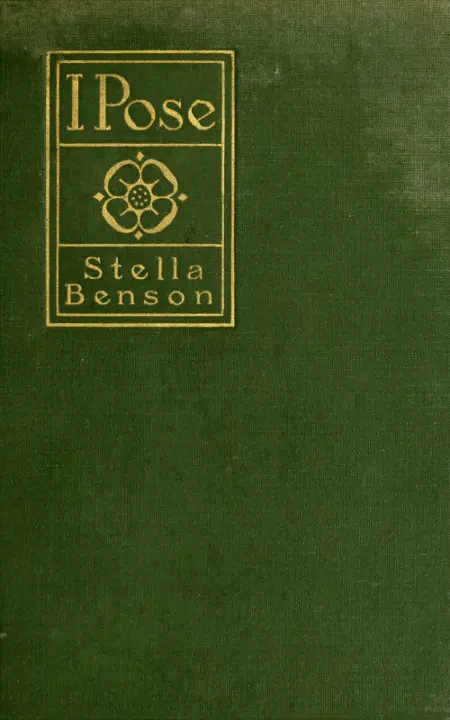
THE CLASSIC COLLECTION · 1916
"I Pose" by Stella Benson is a novel written in the early 20th century. The narrative follows the experiences of an earnest yet hapless gardener who, at 23, navigates life's challenges and absurdities in a boarding house in London. Central themes appear to include the exploration of identity, personal aspirations, and the often farcical nature of social connections, as the gardener interacts with characters such as the pragmatic girl Courtesy and a passionate suffragette. The opening of the novel introduces the gardener, who experiences a series of minor yet comical crises, including the breaking of a boot-lace. He is portrayed as a deeply introspective figure, often lost in his own thoughts and theories about life, love, and art. When he encounters Courtesy, a somewhat oblivious yet kind young woman who helps him with his boot, it sparks a mixture of indignation and admiration in him. As the gardener embarks on a whimsical journey, he later crosses paths with a fervent suffragette who ignites both his curiosity and a new set of complications in their shared tale of exploration and growth. This initial chapter sets the stage for a blend of humor and social commentary, as the gardener fumbles through his interactions while crafting a narrative that reflects both his romantic ideals and the stark realities of his existence.
Introduction adapted from the source catalogue; source summaries may be automatically generated.
Free to read · English · 76,249 words · No account needed
MAKE TIME FOR A GOOD BOOK
On by default. Untick to stop anonymous reading totals. Each page counts after 10 seconds in view. How this works.
Anonymous counting is on unless you have switched it off.
Whose idea was it to make money round? I sometimes feel certain I could control it better if it were square.
“It is mine,” said the gardener, still posing as a philosopher. “A little splinter out of the brimstone lake. Feel it.”
Courtesy smelt it without repulsion.
“Talk again,” she said. “Where would you be without money?”
“Where would I be without money? Where would I be without any of the vices? Singing in Paradise, I suppose.”
“If I pocket this threepenny bit,” said Courtesy, that practical girl, “what will you say?”
“Thank you—and good-bye,” replied the gardener. “It is my last link with
the world.”
Courtesy put it in her purse. “Good-bye,” she said. “So sorry you must go. Reserve a halo for me.”
The gardener rose immediately and walked upstairs with decision into his bedroom, which, by some freak of chance, was papered blue to match his soul. It was indeed the anteroom of the gardener’s soul. Nightly he went through it into the palace of himself.
He took out of it now his toothbrush, a change of raiment, and Hilda. It occurs to me that I have not yet mentioned Hilda. She was a nasturtium in a small pot.
On his way downstairs he met Miss Shakespeare, who held the destinies of 21 Penny Street, and did not hold with the gardener’s unexpected ways.
“Your weekly account ...” she began.
“I have left everything I have as hostages with fate,” said the gardener. “When I get tired of Paradise I’ll come back.”
On the door-step he exclaimed, “I will be a merry vagabond, tra-la-la ...” and he stepped out transfigured—in theory.
As he passed the dining-room window he caught sight of the red of Courtesy’s hair, as she characteristically continued eating.
“An episode,” he thought. “Unscathed I pass on. And the woman, as women must, remains to weep and grow old. Courtesy, my little auburn lover, I have passed on—for ever.”
But he had to return two minutes later to fetch a pocket-handkerchief from among the hostages. And Courtesy, as she met him in the hall, nodded in an unsuitably unscathed manner.
The gardener walked, with Hilda in his hand. It became night. Practically speaking, it is of course impossible for night to occur within three paragraphs of luncheon-time. But actually the day is often to me as full of holes as a Gruyère cheese.
To the gardener the beginnings of a walk which he felt sure must eventually find a place in history were torn ruthlessly out of his experience. He was thinking about red hair, and all things red.
Your reading position is saved on this browser. Take it to another device with a library code. Reading pages adapt to text, rather than matching a printed edition.
Stella Benson

Stella Benson
Stella Benson
Stella Benson
BEHIND THE BOOK
This eBook is for the use of anyone anywhere in the United States and most other parts of the world at no cost and with almost no restrictions whatsoever. You may copy it, give it away or re-use it under the terms of the Project Gutenberg License included with this eBook or online at www.gutenberg.org. If you are not located in the United States, you will have to check the laws of the country where you are located before using this eBook. Read the source licence.
The original source file, including credits and licence, is retained by this library. Request an original-format copy at no charge. Please include the book title and Project Gutenberg identifier #60346.
KEEP YOUR CURIOSITY GOING
Coulson Kernahan

Maurice Baring
Frances Wright
Cécile Tormay

Frederic Jesup Stimson

W. H. P. (William Henry Pope) Jarvis