
The Poor Man
Stella Benson
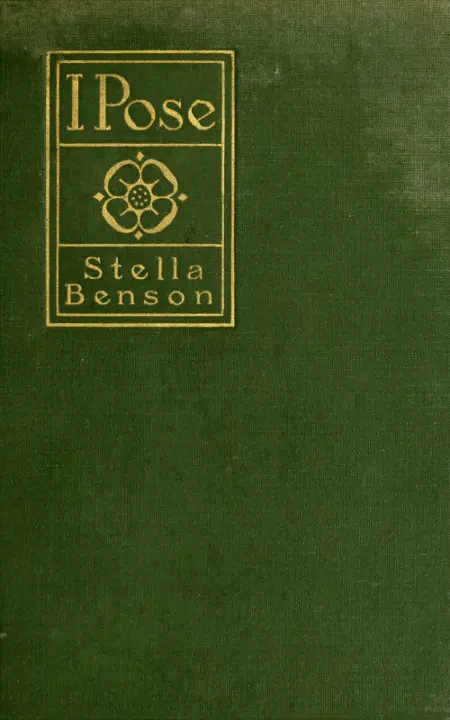
THE CLASSIC COLLECTION · 1916
"I Pose" by Stella Benson is a novel written in the early 20th century. The narrative follows the experiences of an earnest yet hapless gardener who, at 23, navigates life's challenges and absurdities in a boarding house in London. Central themes appear to include the exploration of identity, personal aspirations, and the often farcical nature of social connections, as the gardener interacts with characters such as the pragmatic girl Courtesy and a passionate suffragette. The opening of the novel introduces the gardener, who experiences a series of minor yet comical crises, including the breaking of a boot-lace. He is portrayed as a deeply introspective figure, often lost in his own thoughts and theories about life, love, and art. When he encounters Courtesy, a somewhat oblivious yet kind young woman who helps him with his boot, it sparks a mixture of indignation and admiration in him. As the gardener embarks on a whimsical journey, he later crosses paths with a fervent suffragette who ignites both his curiosity and a new set of complications in their shared tale of exploration and growth. This initial chapter sets the stage for a blend of humor and social commentary, as the gardener fumbles through his interactions while crafting a narrative that reflects both his romantic ideals and the stark realities of his existence.
Introduction adapted from the source catalogue; source summaries may be automatically generated.
Free to read · English · 76,249 words · No account needed
MAKE TIME FOR A GOOD BOOK
On by default. Untick to stop anonymous reading totals. Each page counts after 10 seconds in view. How this works.
Anonymous counting is on unless you have switched it off.
“The attitude of women towards force ...” said the gardener sententiously, “is not what psychologists make it out to be. By some of the books I’ve read, I would have thought that women worshipped brute force; I would have thought that they kept their hair long specially in order to be dragged about by it.”
“I have known very few women really well,” said Samuel; “and the ones I knew didn’t wear hair that they could be dragged about by. I should think the final disappearance of your post-impressionist wife was rather a good riddance.”
“It was neither good nor a riddance. In the same futurist sense I still call her my wife. It’s an effort, I admit, to continue to be fond of a militant suffragette, and yet somehow it’s an effort I can’t help making.”
Courtesy appeared, her hair an impudent rival to the sunset.
“I’ve brought your book from the library,” she said. “I couldn’t get any books by Somethingevsky, as you asked, so I brought The Rosary.
“I ought to congratulate you on your engagement,” said the gardener. “In fact—Mrs. Rust being out of earshot—I do.”
“Thank you,” said Courtesy, looking wonderfully pretty. “I wish everybody in the world was as happy as I am, though of course marriage is an awful risk. How’s your young woman, gardener?”
“As militant as ever,” said the gardener. “I’m expecting a letter from her any day, or a telegram any minute.”
“Why, is she coming down here?”
“Probably,” said the gardener. He had absolutely no grounds for his confidence except the ground of youth, and that, of course, is only a quicksand.
But the funny thing was she came.
For she cried all her current stock of militancy away on Thursday night, and by three o’clock on Good Friday afternoon she was on the door-step of 21 Penny Street.
“Even if slavery and polygamy become the fashion,” she argued characteristically, “Scottie Brown will still be wrongfully detained in quarantine.”
It was not to Scottie Brown that her thoughts turned when the maid told her that Mr. Gardener had gone to the country for Easter.
“But I must see him,” said the suffragette, who was a little drunk with the bitter beverage of tears.
“It’s impossible,” said the maid. “I tell you—he’s away.”
The word “impossible” as usual acted as a challenge.
“Might I have his address?” said the caller.
After consultation with Miss Shakespeare the address was produced, and the suffragette’s decision made.
Your reading position is saved on this browser. Take it to another device with a library code. Reading pages adapt to text, rather than matching a printed edition.
Stella Benson

Stella Benson
Stella Benson
Stella Benson
BEHIND THE BOOK
This eBook is for the use of anyone anywhere in the United States and most other parts of the world at no cost and with almost no restrictions whatsoever. You may copy it, give it away or re-use it under the terms of the Project Gutenberg License included with this eBook or online at www.gutenberg.org. If you are not located in the United States, you will have to check the laws of the country where you are located before using this eBook. Read the source licence.
The original source file, including credits and licence, is retained by this library. Request an original-format copy at no charge. Please include the book title and Project Gutenberg identifier #60346.
KEEP YOUR CURIOSITY GOING
Coulson Kernahan

Maurice Baring
Frances Wright
Cécile Tormay

Frederic Jesup Stimson

W. H. P. (William Henry Pope) Jarvis