The Story of Mary MacLane
Mary MacLane
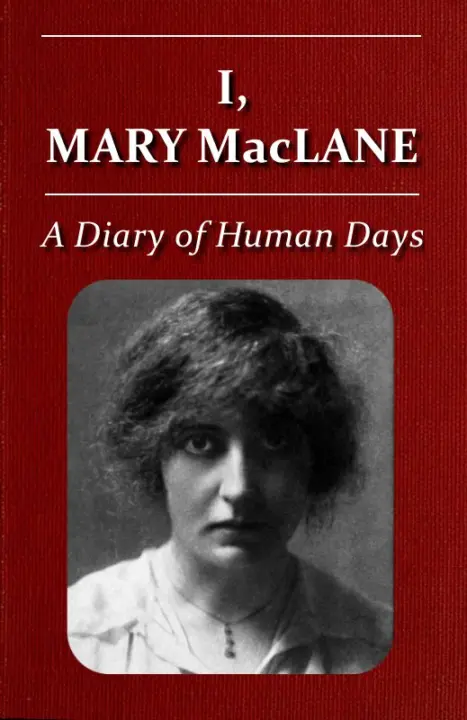
THE CLASSIC COLLECTION · 1917
"I, Mary MacLane: A Diary of Human Days" by Mary MacLane is a diary-style reflection written in the early 20th century. The narrative serves as an introspective exploration of the author's thoughts, feelings, and identity, focusing on themes of loneliness, self-importance, and the human experience. The central figure, Mary MacLane, is a complex individual grappling with her own ego and existential musings, aiming to capture the essence of her existence. At the start of the diary, MacLane's self-exploration is immediate and intense, as she confronts her inner self with an array of conflicting emotions. She opens with a somber setting, detailing her surroundings in Butte, Montana, and reflects on her feelings of despair and isolation. Through her candid confessions, she reveals her various selves, blending humor and melancholy. The passage lays the groundwork for her journey of self-discovery, emphasizing her position as both an individual and as a representative of a broader female experience, all while asserting that her focus is solely on her own unique existence.
Introduction adapted from the source catalogue; source summaries may be automatically generated.
Free to read · English · 62,791 words · No account needed
MAKE TIME FOR A GOOD BOOK
On by default. Untick to stop anonymous reading totals. Each page counts after 10 seconds in view. How this works.
Anonymous counting is on unless you have switched it off.
Close at the east edge of this Butte is a barren ridge of Rockies that is sudden and big and breathing-looking, barbarously personal, touched with varying gifted color-moods and glowering morose color-passions: at the south the snow-topped Highlands lie long faëry solitary miles away, caressed at their summits by thin soft sun-rings and sun-vapors of salmon and sea-green and turquoise and mauve: at the west a gray-shadowed desert burns red-gold in the setting sun and sleeps in pearl-and-ashen stillness under midnight stars: at the north smaller spurs of the range break into foothills and bluffs and gulches, restful wastes of lonely stones and blurred radiances of tawny sand: on top of all the rarefied air of these plateau heights refracts the light into hot dazzling prisms at any vagrant flash of sun on a trailing storm-fringe. This Butte is capriciously decorated with sweet brilliant metallic orgies of color at any time, all times, as if by whims of pagan gods lightly drunk and lightly mad.
St. Paul-Minnesota looks a greenlier-prettier town: the Arizona Cañon looks vastly more fearfully beautiful: Wichita-Kansas probably looks more a regular town: Akron-Ohio doubtless looks more Americanly reassuring: Rome-Italy must have a more ‘settled’ look: New York is much larger and much brighter-looking.
Only this Butte looks deeply and exactly like Butte-Montana.
Its insistent charm is that it goes on strongly resembling itself
year after year.
There is love in me for this Butte.
I am profoundly lonely in it: my life-tissues are long-familiar with the feel of it: its mournful beauty has entered like thin punishing iron into my Soul: and my love for it is made of those things. For no reason I feel love for this Butte.
As much as for the mountains in their mourning intimateness I feel love for all the outsides and surfaces of the town itself: the stone streets full of houses and shops and stores and brick walls and laundry-wagons and persons: the vacant lots where boys play ball: the school-buildings which for twenty years have needed the same green grass around them and the same playgrounds for school-children to play in (and will go on twenty years needing them): the little mines in unexpected midtown blocks with their engines and hoists and scaffolds and green coppery dumps: the big mines on the Hill busily working day and night, a bristling citadel of smoke-stacks and tall buildings above the treasure-drifts and tunnels that come down honeycombing the town under its streets and hoses and yield up wealths of monthly millions: the desolate wind-swept cemetery on the Flat: the Timber Butte: the School of Mines: the Brophy grocery-window full of attractive grocery-food: the St. Gaudens statue of Marcus Daly: the few sweet green trees on North Montana Street by the court-house: the edge of Walkerville: Ex-Senator Clark’s old-fashioned closed house in Granite Street: the stone Episcopal Church with the memorial windows: the surprising steep Idaho Street hill: the old Reduction Works reminiscent of the bygone Heinze and the bold buccaneering days: the Montana Street cemetery at last kempt and nurtured green as Beloit-Wisconsin: the little rocky Missoula gulch: the North Excelsior Street neighborhood where I wrote my Devil and Gray-dawn book: the Butte High School where I studied and meditated youngly: the old Library where I used to get a variety of books in my gangling girlhood: the electric ore-trains going to Anaconda: the vegetable Chinamen: the Post-Office News-stand: the Mexican tamale venders in the early night: the sweet green trees and other greenness in people’s yards garnered and cherished in a way which would astonish Toledo-Ohio: the brilliant sparkling look of the town from far out on the Flat late in the evening, like a mammoth broken tiara of starry diamonds, twinkling points of blue and orange and cerise and violet, fired and flung against a mountainside of dark velvet,--an aspect intensely Butte: the cool mosquitoless summer nights: the Anaconda Standard: the sulphurous smoky deadly-cold winter mornings: the Cornish and Irish and Austrian and Finn miners: the little slim green onions in the markets: the noise and color and morale of the crowds on a Miner’s Union day: the markets on the afternoon shade side of West Park Street full of crabs and lobsters from Seattle and shining fish from California, and mushrooms and froglegs and squabs and hothouse things from hereabouts: the Parrot smelter: the Chinese gardens at Nine Mile: the Italian village of Meaderville: the fortified battlemented look of the town at the east of South Butte: the mystic familiar sand-and-barrenness--
Your reading position is saved on this browser. Take it to another device with a library code. Reading pages adapt to text, rather than matching a printed edition.
Mary MacLane
Mary MacLane
BEHIND THE BOOK
This eBook is for the use of anyone anywhere in the United States and most other parts of the world at no cost and with almost no restrictions whatsoever. You may copy it, give it away or re-use it under the terms of the Project Gutenberg License included with this eBook or online at www.gutenberg.org. If you are not located in the United States, you will have to check the laws of the country where you are located before using this eBook. Read the source licence.
The original source file, including credits and licence, is retained by this library. Request an original-format copy at no charge. Please include the book title and Project Gutenberg identifier #43556.
KEEP YOUR CURIOSITY GOING
John L. Ransom

Herman W. Mudgett

Harriet Monroe
Daniel Dulany Addison
Charles Lanman

Harold Rosher