
The Writing of News A Handbook with Chapters on Newspaper Correspondence and Copy Reading
Charles G. (Charles Griffith) Ross
THE CLASSIC COLLECTION · 1915
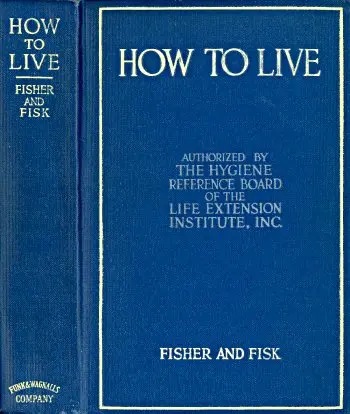
"How to Live: Rules for Healthful Living Based on Modern Science" by Fisher and Fisk is a scientific publication written in the early 20th century. This work serves as a comprehensive guide on individual hygiene and healthful living, drawing upon advancements in modern science to promote physical well-being and longevity. The book aims not only to prolong life but to enhance its quality, advocating for a holistic approach to health that includes diet, exercise, and environmental factors. The opening of the book introduces the mission of the Life Extension Institute, which emphasizes the importance of health awareness and disease prevention. Authors Irving Fisher and Eugene Lyman Fisk outline their commitment to disseminating knowledge about individual hygiene as a critical component of overall health. They highlight a cultural shift from viewing health merely as the absence of illness toward embracing a proactive approach that enhances vitality and physical efficiency. The introductory sections emphasize the positive implications of health choices and lay the groundwork for subsequent discussions on essential topics like air quality, nutrition, and lifestyle practices that contribute to a longer, more fulfilling life.
Introduction adapted from the source catalogue; source summaries may be automatically generated.
Free to read · English · 68,221 words · No account needed
MAKE TIME FOR A GOOD BOOK
On by default. Untick to stop anonymous reading totals. Each page counts after 10 seconds in view. How this works.
Anonymous counting is on unless you have switched it off.
Physical Traits.--Character of the facial features, color of the eyes, hair and skin, stature, weight, energy, strength, endurance, quickness, commanding presence, vivacity of manner, general bodily soundness; also defects of many kinds, such as those of the nervous system, of the speech, eyes, ears, skin, also baldness, defects of the muscular system, blood, thyroid glands, vascular system, respiratory system, digestive system, reproductive organs; also defects and peculiarities of the skeleton, etc. This does not mean that all shortcomings are inherited. It does mean, however, that the type of organism is inheritable which lacks resistance to the germs and other precipitating factors in bringing about the disease.
Mental Traits.--Among the mental characteristics known to arise from traceable hereditary sources may be mentioned factors in musical ability, artistic composition, literary ability, mechanical skill, calculating ability, inventive ability, memory, ability to spell, fluency in conversation, aptness in languages, military talent, acquisitiveness, attention, story-telling, poetic ability; and, on the other hand, insanity, feeble-mindedness of many types, epilepsy. These are suggestive of the inheritability of many other mental traits not yet studied.
Moral Traits.--Among the moral traits known to possess inheritable elements are generosity, piousness, independence, industry, will-power, faithfulness, fairness, sociability, reliability, self-reliance, tendency to work hard, perseverance, carefulness, impulsiveness, temperance, high-spiritedness, joviality, benignity, quietness, cheerfulness, hospitality, sympathy, humorousness, love of fun, neighborliness, love of frontier life, love of travel and of adventure. The same may be said of immoral traits, such as criminality, pauperism, delinquency, irascibility, lying, truancy, superstition, clannishness, secretiveness, despondency, slyness, exclusiveness, vanity, cunning, cruelty, quickness to anger, revengefulness, etc.
[Sidenote: Distribution of Traits]
These physical, mental and moral peculiarities are not scattered evenly through the population, but exist on certain family lines only.
For instance, one-tenth of the deaths that occur in the United States are from tuberculosis. But this does not mean that one-tenth of all families die of the disease. On the contrary, some families lose more than half their numbers from it, while other families lose almost none at all. The 10 per cent. is simply the average of all. The percentage is high among the Irish, and low among the Jews. Life insurance companies take consideration of this fact in examining applicants for insurance. A family history of tuberculosis counts against even a healthy applicant, not because of a belief that tuberculosis is directly inheritable, but because non-resistant types, especially light-weights, are known to be transmitted. A profound influence toward checking this malady would evidently be exerted if the matings on the family lines exhibiting the characteristic of susceptibility were to cease, and thus the perpetuation of susceptible types checked.
Your reading position is saved on this browser. Take it to another device with a library code. Reading pages adapt to text, rather than matching a printed edition.
BEHIND THE BOOK
This eBook is for the use of anyone anywhere in the United States and most other parts of the world at no cost and with almost no restrictions whatsoever. You may copy it, give it away or re-use it under the terms of the Project Gutenberg License included with this eBook or online at www.gutenberg.org. If you are not located in the United States, you will have to check the laws of the country where you are located before using this eBook. Read the source licence.
The original source file, including credits and licence, is retained by this library. Request an original-format copy at no charge. Please include the book title and Project Gutenberg identifier #19598.
KEEP YOUR CURIOSITY GOING
Charles G. (Charles Griffith) Ross
Hannah Webster Foster

Emily Lawless
Edwin Hamlin Carr

Charles De Lano Hine
Andrew Ure