
The Writing of News A Handbook with Chapters on Newspaper Correspondence and Copy Reading
Charles G. (Charles Griffith) Ross
THE CLASSIC COLLECTION · 1915
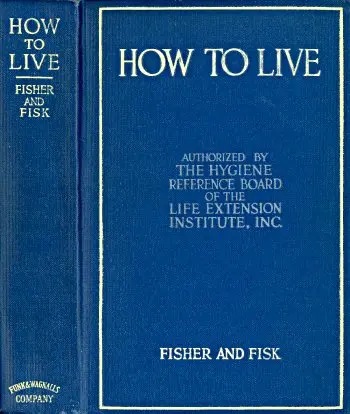
"How to Live: Rules for Healthful Living Based on Modern Science" by Fisher and Fisk is a scientific publication written in the early 20th century. This work serves as a comprehensive guide on individual hygiene and healthful living, drawing upon advancements in modern science to promote physical well-being and longevity. The book aims not only to prolong life but to enhance its quality, advocating for a holistic approach to health that includes diet, exercise, and environmental factors. The opening of the book introduces the mission of the Life Extension Institute, which emphasizes the importance of health awareness and disease prevention. Authors Irving Fisher and Eugene Lyman Fisk outline their commitment to disseminating knowledge about individual hygiene as a critical component of overall health. They highlight a cultural shift from viewing health merely as the absence of illness toward embracing a proactive approach that enhances vitality and physical efficiency. The introductory sections emphasize the positive implications of health choices and lay the groundwork for subsequent discussions on essential topics like air quality, nutrition, and lifestyle practices that contribute to a longer, more fulfilling life.
Introduction adapted from the source catalogue; source summaries may be automatically generated.
Free to read · English · 68,221 words · No account needed
MAKE TIME FOR A GOOD BOOK
On by default. Untick to stop anonymous reading totals. Each page counts after 10 seconds in view. How this works.
Anonymous counting is on unless you have switched it off.
[52] Bangs, L. Bolton: Some Observations on the Effects of Tobacco in Surgical Practice, Medical Record, LXXIII, March 4, 1908, pp. 421-23-51.
[53] Cannon, Aub. Binger: Effect of Nicotin Injection on Adrenal Secretion, Jour. Pharm. and Exper. Therap., 1912, p. 381; Editorial, Nicotin and Adrenals, Jour. A. M. A., 1912, LXIII, p. 1287.
[54] Hare, Hobart Amory: Fiske Prize Dissertation, No. 34, p. 1884. Dixon, A. S.: Proceedings of the Academy of Natural Sciences, Philadelphia, Nov. 11, 1884.
[55] Reynolds, H. S.: Jour. A. M. A., May 30, 1914, LXII, p. 1723.
[56] Annual Report of the Commissioner of Internal Revenue, 1914, p. 34, Government Printing Office, Washington, D. C.
Bamberger, J.: Hygiene of Cigar Smoking, Abstr. Jour. A. M. A., 1904, XLIII, p. 706; Zur Hygienie des Rauchens, Munchen. med. Wchnschr., 1904, LI, pp. 1344-1345.
Current Comment: Some New Evidence on the Tobacco Question, Jour. A. M. A., 1912, LIX, p. 1798.
Editorial: The Pharmacology of Tobacco Smoke, Jour. A. M. A.. 1909,
LII, p. 386.
Editorial: The Use of Tobacco, Jour. A. M. A., 1910, LX, p. 32.
Editorial: Tobacco-Smoking and Circulation, Jour. A. M. A., 1914,
XLII, p. 461.
Hochwart, L. Von Frankl: Die Nervösen, Erkrankungen der Tabakraucher, Deutsch. med. Wchnschr., 1911, XXXVII, pp. 2273, 2321.
Index Catalogue of the Library of the Surgeon-General's Office, second series, XVIII, pp. 297-306.
Larrabee, R. C.: Tobacco and the Heart, Abstr. Jour. A. M. A., 1903, XLI, p. 50. Read before the Massachusetts Medical Society, June, 1903.
Pel: Un cas de psychose tabagique, Ann. med. Chir., 1911, XIX,
p. 171.
[Sidenote: Infection]
Bacteria play a part in most colds. In some cases there is a general infection, with local symptoms, as in grippe; in others there is a local infection, with mixed classes of bacteria. It is probable that these various forms of bacteria are constantly present in the nasal secretions, but do not cause trouble until the local resistance or the general resistance is in some way lowered.
[Sidenote: Nasal Obstruction]
In many, the susceptibility to colds is due to abnormalities in the nose or throat. Nasal obstruction is a very common condition. The nose, like the eye, is usually an imperfect organ. These obstructions are often the result of adenoids in childhood, which interfere with the proper development of the internal nasal structures. Malformation of the teeth and dental arches in childhood are frequent and often neglected causes of nasal obstruction. Such malformations are caused by the arresting of the growth of the upper jaw and nasal structures. Correction of the deformity of the arches often renders nasal surgery unnecessary. Such conditions not only predispose to colds, but increase their severity and the danger of complicating infection of the bony cavities in the skull that communicate with the nose. They also increase the liability to involvement of the middle ear and of the mastoid cells which are located in the skull just behind the ear. The importance, therefore, of having the nose and throat carefully examined, and of having any diseased condition of the mucous membrane or any obstruction corrected must be apparent. All who suffer from recurrent colds should take this precaution before winter sets in.
Your reading position is saved on this browser. Take it to another device with a library code. Reading pages adapt to text, rather than matching a printed edition.
BEHIND THE BOOK
This eBook is for the use of anyone anywhere in the United States and most other parts of the world at no cost and with almost no restrictions whatsoever. You may copy it, give it away or re-use it under the terms of the Project Gutenberg License included with this eBook or online at www.gutenberg.org. If you are not located in the United States, you will have to check the laws of the country where you are located before using this eBook. Read the source licence.
The original source file, including credits and licence, is retained by this library. Request an original-format copy at no charge. Please include the book title and Project Gutenberg identifier #19598.
KEEP YOUR CURIOSITY GOING
Charles G. (Charles Griffith) Ross
Hannah Webster Foster

Emily Lawless
Edwin Hamlin Carr

Charles De Lano Hine
Andrew Ure