THE CLASSIC COLLECTION✦The Gentle Art of Cooking WivesCLASSIC FREE BOOKS
The Gentle Art of Cooking Wives
Elizabeth Strong Worthington
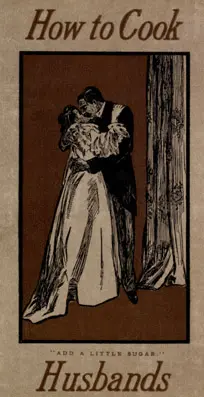
THE CLASSIC COLLECTION · 1899
"How to Cook Husbands" by Elizabeth Strong Worthington is a humorous novel written in the late 19th century. The book takes a whimsical approach to marriage and domestic life, presenting a blend of satire and practical advice aimed at women who are contemplating the challenges of marriage. The main character appears to be a thirty-four-year-old unmarried woman who reflects on marriage, family life, and the complexities involved in maintaining a husband's happiness, effectively likening it to a culinary art. The opening portion of the book introduces readers to a playful recipe for "cooking" husbands, suggesting that they require careful management to thrive in a marital setting. The narrator reflects on a humorous newspaper recipe, contemplating her own experience with domestic management and the difficulties of relationships. As she muses about having a husband and the trials of managing a household, she draws vivid analogies between cooking and the nuances of marriage, giving insights into her thoughts about love, companionship, and the dynamics of gender roles in her society. The tone is light-hearted, yet it subtly addresses deeper themes of loneliness, longing for companionship, and the expectations placed upon women.
Introduction adapted from the source catalogue; source summaries may be automatically generated.
Free to read · English · 29,092 words · No account needed
MAKE TIME FOR A GOOD BOOK
On by default. Untick to stop anonymous reading totals. Each page counts after 10 seconds in view. How this works.
Anonymous counting is on unless you have switched it off.
I was no longer lonely, no longer shut out from it all--there was the bird on its nest; the little wife and mother in her home; and I--I was very near them--akin to them. I had seen myself in my home, with my child, and my husband; I had felt his dear arms about me, and his dear face close to mine. I was no longer an alien. I, too, had a place in the heart of another.
Still I sat and dreamed, and even the ringing of my door-bell failed to rouse me: but when I heard the maid say to someone:
"She has been downstairs to-night, but I think she has gone up now, and I don't like to call her."
I started forward, saying quickly:
"No, I am here--I will see any one."
And so he came in, but it was not the one I expected. It was Mr.
Gregory.
I think that he found my embarrassment on greeting him both gratifying and encouraging, but its cause was alien to his thought. I was brought back from another world, as it were, with a rude shock, and in my enfeebled condition, consequent upon a severe illness could not control myself. Indeed I did not feel that I was mistress of myself at any time during the evening.
After a word or two, which I cannot recall, I stammered out:
"I was not expecting you this evening--I had not sent for you."
"I know that you have not," he answered--then dropping his voice a trifle, he added, "I could not wait any longer--I found it difficult to wait so long as this. I hardly dared hope that I might see you this evening, but I felt I must try."
Intent upon sparing him the pain of a spoken declaration, I exclaimed:
"Oh, Mr. Gregory, don't! please don't say anything more. I am not deserving of your esteem and kindness."
He came nearer me, and his voice was at once tender and reverent, as he
said:
"You are more than worthy of what I have to offer, which is myself, and
all that I have."
"Don't!" I cried again; "don't say anything more! Let us imagine this
unsaid!"
"Such words can never be recalled," he said gravely.
"They must be," I persisted; "I cannot accept! I have nothing to give in
return!"
A look of disappointment came over his face, and if I mistake not, it was shaded with displeasure. "I hardly expected this, Miss Leigh, I have hardly been led to expect this."
Your reading position is saved on this browser. Take it to another device with a library code. Reading pages adapt to text, rather than matching a printed edition.
BEHIND THE BOOK
This eBook is for the use of anyone anywhere in the United States and most other parts of the world at no cost and with almost no restrictions whatsoever. You may copy it, give it away or re-use it under the terms of the Project Gutenberg License included with this eBook or online at www.gutenberg.org. If you are not located in the United States, you will have to check the laws of the country where you are located before using this eBook. Read the source licence.
The original source file, including credits and licence, is retained by this library. Request an original-format copy at no charge. Please include the book title and Project Gutenberg identifier #26210.
KEEP YOUR CURIOSITY GOING
Coulson Kernahan

Maurice Baring
Frances Wright
Cécile Tormay

Frederic Jesup Stimson

W. H. P. (William Henry Pope) Jarvis