THE CLASSIC COLLECTION✦The Gentle Art of Cooking WivesCLASSIC FREE BOOKS
The Gentle Art of Cooking Wives
Elizabeth Strong Worthington
THE CLASSIC COLLECTION · 1899
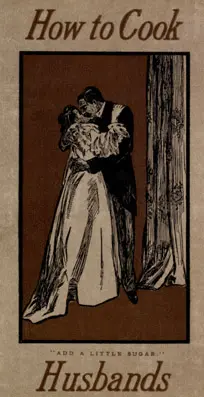
"How to Cook Husbands" by Elizabeth Strong Worthington is a humorous novel written in the late 19th century. The book takes a whimsical approach to marriage and domestic life, presenting a blend of satire and practical advice aimed at women who are contemplating the challenges of marriage. The main character appears to be a thirty-four-year-old unmarried woman who reflects on marriage, family life, and the complexities involved in maintaining a husband's happiness, effectively likening it to a culinary art. The opening portion of the book introduces readers to a playful recipe for "cooking" husbands, suggesting that they require careful management to thrive in a marital setting. The narrator reflects on a humorous newspaper recipe, contemplating her own experience with domestic management and the difficulties of relationships. As she muses about having a husband and the trials of managing a household, she draws vivid analogies between cooking and the nuances of marriage, giving insights into her thoughts about love, companionship, and the dynamics of gender roles in her society. The tone is light-hearted, yet it subtly addresses deeper themes of loneliness, longing for companionship, and the expectations placed upon women.
Introduction adapted from the source catalogue; source summaries may be automatically generated.
Free to read · English · 29,092 words · No account needed
MAKE TIME FOR A GOOD BOOK
On by default. Untick to stop anonymous reading totals. Each page counts after 10 seconds in view. How this works.
Anonymous counting is on unless you have switched it off.
I was tired that night, and it was a luxury to lie flat upon my back on the beach, listening to the rhythmical thud of the big, long wave at my feet, and the song of the stars overhead. There is something unspeakably tranquillizing in the studded dome of heaven; there is also something unspeakably sad. It bends over the struggling, yearning, aching human heart, as a mother, who has attained that peace which is the outgrowth of suffering, bends over the passion, the sobbing, and the despair of her child.
"Hush, hush, it is all for the best."
"I cannot--will not bear it!"
"Hush, you know not what you say. God's hand is in it all."
"There is no God in this, or if there is, He hates me!"
"Ah, my child, He loves you with unutterable love, and pities with unutterable pity. Yet a little while, and the day shall shine upon you; then you will know--a little while."
I turned from the great vault above me, and looked out upon the restive waters, and as I turned I saw a shadowy Mrs. Purblind sitting beside me on the beach, and questioning with sad eyes and heart, the stars that bent to listen.
"I have tried," she said; her face, usually so thoughtless,
tear-stained, and quivering.
"Yes, I know you have tried," I answered; "I have seen that!"
"But he is just the same."
"Yes, and will be for a long time, and you will have to go on trying for years, if you want to carry him back to the old days," I said.
"That's one of the hardest things in all the world!" she cried passionately, "if we stop doing right--the right stops with us, but if we stop doing wrong and begin to do right, the wrong goes on."
"Not for always," I said, looking up to the stars.
"Oh, for so long!"
The great dome rich with gems, and deep with peace, bent over her, and by and by her sobs ceased.
"You are trying, I know," I reiterated, "but you don't understand--you can't, for you have only a woman's nature."
"What should I have, pray?"
"A woman's, and a man's, and a child's, to be a perfect wife and mother; that is, you must be able to comprehend them all. Your husband came home cross to-night."
"Yes, irritable toward us all, and I so hoped to have everything
pleasant this evening."
"He, too, had his hopes to-day, and they were flung to the ground, and
broken before his eyes."
"What do you mean?"
"The special agent of a company that he has for a year been working to
get, has been in town."
Your reading position is saved on this browser. Take it to another device with a library code. Reading pages adapt to text, rather than matching a printed edition.
BEHIND THE BOOK
This eBook is for the use of anyone anywhere in the United States and most other parts of the world at no cost and with almost no restrictions whatsoever. You may copy it, give it away or re-use it under the terms of the Project Gutenberg License included with this eBook or online at www.gutenberg.org. If you are not located in the United States, you will have to check the laws of the country where you are located before using this eBook. Read the source licence.
The original source file, including credits and licence, is retained by this library. Request an original-format copy at no charge. Please include the book title and Project Gutenberg identifier #26210.
KEEP YOUR CURIOSITY GOING
Coulson Kernahan

Maurice Baring
Frances Wright
Cécile Tormay

Frederic Jesup Stimson

W. H. P. (William Henry Pope) Jarvis