THE CLASSIC COLLECTION✦Anecdotes for boysCLASSIC FREE BOOKS
Anecdotes for boys
Harvey Newcomb
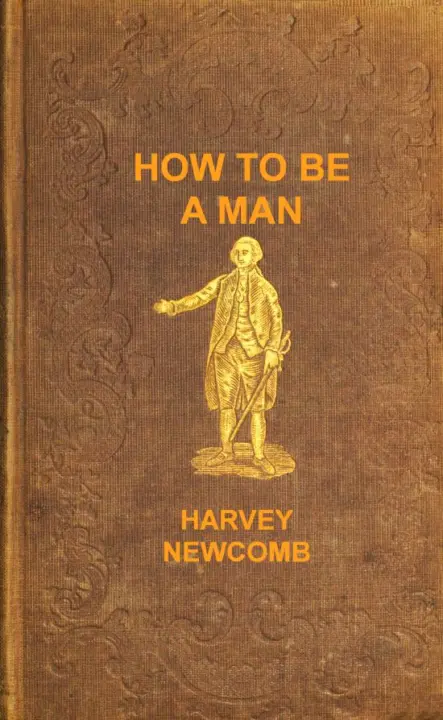
THE CLASSIC COLLECTION · 1847
"How to be a Man: A Book for Boys" by Harvey Newcomb is a guidebook written in the mid-19th century. The text serves as a manual for young boys, aiming to provide valuable insights and practical advice on character formation, personal conduct, and the development of virtues essential for becoming respectable men. The author emphasizes the importance of good habits, manners, and moral principles in the formative years of adolescence. The opening of the book sets a foundational tone by discussing the significance of childhood and youth in shaping one's character. Newcomb draws poignant analogies, comparing young boys' potential for growth to that of a tree, stressing that the actions and behaviors formed during these early years have lasting impacts. He urges readers to be mindful of their conduct and attitudes, implying that the character they build now is crucial for their future roles as responsible adults. He encourages manly virtues—courage, generosity, and respect—while advising against immature behavior, thus seeking to instill a sense of duty and consciousness regarding their long-term development.
Introduction adapted from the source catalogue; source summaries may be automatically generated.
Free to read · English · 47,229 words · No account needed
MAKE TIME FOR A GOOD BOOK
On by default. Untick to stop anonymous reading totals. Each page counts after 10 seconds in view. How this works.
Anonymous counting is on unless you have switched it off.
III. THE AFFECTIONS.--I shall not undertake, in this place, to give a full and complete definition of the affections. It will answer my present purpose, to say that the affections are the feelings or emotions of the heart. This may not be philosophically accurate; but when my readers come, at a more advanced age, to study mental and moral philosophy, they can enlarge their views. For all practical purposes, this will answer. And what I mean by educating the affections is, to acquire the habit of controlling the feelings, so as to suppress the bad and cultivate the good. You hear people talk of good and bad dispositions. But a good disposition is only the preponderance of good feelings; or in other words, where good feelings and good tempers prevail, we say that person has a good disposition; but if bad feelings and evil tempers predominate, we say he has a bad disposition. There is no doubt a difference in natural dispositions. But with suitable efforts, and especially with the aid of God’s grace, much may be done to cultivate and improve them.
With these preliminary remarks, I proceed to give some rules for the cultivation of the affections.
1. CHECK THE FIRST RISINGS OF ILL-TEMPER.--The smith, who makes an edged tool,--an axe, a knife, or any such instrument,--first works the iron and steel into the form which he wishes, and then tempers it. While he is working it, he wants to keep it soft, so that he can work it easy; and this he does by keeping it hot. But after he gets it finished, he heats it in the fire, and dips it in water, so as to cool it suddenly, and that makes it hard. But, if he left it so, it would be so hard that it would break all to pieces as soon as it was used. So he holds it again over the fire, and heats it a little, to take out a part of the temper, and make it just of the hardness that he wishes. An instrument that is very hard is called high-tempered; one that is very soft is low-tempered. This is a good illustration of temper as it appears in us. A high temper is one that is easily excited, and that runs so high as to be in danger of doing great mischief. A low temper is a disposition easy and indifferent, like a knife tempered so little that the edge will turn the first time it is used. Now you want temper enough not to be indifferent, but not so much as to fly all in pieces. And I know nothing on which your usefulness and happiness more depend, than in the proper regulation of your temper; and not your own happiness alone, but the happiness of all around you. One of the first and greatest moral lessons is, to learn to control your temper. “He that is slow to anger,” says Solomon, “is better than the mighty; and he that ruleth his spirit, than he that taketh a city.” But, “He that hath no rule over his own spirit is like a city that is broken down and without walls.” By indulging an ungoverned temper, you expose yourself to many evils. You show the weak points of your character, and lose the good opinion of others, and your own self-respect. You cannot help thinking meanly of yourself after having broken out in a sudden gust of anger, or given indulgence to a peevish, fretful spirit. To be ill-humored, peevish, or cross, is to be unhappy, and to make others unhappy. But a sweet temper will not only make you happy, but, like the balmy breezes of a summer evening, it will shed a sweet fragrance all around you. Nothing will render your character more unlovely than ill-temper. Nor, if habitually indulged at home, can it be concealed even from the most careless observer. You will carry the mark of it wherever you go. There will be the ill-natured scowl, the knit brow, the distorted features, which no sweet-scented soap can wash out, and no cosmetic hide. It will spoil the most elegant features, and mar the most beautiful countenance. But a sweet temper will hide a thousand defects, and render the most ordinary features beautiful and lovely. I do not know any thing that adds a greater charm to the youthful countenance. But, if you would have a sweet temper, you must suppress every ill-natured feeling; never suffer yourself to be angry at trifles, nor get into a storm of passion on any account: neither indulge a peevish, fretful disposition; but, on the contrary, cultivate and cherish good-nature, in every possible way. Strive to be pleased with every thing around you, unless it is positively bad; and never suffer the ill-humors of others to disturb your own tranquillity. The noisy cataract comes splashing its muddy waters over the side of the mountain, leaping from rock to rock, now shouting, now murmuring, now scolding, now rushing on in the wildest fury, till it plunges into the great river; but the river rolls quietly on its majestic way, undisturbed by the babbling waterfall, which only makes a momentary ripple upon the surface of its placid waters. But, suppose the river should stop its course, to quarrel with the noisy waterfall, what would be the consequence? The whole country would be inundated with the fury of its pent-up waters. You cannot afford to get angry with every one that is disposed to treat you ill. It costs too much. Did you ever see a dog barking at the moon? And what did the moon do? It went right straight on, and minded nothing about it. The moon can’t afford to stop and quarrel with the dog that barks at it.
Your reading position is saved on this browser. Take it to another device with a library code. Reading pages adapt to text, rather than matching a printed edition.
BEHIND THE BOOK
This eBook is for the use of anyone anywhere in the United States and most other parts of the world at no cost and with almost no restrictions whatsoever. You may copy it, give it away or re-use it under the terms of the Project Gutenberg License included with this eBook or online at www.gutenberg.org. If you are not located in the United States, you will have to check the laws of the country where you are located before using this eBook. Read the source licence.
The original source file, including credits and licence, is retained by this library. Request an original-format copy at no charge. Please include the book title and Project Gutenberg identifier #56263.
KEEP YOUR CURIOSITY GOING

Abby Morton Diaz
Helen Hunt Jackson
Mary Frances Blaisdell
Stuart Dodgson Collingwood

Kate Douglas Smith Wiggin
Hesba Stretton