THE CLASSIC COLLECTION✦Anecdotes for boysCLASSIC FREE BOOKS
Anecdotes for boys
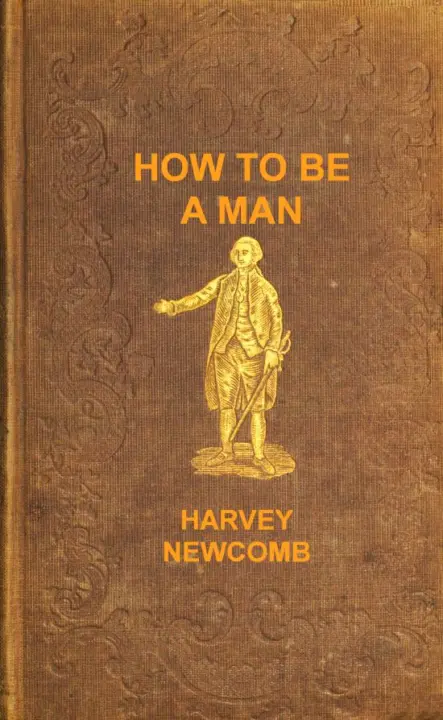
Harvey Newcomb
THE CLASSIC COLLECTION · 1847
"How to be a Man: A Book for Boys" by Harvey Newcomb is a guidebook written in the mid-19th century. The text serves as a manual for young boys, aiming to provide valuable insights and practical advice on character formation, personal conduct, and the development of virtues essential for becoming respectable men. The author emphasizes the importance of good habits, manners, and moral principles in the formative years of adolescence. The opening of the book sets a foundational tone by discussing the significance of childhood and youth in shaping one's character. Newcomb draws poignant analogies, comparing young boys' potential for growth to that of a tree, stressing that the actions and behaviors formed during these early years have lasting impacts. He urges readers to be mindful of their conduct and attitudes, implying that the character they build now is crucial for their future roles as responsible adults. He encourages manly virtues—courage, generosity, and respect—while advising against immature behavior, thus seeking to instill a sense of duty and consciousness regarding their long-term development.
Introduction adapted from the source catalogue; source summaries may be automatically generated.
Free to read · English · 47,229 words · No account needed
MAKE TIME FOR A GOOD BOOK
On by default. Untick to stop anonymous reading totals. Each page counts after 10 seconds in view. How this works.
Anonymous counting is on unless you have switched it off.
Having made these general remarks, I will give you a few simple directions for making the Sabbath both profitable and delightful. The evening before the Sabbath, do every thing that can be done, to save doing on the Sabbath. Leave nothing to be done in God’s time that you can do in your own time. Lay out your Sabbath day’s clothing, and see that it is all in order, that you may have no brushing or mending to be done Sabbath morning. Rise early in the morning, and, while washing and dressing, which you will do in as little time as possible, think of your need of the “washing of regeneration and renewing of the Holy Ghost,” and of being clothed in the clean, white robe of Christ’s righteousness. Then offer up your thanksgiving to God for his mercy in preserving your life, and giving you another holy Sabbath, and pray for his presence and blessing through the day. If you are called by your father or mother, for any service of the family, go to it cheerfully; and as soon as you can retire again, read a portion of Scripture, and pray to God for such particular blessings upon yourself as you feel your need of, and for his blessing upon others on his holy day. If you attend the Sabbath school, you will need to look over your lesson for the day, and endeavor to apply it to your own heart; for I suppose you do not put off the study of your lesson till Sabbath morning.
Never stay at home on the Sabbath, unless you are necessarily detained. Make it a matter of principle and calculation always to be there. On your way to the house of God, do not engage in any unnecessary conversation, especially that which is vain, light, or trifling, to divert your mind, and unfit you for the worship of God. Do not stand about the doors of the meeting-house, to salute your friends, or to converse with your young companions. This practice, I am sorry to say, prevails in the country, among young people of both sexes, to the great annoyance of well-bred people. It is a great temptation to conversation improper for the Sabbath. It is very unpleasant for people who are passing, to have the way blocked up, so as to have to press through a crowd. Neither do people like to be stared at, by a company of rude young people, as they pass into the house of God. I am sorry to admit, also, that this unmannerly practice is not confined to youth; but that many elderly people set the example. Instead of doing so, go directly to your seat, in a quiet, reverent manner; and if any time intervenes before the commencement of public worship, do not spend it in gazing about the house, to observe the dress of different persons; but take the opportunity to compose your mind, to call in all vagrant thoughts, to get your heart impressed with a sense of God’s presence, and to lift up your soul in silent prayer for his blessing. Or, if the time be long, you can employ a part of it in reading the Bible, or devotional hymns. But do not carry any other book to the house of worship to be read there. If you have a Sabbath school library book, it will be better not to read it at such a time, because you will be likely to get your mind filled with it, so as to interfere with the services of the sanctuary. But the Bible and hymn book, being of a devotional character, will tend to prepare your mind for worship. Above all, do not read a newspaper, of any kind, at such a time. Even a religious newspaper would tend to divert your mind from that serious, tender, devout frame, which you ought to possess when you engage in the solemn public worship of the Great Jehovah. But I have often witnessed more serious improprieties, in the house of God, than any of these. I have seen young people whispering and laughing during the sermon; and it is a very common thing to see them gazing about during the singing, as though they had nothing to do with the service. I have also seen them engaged in reading, in the time of sermon, or of singing. Some, also, are seen, in time of prayer, with their eyes wide open, gazing about. Such conduct would be very unmannerly, if nobody were concerned but the minister; for it is treating him as though he were not worthy of your attention. But when it is considered that he speaks to you in the name of God, and that, in prayer, while you stand up with the congregation, you profess to join in the prayer; and while the hymn is sung, you profess to exercise the devout feeling which it expresses,--when all these things are considered, such conduct as that I have described appears impious in a high degree.
Your reading position is saved on this browser. Take it to another device with a library code. Reading pages adapt to text, rather than matching a printed edition.
BEHIND THE BOOK
This eBook is for the use of anyone anywhere in the United States and most other parts of the world at no cost and with almost no restrictions whatsoever. You may copy it, give it away or re-use it under the terms of the Project Gutenberg License included with this eBook or online at www.gutenberg.org. If you are not located in the United States, you will have to check the laws of the country where you are located before using this eBook. Read the source licence.
The original source file, including credits and licence, is retained by this library. Request an original-format copy at no charge. Please include the book title and Project Gutenberg identifier #56263.
KEEP YOUR CURIOSITY GOING

Abby Morton Diaz
Helen Hunt Jackson
Mary Frances Blaisdell
Stuart Dodgson Collingwood

Kate Douglas Smith Wiggin
Hesba Stretton