
Right and wrong in Massachusetts
Maria Weston Chapman
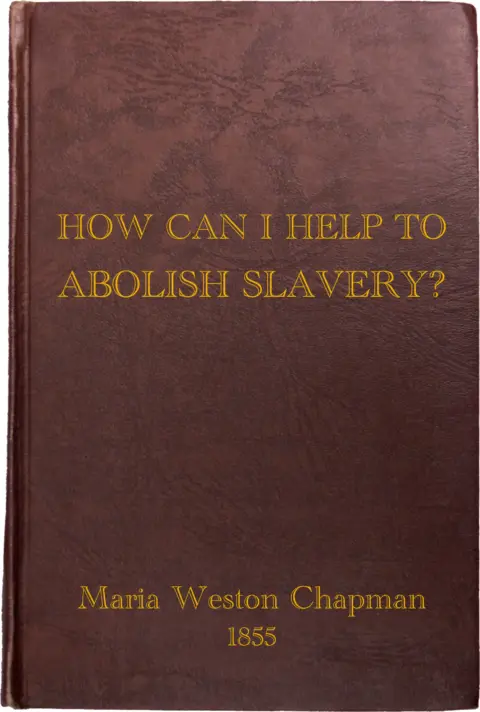
THE CLASSIC COLLECTION · 1855
"How Can I Help to Abolish Slavery?" or, Counsels to the Newly Converted by Maria Weston Chapman is a poignant anti-slavery tract written during the early to mid-19th century. The book serves as a passionate call to action for individuals seeking to contribute to the abolition of slavery, emphasizing moral duty and the transformative power of dedicated activism. It encapsulates the fervor of the abolitionist movement in a time of great social and political upheaval in the United States. In the text, Chapman addresses the newly converted abolitionist, offering guidance on effective methods to combat slavery beyond mere political solutions. She critiques various approaches, such as colonization and political party involvement, arguing that they serve to maintain the status quo rather than challenge the institution of slavery directly. Instead, she advocates for joining the American Anti-Slavery Society and engaging in grassroots efforts that focus on moral persuasion and elevating public consciousness. Through her compelling narrative, Chapman underscores the importance of unwavering commitment to the cause and the necessity of collaborative action to effect meaningful change, ultimately presenting abolition as both a moral imperative and a collective struggle.
Introduction adapted from the source catalogue; source summaries may be automatically generated.
Free to read · English · 4,687 words · No account needed
MAKE TIME FOR A GOOD BOOK
On by default. Untick to stop anonymous reading totals. Each page counts after 10 seconds in view. How this works.
Anonymous counting is on unless you have switched it off.
“Establish free-labor warehouses.” Indeed! is that a good business calculation that leads to expend in search of the products of free labor the time and money that would make all labor free? While wrong exists in the world, you cannot (short of suicide) but draw your every life breath in involuntary connection with it; nor is conscience to be satisfied with any thing short of a complete devotion to the anti-slavery cause of the life that is sustained by slavery. We may draw good out of evil: we must not do evil, that good may come. Yet I counsel you to honor those who eat no sugar, as you ask no questions for conscience’s sake; while you despise those who thrust forward such a call upon conscience, impossible, in the nature of things, to be obeyed, and therefore not binding, as if it were the end of the law for righteousness, in order to injure Garrison, the great and good founder of the American Anti-Slavery Society. I have seen men stand drawing bills of exchange between England and the United States, while uttering maledictions against the American Anti-Slavery Society, because it does not, as such, occupy itself with the free produce question. This I brand as pro-slavery in disguise—sheer hypocrisy.
You see, my friend, that I have replied to your question in the conviction that you desire the abolition of slavery above all other things in this world; as one assured that it is the great work of Christianity in our age and country, as the conflict with idolatry was in other times and climes. Thus you see the salvation of the souls, the maintenance of the rights, the fulfilment of the duties, and the preservation of the free institutions of Americans, to depend upon the extirpation of this accursed and disgraceful disease which is destroying them. If I had reason to think you merely desirous to make sectarian and political capital out of a holy thought and a sacred purpose originated by others—if you were merely contriving defences for what is indefensible, and trying to save the credit of what is disgraceful, trying to throw dust, and change the issue, and pay tithes of cumin to delay justice, in order to spare your own insignificant self in this greatest conflict of light and darkness, good and evil, which the world has now to show—if you had been trying how to seem creditably interested in what ought to be an American’s first business, and calculating how little instead of how much you might sacrifice to the soul-exalting cause of freedom—if you were but trying to get yourself or some friend into office by the judicious use of ideas which, as a republican and a Christian, you ought to give yourself wholly to be used by—if you were the hired agent of some demisemiquaver of a movement which tacked anti-slavery to its other titles, in order to establish a claim on the purses of abolitionists—in any of these cases I would not have stopped to talk with you. Your interest being the thing you had at heart, I should not counsel; I should be called, in the name of all that is holy, to condemn you, in order that blame might awaken conscience. But the case, I trust, is different. I may, then, say to you, with all the confidence, nay, certainty, which is inseparable from experience, knowledge, and utter self-abnegation in the matter, WORK WITH THE AMERICAN ANTI-SLAVERY SOCIETY. Lavish your time, your money, your labors, your prayers, in that field, which is the world, and you will reap a thousand fold, now and hereafter. This movement moves. It is alive. Hear how every thing mean and selfish struggles, hisses, and dies under its influence. Never, since the world was, has any effort been so clear, so strong, so uncompromising, so ennobling, so holy, and, let me add, so successful. It is “the bright consummate flower” of the Christianity of the nineteenth century. Look at those who “have not resisted the heavenly vision” it presented them of a nation overcoming its evil propensities, and doing right at all risks; ask them whether it has not saved their souls alive; ask them if it has not made them worshippers of the beauty and sublimity of high character, till they are ready to “know nothing on earth but Jesus Christ and him crucified.” For this they give all—wealth, youth, health, strength, life. Worldly success, obtained by slackening their labors against slavery, (and it is easy to have it on those terms at any moment, so placable a monster is the world,) strikes them like failure and disgrace. They have “scorned delights, and lived laborious days,” till at length they feel it no sacrifice, but the highest joy. All this the American Anti-Slavery Society demands of you. DO IT! and be most grateful for the opportunity of fulfilling a work which is its own exceeding great reward. DO IT, and find yourself the chosen of God, to keep alive in this nation, degraded and corrupted by slavery, the noble flame of Christian faith, the sentiment of honor and fidelity, the instinct of high-mindedness, the sense of absolute, immutable duty, the charm of chivalrous and poetic feeling, which would make of the poorest Americans the Christian gentlemen of the world.
Your reading position is saved on this browser. Take it to another device with a library code. Reading pages adapt to text, rather than matching a printed edition.
Maria Weston Chapman
BEHIND THE BOOK
This eBook is for the use of anyone anywhere in the United States and most other parts of the world at no cost and with almost no restrictions whatsoever. You may copy it, give it away or re-use it under the terms of the Project Gutenberg License included with this eBook or online at www.gutenberg.org. If you are not located in the United States, you will have to check the laws of the country where you are located before using this eBook. Read the source licence.
The original source file, including credits and licence, is retained by this library. Request an original-format copy at no charge. Please include the book title and Project Gutenberg identifier #68031.
KEEP YOUR CURIOSITY GOING

David Patterson (Spirit) Hatch
Cécile Tormay

Moritz Busch
Coulson Kernahan
John L. Ransom

Ralph Waldo Emerson