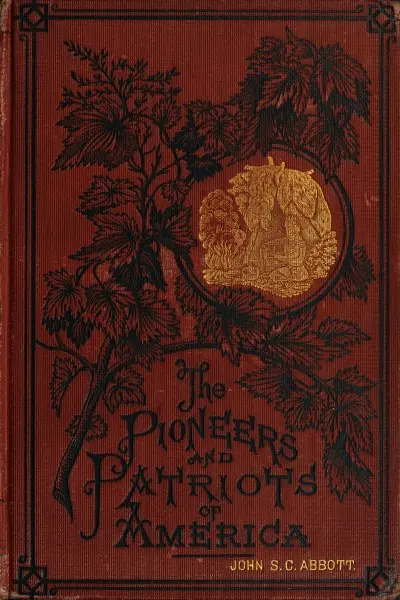
George Washington; or, Life in America One Hundred Years Ago.
John S. C. (John Stevens Cabot) Abbott
THE CLASSIC COLLECTION · 1898
"Hortense" by John S. C. Abbott is a historical account written in the late 19th century. The work delves into the life and times of Hortense de Beauharnais, the stepdaughter of Napoleon Bonaparte, illuminating the dramatic backdrop of the French Revolution and its aftermath. The narrative explores not only the tribulations and triumphs of its central character but also the complex relationships and societal changes that defined her era. The opening of the book introduces Josephine, Hortense's mother, recounting her struggles from an early age, including a forced marriage and the turbulent impacts of the French Revolution. As the narrative progresses, it highlights Josephine's enduring love for her children, even amidst political turmoil and personal tragedies, culminating in the execution of her first husband. The gripping early chapters set the stage for Hortense's rise in the imperial court as the daughter of Napoleon, exploring themes of loyalty, love, and the complexities of family ties during a revolutionary age.
Introduction adapted from the source catalogue; source summaries may be automatically generated.
Free to read · English · 69,594 words · No account needed
MAKE TIME FOR A GOOD BOOK
On by default. Untick to stop anonymous reading totals. Each page counts after 10 seconds in view. How this works.
Anonymous counting is on unless you have switched it off.
"Duroc! gracious Heaven, my presentiments never deceive me. This is a
sad day, a fatal day."
Immediately alighting from his horse, he walked to and fro for a short time absorbed in painful thoughts, while the thunders of the battle resounded unheeded around him. Then turning to Caulaincourt, he said,
"Alas! when will fate relent? When will there be an end of this? My eagles will yet triumph, but the happiness which accompanies them is fled. Whither has he been conveyed? I must see him. Poor, poor Duroc!"
The Emperor found the dying marshal in a cottage, still stretched upon the camp litter by which he had been conveyed from the field. Pallid as marble from the loss of blood, and with features distorted with agony, he was scarcely recognizable. The Emperor approached the litter, threw his arms around the neck of the friend he so tenderly loved, and exclaimed, in tones of deepest grief, "Alas! then is there no hope?"
"None whatever," the physicians replied.
The dying man took the hand of Napoleon, and gazing upon him affectionately, said, "Sire, my whole life has been devoted to your service, and now my only regret is that I can no longer be useful to you." Napoleon, in a voice almost inarticulate with emotion, said,
"Duroc, there is another life. There you will await me."
"Yes, sire," the marshal faintly replied, "but that will be thirty years hence. You will then have triumphed over your enemies, and realized the hopes of our country. I have lived an honest man. I have nothing to reproach myself with. I have a daughter, to whom your Majesty will be a father."
Napoleon was so deeply affected that he remained for some time in silence, incapable of uttering a word, but still affectionately holding the hand of his dying friend.
Duroc was the first to break the silence. "Sire," he said, "this sight
pains you. Leave me."
The Emperor pressed his hand to his lips, embraced him affectionately, and saying sadly, "Adieu, my friend," hurried out of the room.
Supported by Marshal Soult and Caulaincourt, Napoleon, overwhelmed with grief, retired to his tent, which had been immediately pitched in the vicinity of the cottage. "This is horrible," he exclaimed. "My excellent, my dear Duroc! Oh, what a loss is this!"
His eyes were flooded with tears, and for the moment, forgetting every thing but his grief, he retired to the solitude of his inner tent.
Your reading position is saved on this browser. Take it to another device with a library code. Reading pages adapt to text, rather than matching a printed edition.
John S. C. (John Stevens Cabot) Abbott
John S. C. (John Stevens Cabot) Abbott
John S. C. (John Stevens Cabot) Abbott
John S. C. (John Stevens Cabot) Abbott
BEHIND THE BOOK
This eBook is for the use of anyone anywhere in the United States and most other parts of the world at no cost and with almost no restrictions whatsoever. You may copy it, give it away or re-use it under the terms of the Project Gutenberg License included with this eBook or online at www.gutenberg.org. If you are not located in the United States, you will have to check the laws of the country where you are located before using this eBook. Read the source licence.
The original source file, including credits and licence, is retained by this library. Request an original-format copy at no charge. Please include the book title and Project Gutenberg identifier #24659.
KEEP YOUR CURIOSITY GOING
Cécile Tormay

Moritz Busch
John L. Ransom
Frances Wright
Cécile Tormay

Mabel Potter Daggett