
The Writing of News A Handbook with Chapters on Newspaper Correspondence and Copy Reading
Charles G. (Charles Griffith) Ross
THE CLASSIC COLLECTION · 1909
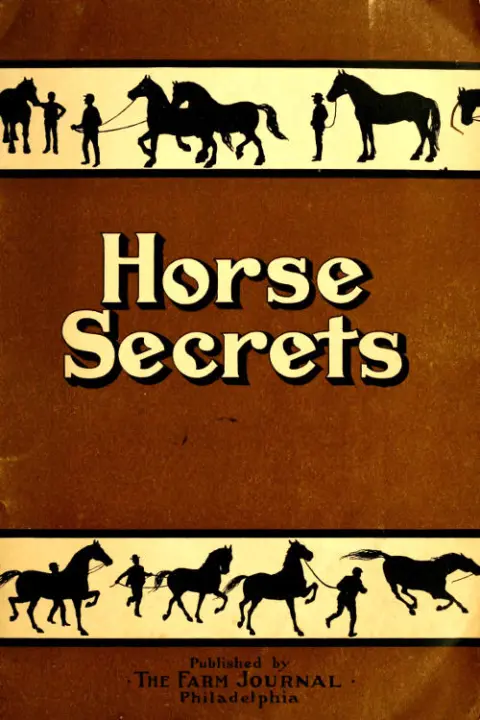
"Horse Secrets" by A. S. Alexander is a practical guide on veterinary science and horse trading written in the early 20th century. The text outlines various insights and tips related to horse breeding, feeding, care, and the often deceptive practices in horse trading, aiming to educate buyers and sellers alike. Dr. Alexander's extensive experience in veterinary science serves as a foundation for the valuable information presented in this work. At the start of the book, the author introduces his background and explains the intention behind this compilation of knowledge—namely, to protect both buyers and sellers from the common tricks and dishonest practices encountered in the horse trading market. He emphasizes the importance of being informed and vigilant to prevent loss and exploitation. The opening chapters delve into topics such as proper foal feeding, peculiarities of horse behavior, and the necessity of recognizing deceit in horse sales, effectively preparing readers for the more intricate details covered in subsequent sections.
Introduction adapted from the source catalogue; source summaries may be automatically generated.
Free to read · English · 24,423 words · No account needed
MAKE TIME FOR A GOOD BOOK
On by default. Untick to stop anonymous reading totals. Each page counts after 10 seconds in view. How this works.
Anonymous counting is on unless you have switched it off.
=Legs Go.=—See Market Rules No. 5.
=Light in the Timber.=—Light boned below knees and hocks.
=Little Green.=—Awkward, poorly broken; may not pull.
=Lop Ear.=—Ears dropping over. May be a dummy.
=Lugger.=—Pulls or lugs on the bit.
=Lunker.=—An exceptionally big, heavy-boned horse.
=Makes a Little Noise.=—A slight roarer or whistler.
=Mallenders.=—Scurfy or eczematous condition of skin back of knees.
=Mecatched.=—Jewish term for a heavey horse.
=Mechanical Choker.=—A horse that roars when pulling a heavy load uphill, by getting the chin down to the chest, but is otherwise sound.
=Megrims.=—Fits; staggers; sudden falling.
=Michigan Age.=—Old.
=Michigan Pad.=—See Cushion. A puff on forward edge of hind cannon just
below hock.
=Moon-Blind; Moon-Eyed.=—Eyes diseased or blind from periodic or
recurrent ophthalmia.
=Mug.=—A greenhorn or buyer from the country.
=Nicked.=—Tail operated upon by severing the muscles to “set up” or
straighten it.
=Nickel’s Worth of Hair Off.=—Wire cut.
=Nigger-Heeled.=—Front toes turned out; heels in.
=Old Skin or Skate.=—Aged, decrepit, or worn-out horse.
=One Bum Lamp.=—One eye blind, diseased or unsound.
=Outside Cushion.=—Same as Cushion or Michigan Pad.
=Over-Reach.=—Stride takes hind feet farther forward than the point at which the fore ones were picked up.
=Paddle.=—“Winging” out with fore feet.
=Palsy.=—Shiverer; chorea.
=Parrot Mouth.=—Upper incisor (pincher) teeth protruding over lower incisors. Upper jaw longer and projecting over under jaw.
=Pig-Eye.=—Small, retracted eyes. Characteristic of some horses of French breed. May indicate imperfect vision.
=Pigeon-Toed.=—Front toes turned in. Opposite of nigger-heeled.
=Pilgrim.=—An old, worn-out horse. A good old “has been.”
=Pin-Hipped.=—Hipped from fracture of point of ilium.
=Pink-Eye.=—Pinky, as a market term, applied to moon blindness. Correctly speaking, epizootic, cellulitis, or influenza, especially affecting the membranes of the eyes.
=Plug.=—An old, worn-out horse, or one of poor shape.
=Poll-Evil.=—Swelling and abscess, similar to fistulous withers,
affecting poll of head.
=Pones.=—Lumps of fat on body of mule.
=Posting.=—Rider rising and falling in saddle with each alternate step of
horse when trotting.
=Puffs.=—Soft swellings involving joints or tendons. Distensions of synovial bursal and capsular ligaments. Thoroughpins, wind-galls, bog-spavin.
=Quarter Crack.=—Fissure in wall of hoof running from hair toward sole at
quarter.
=Quittor.=—Enlargement of the hoof head (coronet) having one or more openings (pipes or sinuses) discharging pus and connecting with diseased cartilage or other tissues.
=Rat Tail.=—Slim, almost hairless tail.
=Rejects.=—Horses returned to seller on account of unsoundness, or for
other reasons.
=Rickety.=—Horse affected with rickets (rachitis). Same as Bobber or Jig
Back.
=Ridgeling. Original.=—Cryptorchid. Testicles retained in abdomen or
inguinal canal.
Your reading position is saved on this browser. Take it to another device with a library code. Reading pages adapt to text, rather than matching a printed edition.
BEHIND THE BOOK
This eBook is for the use of anyone anywhere in the United States and most other parts of the world at no cost and with almost no restrictions whatsoever. You may copy it, give it away or re-use it under the terms of the Project Gutenberg License included with this eBook or online at www.gutenberg.org. If you are not located in the United States, you will have to check the laws of the country where you are located before using this eBook. Read the source licence.
The original source file, including credits and licence, is retained by this library. Request an original-format copy at no charge. Please include the book title and Project Gutenberg identifier #61276.
KEEP YOUR CURIOSITY GOING
Charles G. (Charles Griffith) Ross
Hannah Webster Foster

Emily Lawless
Edwin Hamlin Carr

Charles De Lano Hine
Andrew Ure