THE CLASSIC COLLECTION✦Andersonville diaryCLASSIC FREE BOOKS
Andersonville diary
John L. Ransom
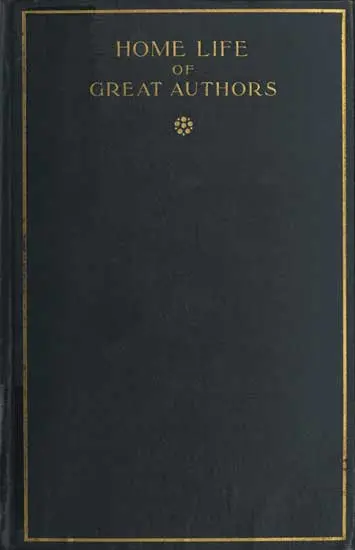
THE CLASSIC COLLECTION · 1887
"Home Life of Great Authors" by Hattie Tyng Griswold is a collection of biographical sketches written in the late 19th century. The book explores the personal lives and home environments of several notable authors, focusing on aspects often overlooked in traditional biographies. Rather than providing in-depth critiques or comprehensive life histories, the work offers readers a glimpse into the domestic settings and unique circumstances that shaped the creative processes of these influential literary figures. The opening of the text presents a preface in which Griswold explains her intention to write these sketches for busy individuals who seek to connect with their favorite authors on a more personal level without delving into extensive literature. The beginning sections introduce Wolfgang Goethe's early life, detailing his upbringing in a gloomy house in Frankfort-on-the-Main, the influence of his parents, especially his supportive mother, and his initial manifestations of genius through early education and romantic interests. Thus, the initial chapters set the stage for a series of intimate portrayals that reveal how the inner lives of these authors were shaped by their home experiences.
Introduction adapted from the source catalogue; source summaries may be automatically generated.
Free to read · English · 126,765 words · No account needed
MAKE TIME FOR A GOOD BOOK
On by default. Untick to stop anonymous reading totals. Each page counts after 10 seconds in view. How this works.
Anonymous counting is on unless you have switched it off.
Burns in his twenty-third year took the farm at Mossgiel, where he first became acquainted with Jane Armour. This lady was the daughter of a respectable mason in the village of Mauchline, where she was the reigning beauty and belle. It was almost love at first sight upon the part of both, and a close intimacy soon sprung up between them. Burns was very handsome at this time, gay and fascinating in manners, and a more experienced and highly-placed woman than Jane Armour might have been excused for loving the wild young poet. For wild he undoubtedly was, even at this time,--so much so that her parents objected to the friendship. He was nearly six feet high, with a robust yet agile frame, a finely formed head, and an uncommmonly interesting countenance. His eyes were large, dark, and full of ardor and animation. His conversation was full of wit and humor. He was very proud, and would be under pecuniary obligation to no one. He was also very generous with his own money. Of the first five hundred pounds which he received for his poems, he immediately gave two hundred to his brother Gilbert to help toward the support of their mother; and he was always as ready to share whatever sum he had with those he loved.
The consequences of the intimacy between the poet and Jane Armour were soon such as could not be concealed, and the farm having been a disastrous speculation in the hands of Burns, he was not in a situation to marry, although extremely anxious to do so. It was therefore agreed upon between them that he should give her a written acknowledgment of marriage, and then sail for Jamaica, and push his fortunes there. This arrangement, however, did not suit the lady's father, who had a very poor opinion of Burns's general character, and he prevailed upon Jane to destroy this document. Under these circumstances she became the mother of twins, and great scandal followed Burns even to Edinburgh, where he had been induced to stop instead of sailing for Jamaica. But his poems, which he succeeded in publishing at this time, gave him a name and some money, and he returned to Mossgiel, and getting her father to consent, married Jane, and moved on to a farm six miles from Dumfries. He had become a lion, and the tables of the neighboring gentry were soon open to him, as the houses of the great had been in Edinburgh. Those were the days of conviviality, and Burns took his part in the hilarity of the table, soon with very direful consequences to himself and his family. He made many resolutions of amendment; but temperance was a very rare virtue in those days, and Burns, who could not bear it, was expected to drink just as much as those who could bear it, and who could afford it. His genius suffered from this irregular life, and in a little while he was not capable of doing justice to himself in his writings; but he continued to be good company at table, and to be invited with the local magnates, long after he had become a confirmed drunkard. The farm was given up, and he soon depended entirely upon his seventy pounds a year, the pay of an exciseman. He felt his degradation very deeply, and had fearful struggles with his temptation, but was always overborne. The horrible sufferings of genius in such thraldom have never been adequately represented, nor indeed can they ever be. When the will has become so enfeebled that no real resistance can be made, while yet pride and kind-heartedness survive, the agony of such a man is appalling. He loves his family, he knows better than any other all they suffer for his sake; he determines a thousand times to reform, only to find himself powerless to do so. He strives with more than the heroism of a martyr many times, but he is beaten. We often blame him for his defeat, but there comes a time to such a man when defeat is inevitable. Happy he who makes his manful struggle while there is yet time. Poor Burns, alas, did not. He went from bad to worse, while his wife and five small children suffered as the families of such men always suffer. From October, 1795, to the January following, an accident confined him to his house. A few days after he began to go out, he dined at a tavern, and returned home about three o'clock of a very cold morning, benumbed and intoxicated. This was followed by rheumatism. He was never well again, though he lived until the end of June. His mind during all this time was wrung with the most poignant agony in regard to the family he must leave,--for he knew he should not recover. It is heart-rending to read of his sufferings and remorse, and to know that on the morning of her husband's funeral Mrs. Burns gave birth to another child. It is pleasant to learn that a subscription was immediately taken up for the destitute family, which placed them in comparative comfort.
Your reading position is saved on this browser. Take it to another device with a library code. Reading pages adapt to text, rather than matching a printed edition.
BEHIND THE BOOK
This eBook is for the use of anyone anywhere in the United States and most other parts of the world at no cost and with almost no restrictions whatsoever. You may copy it, give it away or re-use it under the terms of the Project Gutenberg License included with this eBook or online at www.gutenberg.org. If you are not located in the United States, you will have to check the laws of the country where you are located before using this eBook. Read the source licence.
The original source file, including credits and licence, is retained by this library. Request an original-format copy at no charge. Please include the book title and Project Gutenberg identifier #31133.
KEEP YOUR CURIOSITY GOING
John L. Ransom

Herman W. Mudgett

Harriet Monroe
Daniel Dulany Addison
Charles Lanman

Harold Rosher