THE CLASSIC COLLECTION✦An outlaw’s diary: the CommuneCLASSIC FREE BOOKS
An outlaw’s diary: the Commune
Cécile Tormay
THE CLASSIC COLLECTION · 1910
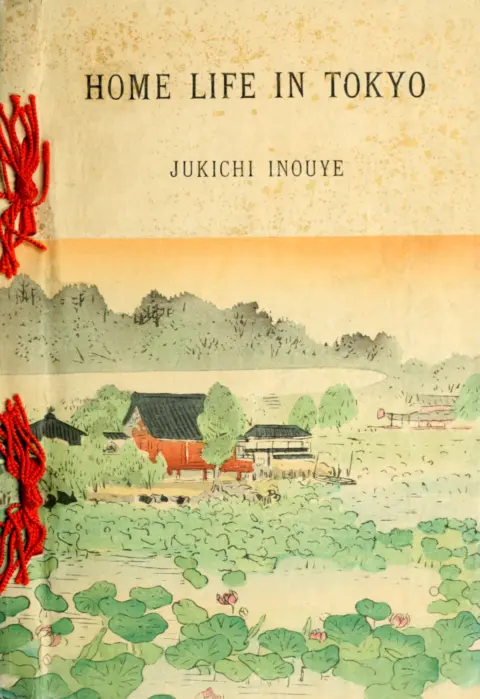
"Home Life in Tokyo" by Jukichi Inouye is a cultural account written in the early 20th century. This work offers a unique perspective on Japanese domestic life from the viewpoint of a native, contrasting with many contemporary writings that typically reflect Western views of Japan. The author explores various aspects of life in Tokyo, covering topics such as family structure, food customs, housing, and social etiquette. The opening of the book presents the author's intention to provide a detailed description of daily life in Tokyo, highlighting the previous absence of native accounts on such homely matters. He emphasizes the importance of localization—focusing solely on Tokyo in order to capture the intricacies and peculiarities of urban life there. Inouye discusses Tokyo's emergence as the capital after the fall of the Shogunate, while addressing the city’s growth during the Edo period and the socio-political backdrop leading to its modern characteristics. The preface sets the tone for an enlightening exploration of how traditional Japanese customs interact with the inroads of modernization, a theme central to the book.
Introduction adapted from the source catalogue; source summaries may be automatically generated.
Free to read · English · 95,306 words · No account needed
MAKE TIME FOR A GOOD BOOK
On by default. Untick to stop anonymous reading totals. Each page counts after 10 seconds in view. How this works.
Anonymous counting is on unless you have switched it off.
Most houses in Japan are made of wood. In Tokyo only a little over one-eighth of the houses are made of other materials, that is, of brick, stone, or plaster, so that the capital may be said to be a city of wooden houses. It is therefore, needless to add, often ravaged by fire. In old Yedo fires were known as the “Flowers of Yedo,” being as much among the great sights of the city as the cherry-blossoms on the south-east bank of the River Sumida, the morning-glories of Iriya, or the chrysanthemums of Dangozaka, for which Tokyo is still noted. Under the feudal government occurred several fires which burnt down tens of thousands of houses, and even under the new regime disastrous fires are not unknown. On two occasions, in 1879 and 1881, over ten thousand houses were destroyed; but the last great conflagration took place in 1892 when four thousand buildings were devoured by the flames. Since then, though fires have been frequent enough, their ravages have been more limited, thanks to a more efficient system of fire-brigades and plentiful supply of water. During the last few years the average number of houses annually destroyed has been about seven hundred, which cover an area of seven and a half acres; and as the total area of buildings in Tokyo is three thousand seven hundred acres, the fires destroy every year one five-hundredth part of the city. The actual loss of property is not so great as might at first sight be supposed; for it is a notorious fact that houses in Tokyo are not so carefully constructed as in Kyoto and other cities, and the greater risks from fire incurred in the capital discourage the building of costly houses unless they are to stand on extensive grounds. Formerly it was calculated that the average life of a house was about thirty years; but now the lesser frequency of fires would give them a much longer lease. This is comforting to house-owners; but it must be confessed that wooden houses more than thirty years old are not pleasant to live in. The timber, unless extremely well-seasoned, becomes warped and the pillars of the house get out of the perpendicular, with the result that the sliding-doors refuse to close flat upon them but leave a space at the top or bottom through which the cold wind whistles at will in winter. This is the case even with carefully-built houses, while in others the defects are still more glaring. The jerry-builder’s hand is conspicuous in most houses to let, and the rent is high compared with the cost of construction. The landlords protest that they have to charge a high rent as whole blocks may be swept away in one night through malice or stupidity. And there is something to be said for their argument, especially as fire insurance is still far from universal, for it is strange when one comes to think of it that there are not more destructive fires. It is so easy to burn down a wooden house. A rag soaked with kerosene is enough to destroy any number of houses and is the favourite means with incendiaries who hope to steal household goods which are brought out in confusion into the street whenever there is a fire in the neighbourhood. Besides, a slight act of carelessness or neglect may lead to a terrible conflagration; a candle left too near a paper sliding-door was the origin of the great fire of 1892 already mentioned. Similarly, a kerosene lamp or a brazier overturned, a pinch of lighted tobacco or an unextinguished cigar-end, an over-heated stove or a piece of red-hot charcoal dropped on the floor, these are among the commonest causes of fires; and even the cheap Japanese matches, of which as the splints are not dipped in paraffin, at least half a dozen are needed to light a cigarette in the open air, are responsible for as many fires every year. Since such slight accidents may at any time lead to great disasters, the inhabitants, as they go to bed, are never sure, especially in crowded quarters, of still having a roof over their heads next morning. They may be aroused from their slumbers by the dreaded triple peal of the alarm-bell and find the neighbouring street or next door wrapped in flames, and just manage to run out of their houses with nothing but the clothes on their backs. We are, however, so used to the fire-alarm that if the peals are double to indicate that the fire is in the next district, we only get out of bed to look at it from idle curiosity and turn in again unless our house is leeward of the burning district or we have to run to the assistance of a friend there; and if the bell gives only single peals, which signify that at least one district intervenes between the burning street and the fire-lookout, we turn in our beds and perhaps picture to ourselves the lively time they must be having in that street. A fire is, on account of its uncertainty and suddenness, only less feared than an earthquake, and the general feeling among the citizens is that of insecurity.
Your reading position is saved on this browser. Take it to another device with a library code. Reading pages adapt to text, rather than matching a printed edition.
BEHIND THE BOOK
This eBook is for the use of anyone anywhere in the United States and most other parts of the world at no cost and with almost no restrictions whatsoever. You may copy it, give it away or re-use it under the terms of the Project Gutenberg License included with this eBook or online at www.gutenberg.org. If you are not located in the United States, you will have to check the laws of the country where you are located before using this eBook. Read the source licence.
The original source file, including credits and licence, is retained by this library. Request an original-format copy at no charge. Please include the book title and Project Gutenberg identifier #65870.
KEEP YOUR CURIOSITY GOING
Cécile Tormay

Moritz Busch
John L. Ransom
Frances Wright
Cécile Tormay

Mabel Potter Daggett