THE CLASSIC COLLECTION✦An outlaw’s diary: the CommuneCLASSIC FREE BOOKS
An outlaw’s diary: the Commune
Cécile Tormay
THE CLASSIC COLLECTION · 1910
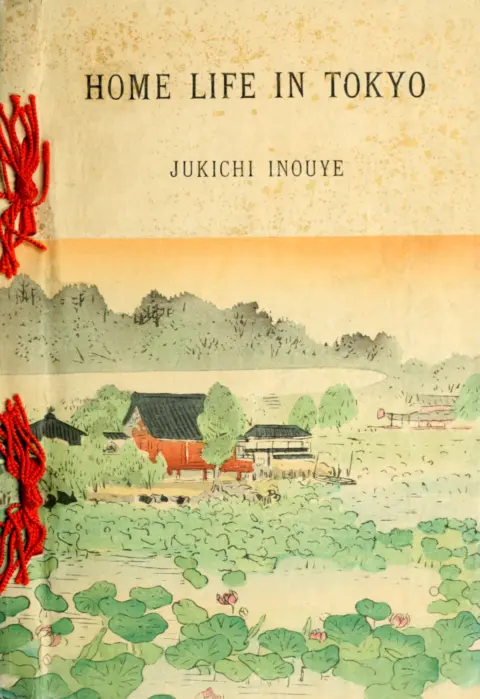
"Home Life in Tokyo" by Jukichi Inouye is a cultural account written in the early 20th century. This work offers a unique perspective on Japanese domestic life from the viewpoint of a native, contrasting with many contemporary writings that typically reflect Western views of Japan. The author explores various aspects of life in Tokyo, covering topics such as family structure, food customs, housing, and social etiquette. The opening of the book presents the author's intention to provide a detailed description of daily life in Tokyo, highlighting the previous absence of native accounts on such homely matters. He emphasizes the importance of localization—focusing solely on Tokyo in order to capture the intricacies and peculiarities of urban life there. Inouye discusses Tokyo's emergence as the capital after the fall of the Shogunate, while addressing the city’s growth during the Edo period and the socio-political backdrop leading to its modern characteristics. The preface sets the tone for an enlightening exploration of how traditional Japanese customs interact with the inroads of modernization, a theme central to the book.
Introduction adapted from the source catalogue; source summaries may be automatically generated.
Free to read · English · 95,306 words · No account needed
MAKE TIME FOR A GOOD BOOK
On by default. Untick to stop anonymous reading totals. Each page counts after 10 seconds in view. How this works.
Anonymous counting is on unless you have switched it off.
The child is at first fed entirely with its mother’s milk; if she is weak or sickly, a wet nurse is engaged in a family which can afford one, but in poor homes the child is nourished with a very thin rice-gruel. Cow’s milk is now largely used in Tokyo, and in many families given together with human milk. Very often the former is drunk in the daytime, and at night the mother who sleeps with the baby, suckles it with her own milk. In Japan the mother, unless her place is taken by the wet nurse, invariably sleeps with the youngest child, and never leaves it by itself in a cot or bed. This has the advantage that any ailment that the child may happen to suffer in the course of the night is not left to be discovered in the morning when it may be too late, but is detected at once and attended to before it becomes serious. Thus, for instance, any rise in temperature is immediately felt when the child gets its milk, and measures are taken accordingly.
On the hundred and ninth day after the birth, occurs the “first-eating,” at which a tray of food is set before the baby. Friends are invited to take part in the ceremony. A lady friend who has a large family of her own is asked to feed the child. She puts into its mouth a little paste of boiled rice and wets its lips with a drop of soup. Though the child generally spits out the paste, the fiction of its eating is maintained, and the ceremony closes with feasting among the invited guests. This “first-eating” is usually deferred for five or ten days as a postponement is supposed to bring luck to the child.
The infant is expected not to be able to walk in less than a twelvemonth; but if it toddles within a year, a bag holding about three pints of uncooked rice is laid on its back, and the child is made to stumble and fall, because to walk before the first birthday augurs, according to one authority, early death and according to another, residence in a distant land. There are many other superstitions connected with infancy. Thus, a child that begins to suck its fingers before the thumb which represents the parents in Japanese palmistry, will not be an encumbrance upon its father when it grows up; if it pushes itself out in sleep beyond the head of its bed, it will rise in the world, while a downward course is in store for the one that slips in under its bed-clothes. The baby which eats fish before it can say toto, the child’s name for fish, will stammer when it talks. In a family in which children have one after another died in infancy, the birth of a healthy infant is ensured by such charms as making a dress for it with thirty-three pieces of cloth collected from as many families, shaving the child’s head till its seventh year, and giving a boy a girl’s name and vice-versa. A sovereign remedy for prickly heat is to hang over the front door by a piece of red thread a small egg-plant before any member of the family eats one that season. Crying at night is stopped by suspending over the child’s bed a picture of a devil beating a prayer-gong. Immunity from measles is secured by putting over the child’s head for a moment the rice-pot still hot after the removal of the rice, while a similar treatment with the bucket for feeding the sacred horse at a shrine is said to be equally efficacious against small-pox. The child’s face is wiped with a wet scrubbing-cloth to cure it of shyness before strangers. For whooping-cough there are several remedies: for instance, a wooden spatula with the child’s name and an invocation against the disease is nailed over the front door; the inked string used by carpenters for marking lines is tied loosely round the neck; a slender piece of nandina wood, just long enough for the child to grasp, is hung by a red thread to its neck; or a pair of small square wooden blocks are obtained from a temple dedicated to Jizo, the protector of children, when the child is suffering from whooping-cough and clapped whenever it coughs, and when it has recovered, the blocks are returned to the temple with another pair bearing the child’s name. If the infant stands up and bending down its head, peeps from between its legs, another child will soon be born in the family; and if it has a single streak on its thigh as a birth-mark, the next to be born will be a boy, but if the streaks are double, the next will be a girl. Mothers are especially warned against leaving their children’s clothes out to dry at night, for the souls of women dying at child-birth fly in the form of birds at dead of night and if they see children’s apparel, they will, from envy, drop their blood upon it and the wearer of the clothing so soiled will surely sicken and die. Infants in arms must, when out at night, be covered with their own loin-cloth to avert the malign influences of the night-demon.
Your reading position is saved on this browser. Take it to another device with a library code. Reading pages adapt to text, rather than matching a printed edition.
BEHIND THE BOOK
This eBook is for the use of anyone anywhere in the United States and most other parts of the world at no cost and with almost no restrictions whatsoever. You may copy it, give it away or re-use it under the terms of the Project Gutenberg License included with this eBook or online at www.gutenberg.org. If you are not located in the United States, you will have to check the laws of the country where you are located before using this eBook. Read the source licence.
The original source file, including credits and licence, is retained by this library. Request an original-format copy at no charge. Please include the book title and Project Gutenberg identifier #65870.
KEEP YOUR CURIOSITY GOING
Cécile Tormay

Moritz Busch
John L. Ransom
Frances Wright
Cécile Tormay

Mabel Potter Daggett