
A Son of Ishmael: A Novel
L. T. Meade
THE CLASSIC COLLECTION · 1916
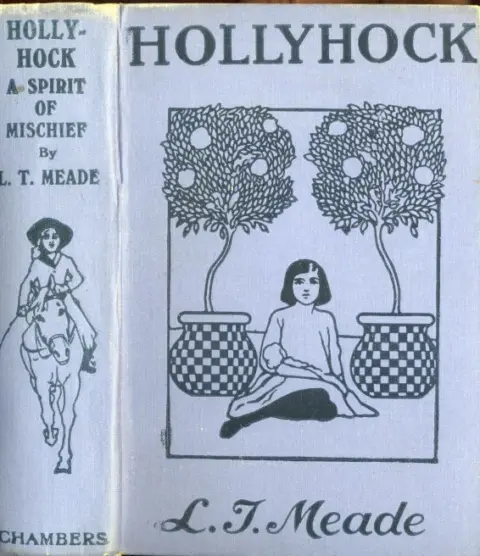
"Hollyhock: A Spirit of Mischief" by L. T. Meade is a children's novel written in the early 20th century. The story unfolds in the picturesque setting of the Upper Glen, where two families—the Lennoxes and the Constables—live a joyous, carefree life with their children, each named after flowers or precious stones. The plot centers around young Hollyhock (real name Jacqueline), who is spirited and daring, and her five sisters as they prepare for a significant change heralded by the arrival of their aunt Agnes Delacour, who has a scheme that will alter their lives. The opening of the novel introduces the idyllic lives of the children of the Upper Glen, highlighting the close-knit relationships they share and their innocent happiness. It establishes the dynamic within the families, especially the sense of impending change brought about by Aunt Agnes's arrival with her educational plans for the children. As Mr. Lennox reads a letter from Agnes about her intentions, Hollyhock's mischievous spirited nature shines through as she expresses her desire to resist being uprooted from her comfortable world. This sets the stage for conflicts between the playful innocence of childhood and the expectations of adult life, as well as the tension that Aunt Agnes’s plans bring into their lives.
Introduction adapted from the source catalogue; source summaries may be automatically generated.
Free to read · English · 72,878 words · No account needed
MAKE TIME FOR A GOOD BOOK
On by default. Untick to stop anonymous reading totals. Each page counts after 10 seconds in view. How this works.
Anonymous counting is on unless you have switched it off.
'Girls,' said one of the English mistresses, who felt quite certain there was mischief ahead, 'I think you ought to take your tea, and be quick about it. You will lose your recreation afterwards if you stop to wrangle.'
'What's wrangle, Miss Kent, dear?' asked Hollyhock in her sweetest tones. 'I like well to hear your pure English words. We Scots talk very differently, no doubt, but we are always willing to learn. So, please, what's wrangle? And will you pass me a fresh scone, Miss Kent, dear, for my appetite is far more than ordinary?'
'Vulgar little glutton,' muttered Leucha to Dorothy Fraser.
'She really is attractive, all the same,' answered Dorothy.
'Oh Dolly, you are not going round to her? That would be the final
straw.'
'No, I 'm not, of course; but I can't help admiring her funny ways and her beautiful, noble sort of face.'
'Noble!' cried Lady Leucha.
'Yes, it is noble, although it is full of mischief too. You could have had her as a great friend, Leucha, and that girl is worth making a friend of. I never saw her like before. She really haunts me.'
'What haunts you, lassie?' cried Hollyhock. 'Is it my eyes so black, or my cheeks so rosy-red, or my hair so curly, and black as the blackest night? I 'm at your service. I'm willing to forgive and forget this blessed minute if you'll all hold out the paws of forgiveness.'
Both Dorothy and Barbara longed to do so, but Lady Leucha put the final extinguisher on their hopes by saying, 'No, never! Why, you are not even a lady!'
'Let's eat,' said Hollyhock. 'I waved the flag of peace, as the great Ardshiel did once; but never again--don't you fear, lassies. No lady, indeed! We 'll see who's the lady!'
In vain Miss Kent tried to stop the angry torrent of words, but this was the hour when the girls were allowed to talk freely. Mrs Macintyre was not present, and all eyes in the room were fixed with admiration on Hollyhock.
'First, we 'd like to know--just for a diversion--what makes a lady,' continued the obstreperous lass. ''Tisn't birth--my certie! no. It must be a sort of civilisation. It must be, to my way of thinking, a give and a take. It must belong to the sort of person who has the courage of her race, and will even wipe the hair of a ghost when he comes to you in his trouble. That's what I call a lady. Others may differ from me.'
Your reading position is saved on this browser. Take it to another device with a library code. Reading pages adapt to text, rather than matching a printed edition.
BEHIND THE BOOK
This eBook is for the use of anyone anywhere in the United States and most other parts of the world at no cost and with almost no restrictions whatsoever. You may copy it, give it away or re-use it under the terms of the Project Gutenberg License included with this eBook or online at www.gutenberg.org. If you are not located in the United States, you will have to check the laws of the country where you are located before using this eBook. Read the source licence.
The original source file, including credits and licence, is retained by this library. Request an original-format copy at no charge. Please include the book title and Project Gutenberg identifier #28566.
KEEP YOUR CURIOSITY GOING
Coulson Kernahan

Maurice Baring
Frances Wright
Cécile Tormay

Frederic Jesup Stimson

W. H. P. (William Henry Pope) Jarvis


