
The lost dirigible
Ralph Henry Barbour
THE CLASSIC COLLECTION · 1907
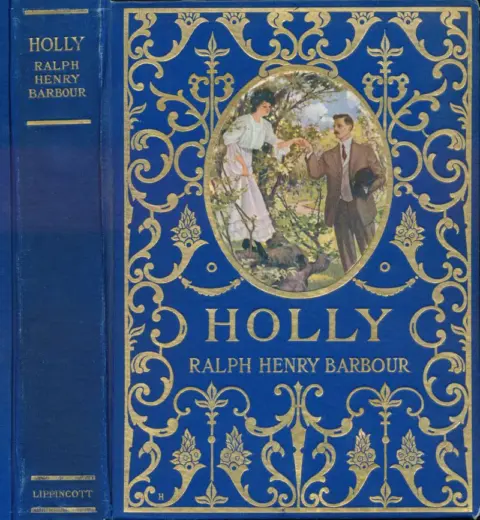
"Holly: The Romance of a Southern Girl" by Ralph Henry Barbour is a novel written in the early 20th century. It centers around Holly Wayne, an 18-year-old girl living in the South, who faces the transition from childhood to adulthood just as her mundane world is disrupted by the arrival of new circumstances and a stranger. The story unfolds in a rich Southern setting filled with descriptions of nature and family dynamics, capturing Holly's complex emotions as she navigates loss, affection, and societal expectations. The opening of the book introduces us to Holly, who is grappling with the loss of her father while living with her Aunt India at Waynewood, their family estate. As the narrative progresses, we learn that Holly is about to undergo significant changes in her life—her sheltered existence is primed for disruption. The arrival of Robert Winthrop, the new owner of Waynewood, brings both mystery and excitement. Holly's initial responses intertwine curiosity and caution, setting the stage for deepening relationships and the possibilities of romance. Through stylish prose, the author hints at Holly’s youthful innocence and her evolving understanding of love and life against a backdrop of Southern culture and charm.
Introduction adapted from the source catalogue; source summaries may be automatically generated.
Free to read · English · 45,478 words · No account needed
MAKE TIME FOR A GOOD BOOK
On by default. Untick to stop anonymous reading totals. Each page counts after 10 seconds in view. How this works.
Anonymous counting is on unless you have switched it off.
Presently the new rental agreement was signed and the Major, after several abortive attempts, flung open the door of the safe and put it carefully away in one of the compartments. Then he took up his broad-brimmed black felt hat and reached for his cane.
“And now, Mr. Winthrop,” he said, “we’ll just take a walk around the town, sir; I’d like you to meet some of our citizens, sir.”
Winthrop good-naturedly acquiesced and preceded the Major down the stairs. During the next hour-and-a-half Winthrop was impressively introduced to and warmly welcomed by some two dozen of Corunna’s foremost citizens, from ’Squire Parish, whom they discovered buying a bale of cotton in the dim recess of his hardware store, to Mr. “Cad” Wilson, who wiped his hand on a towel before reaching it across the bar to add his welcome.
“Not one of the aristocracy,” explained the Major, as they took their way out after drinking Winthrop’s health in Bourbon, “but a gentleman at heart, sir, in spite of his business, sir. When in need of liquid refreshment, Mr. Winthrop, you will find his place the best in town, sir, and you may always depend on receiving courteous treatment.”
The post-office, toward which they bent their steps after breasting Mr. “Cad” Wilson’s swinging doors, proved to be a veritable stamping-ground for Corunna’s celebrities. There Winthrop was introduced to the Reverend Mr. Fillock, the Presbyterian minister; to Mr. “Ham” Somes, the proprietor of the principal drug store; to Colonel Byers, in from his plantation a few miles outside of town to look up an express shipment, and the postmaster himself, Major Warren, who displayed an empty sleeve and, as Winthrop’s guide explained, still never took a drink without preceding it with the toast, “Secession, sah!”
When Colonel Byers alluded to the missing express package the Major
chuckled.
“Colonel,” he said, “’taint another of those boxes of hardware, is it?”
The Colonel laughed and shook his head, and the Major turned to
Winthrop with twinkling eyes.
“You see, Mr. Winthrop, the Colonel got a box of hardware by express some years ago; from Savannah, wan’t it, Colonel?”
“Atlanta, sir.”
“Well, anyhow, the Colonel was busy and didn’t get into town right away, and one day he got a letter from the express agent, saying: ‘Please call for your box of hardware as it’s leaking all over the floor.’”
The Colonel appeared to enjoy the story quite as much as the Major, and Winthrop found their mirth quite as laugh-provoking as the tale.
“And I have heard that the Colonel never got to town in as quick time
as he did then!”
Your reading position is saved on this browser. Take it to another device with a library code. Reading pages adapt to text, rather than matching a printed edition.
Ralph Henry Barbour
Ralph Henry Barbour

Ralph Henry Barbour

Ralph Henry Barbour
BEHIND THE BOOK
This eBook is for the use of anyone anywhere in the United States and most other parts of the world at no cost and with almost no restrictions whatsoever. You may copy it, give it away or re-use it under the terms of the Project Gutenberg License included with this eBook or online at www.gutenberg.org. If you are not located in the United States, you will have to check the laws of the country where you are located before using this eBook. Read the source licence.
The original source file, including credits and licence, is retained by this library. Request an original-format copy at no charge. Please include the book title and Project Gutenberg identifier #69920.
KEEP YOUR CURIOSITY GOING
Coulson Kernahan

Maurice Baring
Frances Wright
Cécile Tormay

Frederic Jesup Stimson

W. H. P. (William Henry Pope) Jarvis