
The lost dirigible
Ralph Henry Barbour
THE CLASSIC COLLECTION · 1907
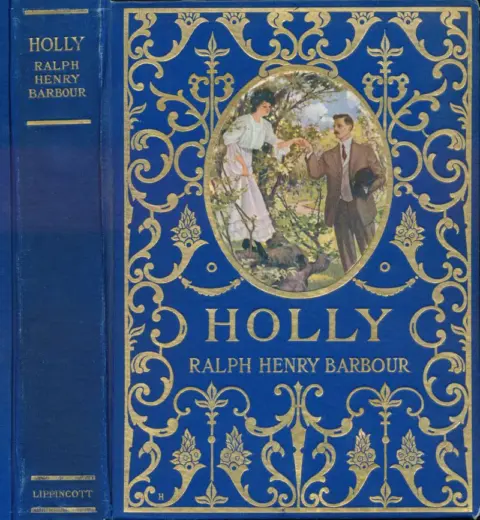
"Holly: The Romance of a Southern Girl" by Ralph Henry Barbour is a novel written in the early 20th century. It centers around Holly Wayne, an 18-year-old girl living in the South, who faces the transition from childhood to adulthood just as her mundane world is disrupted by the arrival of new circumstances and a stranger. The story unfolds in a rich Southern setting filled with descriptions of nature and family dynamics, capturing Holly's complex emotions as she navigates loss, affection, and societal expectations. The opening of the book introduces us to Holly, who is grappling with the loss of her father while living with her Aunt India at Waynewood, their family estate. As the narrative progresses, we learn that Holly is about to undergo significant changes in her life—her sheltered existence is primed for disruption. The arrival of Robert Winthrop, the new owner of Waynewood, brings both mystery and excitement. Holly's initial responses intertwine curiosity and caution, setting the stage for deepening relationships and the possibilities of romance. Through stylish prose, the author hints at Holly’s youthful innocence and her evolving understanding of love and life against a backdrop of Southern culture and charm.
Introduction adapted from the source catalogue; source summaries may be automatically generated.
Free to read · English · 45,478 words · No account needed
MAKE TIME FOR A GOOD BOOK
On by default. Untick to stop anonymous reading totals. Each page counts after 10 seconds in view. How this works.
Anonymous counting is on unless you have switched it off.
“More difficulties?” asked Winthrop, patiently.
“I hope not, sir, but I won’t deny that Miss India may spoil our plans.”
“You mean that she may not want to take a boarder?”
“Well, it’s this way, Mr. Winthrop.” The Major cleared his throat. “Miss Wayne has always been prejudiced against Northerners, but――――”
“Really? But she seemed kindness itself this afternoon.”
“I’m delighted to hear it, sir, delighted! And allow me to say, Mr. Winthrop, sir, that you couldn’t have played a stronger card than you did.”
“Card? What do you mean, Major?”
“I mean that in losing consciousness as you did, sir, you accomplished more than I could have accomplished in an hour’s argument. It was very well done, sir, for I assure you that it was only by representing you as an invalid that I was able to prevail on Miss India to remain here, sir, until your arrival. When I found that I had missed you at the office I feared that you would perhaps unwittingly give the impression of being a――a well man, sir, and thus prejudice the lady against you. But as it happened, sir, you played just the card calculated to win the trick.”
“But, Great Scott!” exclaimed Winthrop, exasperatedly; “you don’t think for a moment, do you, that I deliberately simulated illness in order to work on her sympathies?”
“Of course not,” said the Major, earnestly. “How could you have known? No, no; I merely congratulated you on the fortunate――ah――coincidence, sir.”
“Oh! Then I am to understand that as a well man Miss Wayne will refuse to harbor me, but as an invalid she will consent to do so――for a consideration?”
“Exactly, Mr. Winthrop; that is just how it stands, sir.”
“And having once been accepted will it be necessary for me to continue to pose as an invalid for the rest of my stay?” he asked dryly.
“We-ell,” answered the Major, hesitatingly, “I don’t deny that it would help, but I don’t reckon it’ll be absolutely necessary, sir.”
Winthrop smiled.
“I’m glad to hear it, for I’m rather tired of being an invalid, and I don’t think I should enjoy even making believe for very long. May I ask whether Miss Wayne’s dislike for persons from my section of the country is ineradicable, Major?”
Your reading position is saved on this browser. Take it to another device with a library code. Reading pages adapt to text, rather than matching a printed edition.
Ralph Henry Barbour
Ralph Henry Barbour

Ralph Henry Barbour

Ralph Henry Barbour
BEHIND THE BOOK
This eBook is for the use of anyone anywhere in the United States and most other parts of the world at no cost and with almost no restrictions whatsoever. You may copy it, give it away or re-use it under the terms of the Project Gutenberg License included with this eBook or online at www.gutenberg.org. If you are not located in the United States, you will have to check the laws of the country where you are located before using this eBook. Read the source licence.
The original source file, including credits and licence, is retained by this library. Request an original-format copy at no charge. Please include the book title and Project Gutenberg identifier #69920.
KEEP YOUR CURIOSITY GOING
Coulson Kernahan

Maurice Baring
Frances Wright
Cécile Tormay

Frederic Jesup Stimson

W. H. P. (William Henry Pope) Jarvis