
The lost dirigible
Ralph Henry Barbour
THE CLASSIC COLLECTION · 1907
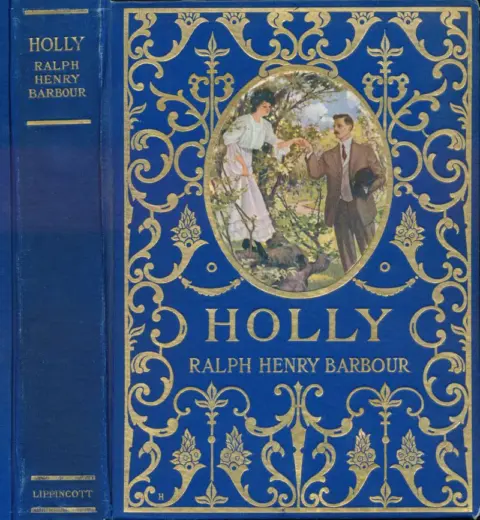
"Holly: The Romance of a Southern Girl" by Ralph Henry Barbour is a novel written in the early 20th century. It centers around Holly Wayne, an 18-year-old girl living in the South, who faces the transition from childhood to adulthood just as her mundane world is disrupted by the arrival of new circumstances and a stranger. The story unfolds in a rich Southern setting filled with descriptions of nature and family dynamics, capturing Holly's complex emotions as she navigates loss, affection, and societal expectations. The opening of the book introduces us to Holly, who is grappling with the loss of her father while living with her Aunt India at Waynewood, their family estate. As the narrative progresses, we learn that Holly is about to undergo significant changes in her life—her sheltered existence is primed for disruption. The arrival of Robert Winthrop, the new owner of Waynewood, brings both mystery and excitement. Holly's initial responses intertwine curiosity and caution, setting the stage for deepening relationships and the possibilities of romance. Through stylish prose, the author hints at Holly’s youthful innocence and her evolving understanding of love and life against a backdrop of Southern culture and charm.
Introduction adapted from the source catalogue; source summaries may be automatically generated.
Free to read · English · 45,478 words · No account needed
MAKE TIME FOR A GOOD BOOK
On by default. Untick to stop anonymous reading totals. Each page counts after 10 seconds in view. How this works.
Anonymous counting is on unless you have switched it off.
The Major bowed his thanks, laid his cane across the table and accepted the chair which Winthrop pushed forward. Winthrop drew a second chair to the other side of the fire-place.
“A fire, Mr. Winthrop,” observed the Major, “is very acceptable these
cool evenings.”
“Well, I haven’t felt the need of it myself,” replied Winthrop, “but it was here and it seemed a shame to waste it. I’ll close the windows if you like.”
“Not at all, not at all; I like fresh air. I couldn’t have too much of it, sir, if it wasn’t for this confounded rheumatism of mine. With your permission, sir.” The Major leaned forward and laid a fresh log on the fire. Winthrop arose and quietly closed the windows.
“Do you smoke, Major? I have some cigars here somewhere.”
“Thank you, sir, if they’re right handy.” He accepted one, held it to his nose and inhaled the aroma, smiled approvingly and tucked it into a corner of his mouth. “You’ll pardon me if I don’t light it,” he said.
“Certainly,” replied Winthrop.
“I never learned to smoke, Mr. Winthrop,” explained the Major, “and I reckon I’m too old to begin now. But when I was a boy, and afterwards, during the war, I got a lot of comfort out of chewing, sir. But it’s a dirty habit, sir, and I had to give it up. The only way I use tobacco now, sir, is in this way. It’s a compromise, sir.” And he rolled the cigar around enjoyably.
“I see,” replied Winthrop.
“I trust you are feeling recovered from the effects of your arduous journey?” inquired the Major.
“Quite, thank you. I dare say Miss Wayne told you what an ass I made of myself when I arrived?”
“You refer to your――ah――momentary indisposition? Yes, Miss India informed me, and I was very pleased to learn of it.” Winthrop stared in surprise. “You are feeling better now, sir?”
“Oh, yes; quite fit, thank you.”
“I’m very glad to hear it. I must apologize for not being at the station to welcome you, sir, but I gathered from your letter that you would not reach Corunna before to-morrow, and I thought that perhaps you would telegraph me again. I was obliged to drive into the country this afternoon on business, and only learned of your visit to my office when I returned. I then took the liberty of calling at the earliest moment.”
“And I’m very glad you did,” answered Winthrop, heartily. “There’s a good deal I want to talk to you about.”
“I am quite at your service, sir.”
Your reading position is saved on this browser. Take it to another device with a library code. Reading pages adapt to text, rather than matching a printed edition.
Ralph Henry Barbour
Ralph Henry Barbour

Ralph Henry Barbour

Ralph Henry Barbour
BEHIND THE BOOK
This eBook is for the use of anyone anywhere in the United States and most other parts of the world at no cost and with almost no restrictions whatsoever. You may copy it, give it away or re-use it under the terms of the Project Gutenberg License included with this eBook or online at www.gutenberg.org. If you are not located in the United States, you will have to check the laws of the country where you are located before using this eBook. Read the source licence.
The original source file, including credits and licence, is retained by this library. Request an original-format copy at no charge. Please include the book title and Project Gutenberg identifier #69920.
KEEP YOUR CURIOSITY GOING
Coulson Kernahan

Maurice Baring
Frances Wright
Cécile Tormay

Frederic Jesup Stimson

W. H. P. (William Henry Pope) Jarvis