
The lost dirigible
Ralph Henry Barbour
THE CLASSIC COLLECTION · 1907
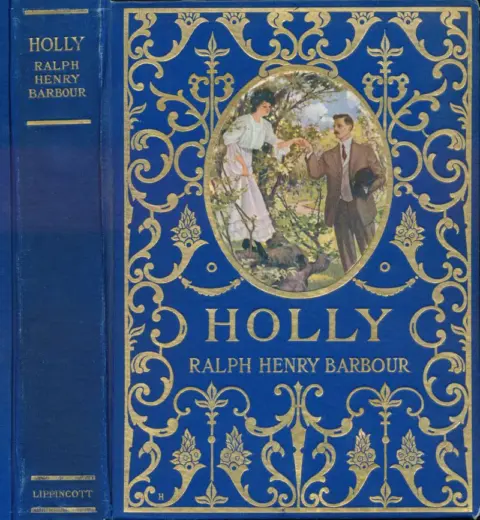
"Holly: The Romance of a Southern Girl" by Ralph Henry Barbour is a novel written in the early 20th century. It centers around Holly Wayne, an 18-year-old girl living in the South, who faces the transition from childhood to adulthood just as her mundane world is disrupted by the arrival of new circumstances and a stranger. The story unfolds in a rich Southern setting filled with descriptions of nature and family dynamics, capturing Holly's complex emotions as she navigates loss, affection, and societal expectations. The opening of the book introduces us to Holly, who is grappling with the loss of her father while living with her Aunt India at Waynewood, their family estate. As the narrative progresses, we learn that Holly is about to undergo significant changes in her life—her sheltered existence is primed for disruption. The arrival of Robert Winthrop, the new owner of Waynewood, brings both mystery and excitement. Holly's initial responses intertwine curiosity and caution, setting the stage for deepening relationships and the possibilities of romance. Through stylish prose, the author hints at Holly’s youthful innocence and her evolving understanding of love and life against a backdrop of Southern culture and charm.
Introduction adapted from the source catalogue; source summaries may be automatically generated.
Free to read · English · 45,478 words · No account needed
MAKE TIME FOR A GOOD BOOK
On by default. Untick to stop anonymous reading totals. Each page counts after 10 seconds in view. How this works.
Anonymous counting is on unless you have switched it off.
“Pray continue, Major,” she said. “Whatever you have done has been done, I am certain, from motives of true friendship.”
The Major bowed gratefully.
“I thank you, madam. To resume, about four years ago Judge Linderman became bankrupt through speculation in cotton. That, I believe, you already knew. What you did not know was that in meeting his responsibilities he was obliged to part with all his real estate holdings, Waynewood amongst them.”
The Major paused, expectantly, but the only comment from his audience, if comment it might be called, was a quivering sigh of apprehension which sent the Major quickly on with his story.
“Waynewood fell into the hands of a Mr. Gerald Potter, of New York, a broker, who――――”
“A Northerner!” cried Miss India.
“A Northerner, my dear lady,” granted the Major, avoiding the lady’s horrified countenance, “but, as I have been creditably informed, a thorough gentleman and a representative of one of the foremost New York families.”
“A gentleman!” echoed Miss India, scornfully. “A Northern gentleman! And so I am to understand that for four years I and my niece have been subsisting on the charity of a Northerner! Is that what you have come to inform me, Major Cass?”
“The former arrangement was allowed to continue,” answered the Major, evenly, “being quite satisfactory to the new owner of the property. I regret, if you will pardon me, the use of the word charity, Miss India.”
“You may regret it to your soul’s content, Major Cass,” replied Miss India, with acerbity. “The fact remains――the horrible, dishonoring fact! I consider your course almost――and I had never thought to use the word to you, sir――insulting!”
“It is indeed a harsh word, madam,” replied the Major, gently and sorrowfully. “I realize that I have been ill-advised in keeping the truth from you, but in a calmer moment you will, I am certain, exonerate me from all intentions unworthy of my love for your dead brother and of my respect for you.” There was a suggestive tremble in the Major’s voice.
Miss India dropped her eyes to the hands which were writhing agitatedly
in her lap. Then:
“You are right, my dear friend,” she said, softly. “I was too hasty. You will forgive me, will you not? But――this news of yours――is so unexpected, so astounding――――!”
“Pray say no more!” interposed the Major, warmly. “I quite understand your agitation. And since the subject is unpleasant to you I will conclude my explanation as quickly as possible.”
“There is more?” asked Miss India, anxiously.
Your reading position is saved on this browser. Take it to another device with a library code. Reading pages adapt to text, rather than matching a printed edition.
Ralph Henry Barbour
Ralph Henry Barbour

Ralph Henry Barbour

Ralph Henry Barbour
BEHIND THE BOOK
This eBook is for the use of anyone anywhere in the United States and most other parts of the world at no cost and with almost no restrictions whatsoever. You may copy it, give it away or re-use it under the terms of the Project Gutenberg License included with this eBook or online at www.gutenberg.org. If you are not located in the United States, you will have to check the laws of the country where you are located before using this eBook. Read the source licence.
The original source file, including credits and licence, is retained by this library. Request an original-format copy at no charge. Please include the book title and Project Gutenberg identifier #69920.
KEEP YOUR CURIOSITY GOING
Coulson Kernahan

Maurice Baring
Frances Wright
Cécile Tormay

Frederic Jesup Stimson

W. H. P. (William Henry Pope) Jarvis