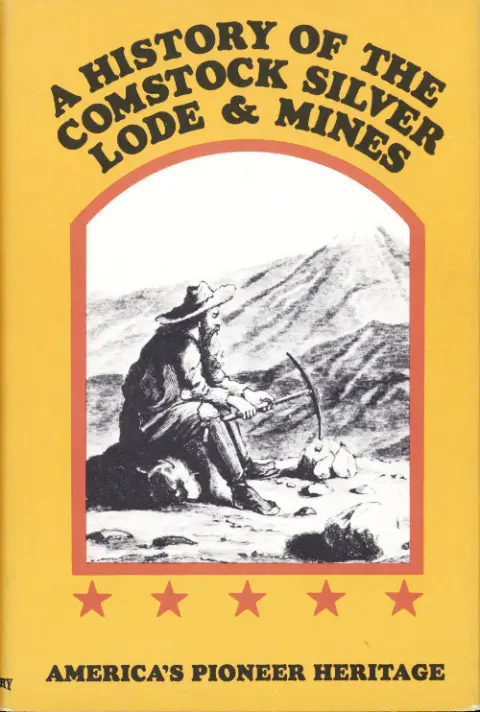
A History of the Comstock Silver Lode & Mines Nevada and the Great Basin Region; Lake Tahoe and the High Sierras
Dan De Quille
THE CLASSIC COLLECTION · 1876
"History of the Big Bonanza: An Authentic Account of the Discovery, History, and Working of the World Renowned Comstock Silver Lode of Nevada" by Dan De Quille is a historical account written in the latter part of the 19th century. This volume chronicles the significant discovery and development of the Comstock Lode, detailing the mining operations, the settlers, and the individuals who played key roles in this transformative era. The narrative not only covers the events surrounding the silver mining boom but also delves into the colorful lives and stories of those involved. The opening of this book sets the stage by examining the early days of settlement in Nevada and the legends that surrounded silver mining. It describes how the land transitioned from little known to being pivotal during the silver rush, emphasizing the contributions of early settlers. The author discusses the challenging environment, the conflict with Native Americans, and the emerging mining culture. Notably, it reveals the misconceptions early miners held about silver mining and introduces characters like "Old Virginia" and others who became significant figures as mining operations escalated. The narrative combines factual history with entertaining anecdotes, highlighting the intrigue and adventure of mining life during that transformative period.
Introduction adapted from the source catalogue; source summaries may be automatically generated.
Free to read · English · 180,009 words · No account needed
MAKE TIME FOR A GOOD BOOK
On by default. Untick to stop anonymous reading totals. Each page counts after 10 seconds in view. How this works.
Anonymous counting is on unless you have switched it off.
Agua—Water.
Acciones—Shares in a mine.
Ahogar—To gouge out a mine by working narrow and only in rich places.
Ademada—Timbered.
Abonar—To pay a debt by instalments.
Azogue—Quicksilver.
Aire—Air.
Bonanza—A large and rich body of ore—prosperity.
Borrâsca—Barren rock—bad luck—adversity.
Bartolina—A chamber cut out in a mine in which to keep tools and
stores.
Barranca—A precipice.
Barretero—A miner.
Barrena—A drill.
Batea—A wooden bowl used in washing auriferous earth.
Buena saca—Doing well.
Contro-pozo—An “upraise” to meet a winze.
Contra Mina—An underground connection.
Charqueo interior—To lead water to a drain.
Cavallo—A “horse”—a block of barren rock in the midst of a body of
ore.
Cinta—A streak of ore.
Chorrerra—A cave—the caving in of a mine.
Cavassos—Borings—drillings.
Cavasal—A cross-piece—timber.
Calabrote—A large rope.
Cabreste—A hair rope—a line.
Canada—A deep ravine, gulch.
Cuarzo—Quartz.
Cascajo—Gravel.
De Cielo—The roof—working overhead.
De Pied or a Pique—Beneath the floor—sinking, or working down.
Derotada—Gutted, spoiled and abandoned.
Dispacho or Dispensa—An ore-house.
Destajo—A contract.
El Cordon—A ridge or spur of a mountain.
El Creston—A crest or outcropping.
El Rumbo—The course.
El Manto—(mantada)—A flat deposit.
Escabar—To strip a claim on the surface merely.
El Tajo abierto—An open cut.
El Socabon—An adit.
El Tiro general—The main shaft.
El Crucero—A cross-cut.
El Fronton—An ore breast.
El Alto—The hanging wall.
El Abajo—The foot wall.
El Patio—The level space at the mouth of a mine or tunnel.
Echardero—A platform for weighing, sorting, or packing ore on. A
Patio of a mine.
En Frutos—In ore.
En Borra (Emborrescade, Borrasca)—Not in pay ore—“petered
out”—applied to the barrenness of veins, not to dead work, as a
tunnel run to reach a vein.
Fundido—Filled with water.
Fueros—Special privileges.
Guardas de Labor—Roof and walls of a mine in general.
Grantio—Granite.
Hilos—Threads of ore.
Hundido—A settling or sinking.
Las Sierras—Mountains or mountain ranges.
La Guia—A guide, or the float rock.
La Recuesta—The dip.
Las Medias—The boundary lines of a claim as marked by Las Escatas,
stakes, or Estacada, staked off.
Las Guardas Rayas—Monuments of wood or stone.
La Demasia or Hueco—The unclaimed ground between two claims.
La Bocca-vieja—The mouth—the old mouth.
La Obra—The tunnel—the work.
La Lumbrera—The air shaft.
Las Canones—The drifts.
La Cata—A small pit—a “coyote hole.”
La Tabla—A stope.
La Patia—A narrow footpath in a mine.
Las Respaldas—The walls of a mine.
Los Caminos—The travelled roads in a mine of any kind.
Los Planes—The deepest workings or bottom of a mine.
Los Pilares—The pillars of a mine—place of timbers—to “dispilar” a
mine is to dig down the pillars.
Las Desagues—The drains of a mine.
Las Escaleras—The notched stepping poles or ladders in a mine.
La Tronada—The rocks thrown down by a blast.
Los Llavis—Beams, timbers.
Latones—Small poles.
La Quebrada—A ravine.
Maderas—All kinds of wood used in a mine for any purpose.
Mecati—A small line.
Minero—A miner.
Nivel—A level.
Obsa muerta—Dead work.
Orcones—Forked poles.
Oro—Gold.
Oro en polvo—Gold dust.
Oro en pasta, bruto or virgen—Gold bullion.
Presa—A dam.
Pileta—A sump or tank.
Paradera—Sluice-gates.
Pico—A pick.
Pala—A shovel.
Polvora—Powder.
Plata—Silver.
Plata virgen or brulo—A rude mass of silver—native silver.
Pizarra—Slate rock.
Puertas—When a vein pinches—“cap rock.”
Pied direcho—A stud.
Pedregal—A stony place.
Roca—A rock.
Risco—A steep rock.
Reata—A rope for tying mules or horses.
Suffocante—Hot, bad air.
Terrero—A pile of waste rock.
Un Mineral—A mining district.
Una Veta—A lode or ledge—a true fissure vein.
Una Veta tapada—A “blind” ledge or lode—a lode that is covered with
soil.
Una Vena—A vein—a narrow seam or streak.
Una Pertinencia—A claim on a lode. (By the Mexican mining law it is
200 Varas ie Medin—200 yards running measure. A vara is 33
inches.)
Un Pozo—A shaft, pit, or winze.
Un Labor—Any part of a mine from which ore is being extracted.
Un Claro—Any worked out portion of a mine.
Un Tapextle—A landing or platform in a shaft—a gallery.
Un Quarton—A slip or “fault” which cuts off the ore.
Un Clavo—A chimney of ore.
Un Amparo—A permit from the Government to quit work on a mine for any
time beyond the customary four months in each year.
Un Ojo—A “pocket.”
Una Bonanza—A big rich strike.
Una Caida—A fall—a slide.
Un Barreno—A drill-hole.
Un Cohete—A blast.
Un Tequio—A task—each cleaner’s pile of ore.
Una Adema—A set of timbers.
Un Malacate—A horse whim.
Una Manesuela, Argans, Hicho bueno—A windlass.
Una Soga—A native rope.
Un Negocio—An enterprise, transaction, or business.
Veta Cata—A new vein.
Vapor—Foul air.
Ventilacion—Ventilation.
Ventilar—To Ventilate.
Your reading position is saved on this browser. Take it to another device with a library code. Reading pages adapt to text, rather than matching a printed edition.
BEHIND THE BOOK
This eBook is for the use of anyone anywhere in the United States and most other parts of the world at no cost and with almost no restrictions whatsoever. You may copy it, give it away or re-use it under the terms of the Project Gutenberg License included with this eBook or online at www.gutenberg.org. If you are not located in the United States, you will have to check the laws of the country where you are located before using this eBook. Read the source licence.
The original source file, including credits and licence, is retained by this library. Request an original-format copy at no charge. Please include the book title and Project Gutenberg identifier #74667.
KEEP YOUR CURIOSITY GOING
Wilfrid Scawen Blunt
Wilfrid Scawen Blunt

E. W. (Edgar Watson) Howe
Cécile Tormay

Moritz Busch
John L. Ransom