THE CLASSIC COLLECTION✦An outlaw’s diary: the CommuneCLASSIC FREE BOOKS
An outlaw’s diary: the Commune
Cécile Tormay
THE CLASSIC COLLECTION · 1871
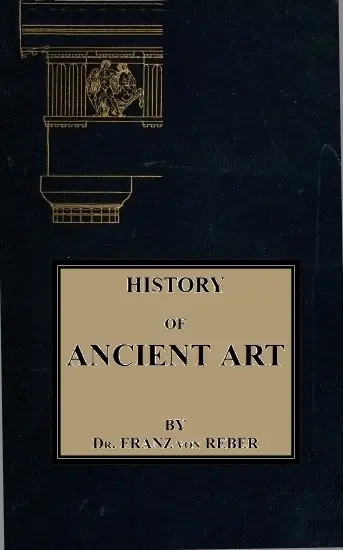
"History of Ancient Art" by Franz von Reber is a scholarly historical account written in the late 19th century. It explores the development, significance, and various manifestations of ancient art across different cultures, including Egypt, Mesopotamia, and Greece, shedding light on their artistic achievements and relevance to civilization. The opening of the text sets the stage for a comprehensive examination of ancient art, beginning with the significance of Egypt's monumental achievements such as the pyramids, and discussing their enduring influence on architectural design. Reber emphasizes the importance of methodical historical study in understanding the evolution and context of art forms, arguing that art functions as a vital record of civilization that conveys cultural values, emotions, and societal structures across time. He highlights the need for clarity in the study of ancient arts, aiming to provide a judicious and well-informed overview that is accessible to students and advanced scholars alike.
Introduction adapted from the source catalogue; source summaries may be automatically generated.
Free to read · English · 149,331 words · No account needed
MAKE TIME FOR A GOOD BOOK
On by default. Untick to stop anonymous reading totals. Each page counts after 10 seconds in view. How this works.
Anonymous counting is on unless you have switched it off.
=Pisé= (Fr.; from piser, to build with stamped clay). A species of tenacious clayey earth, employed for walls and pavement by being rammed down.
=Plinth= (Lat. plinthus, from Gr. πλίνθος, tile). Any rectangular and projecting member of considerable size. A narrow and long plinth is a fillet.
=Po´ros= (Gr.). A light, coarse tufa-limestone almost exclusively employed during the earliest ages of Greek architecture.
=Prona´os= (Gr.; from πρό, before, and ναός).
The open vestibule before the naos.
=Propylæ´on=, pl. propylæ´a (Gr.; from πρό, before, and
πύλη, gate). The portal structure before the entrance to a
Greek temenos.
=Prosty´los=, adj. pro´style (from Gr. πρό, before, and στῦλος, column). That variety of temple plan in which the projecting wall and pilasters of the temple in antis have been transformed to corner columns, thus altering the pronaos from a loggia to an open portico.
=Pseudodip´teros= (pseudo from Gr. ψευδής, false; dipteros, see above). A temple planned upon the dipteral arrangement, in which the inner rank of columns surrounding the cella is wanting.
=Pseudoperip´teros= (pseudo from Gr. ψευδής, false; peripteros, see above). A temple in which the columns surrounding the cella are engaged upon a continuous enclosure wall, as in the great temple of Acragas (Agrigentum).
=Ptero´ma= (Gr.; from πτερόν, wing). The passage surrounding the cella of a peripteral temple.
=Py´lon= (Gr.; from πύλη, gate). The towers of truncated pyramidal form on either side of the gateways of Egyptian temples.
=Quirk.= In architectural usage, a moulding formed by a sharp turn in a
continuous line.
=Reed.= In architectural usage, a small convex moulding applied to a regular surface and frequently repeated. The term is commonly employed for the ornamentation of columns by reversed channels or flutes.
=Reg´ula= (Lat. any straight piece of wood, a ruler). The short band, corresponding to the triglyph, beneath the tænia moulding which crowns the epistyle; the listel. Originally determined by the slat of wood which strengthened the wall-plate at the point of its perforation by the trunnels.
=Revet´ment=, vb. to revete (Fr. revêtement, from revêtir, to clothe). A facing of metal, stone, or wood encasing a kernel--usually of some less firm or sightly material.
=Round´el=, dim. roundlet. A moulding of semicircular profile.
=Scamil´lus= (Lat. little bench, foot-stool). A slight projection, cut by means of a joggle, upon a constructive feature in such a manner as to prevent its adjacent edges from touching and possibly chipping those of the next block. A scamillus thus creates the incision between the upper drum of the shaft and the necking of the Doric capital, and is also occasionally inserted between the top of the abacus and the soffit of the epistyle.
Your reading position is saved on this browser. Take it to another device with a library code. Reading pages adapt to text, rather than matching a printed edition.
BEHIND THE BOOK
This eBook is for the use of anyone anywhere in the United States and most other parts of the world at no cost and with almost no restrictions whatsoever. You may copy it, give it away or re-use it under the terms of the Project Gutenberg License included with this eBook or online at www.gutenberg.org. If you are not located in the United States, you will have to check the laws of the country where you are located before using this eBook. Read the source licence.
The original source file, including credits and licence, is retained by this library. Request an original-format copy at no charge. Please include the book title and Project Gutenberg identifier #42082.
KEEP YOUR CURIOSITY GOING
Cécile Tormay

Moritz Busch
John L. Ransom
Frances Wright
Cécile Tormay

Mabel Potter Daggett