THE CLASSIC COLLECTION✦An outlaw’s diary: the CommuneCLASSIC FREE BOOKS
An outlaw’s diary: the Commune
Cécile Tormay
THE CLASSIC COLLECTION · 1871
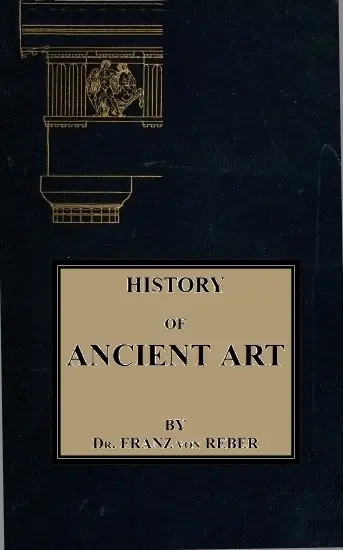
"History of Ancient Art" by Franz von Reber is a scholarly historical account written in the late 19th century. It explores the development, significance, and various manifestations of ancient art across different cultures, including Egypt, Mesopotamia, and Greece, shedding light on their artistic achievements and relevance to civilization. The opening of the text sets the stage for a comprehensive examination of ancient art, beginning with the significance of Egypt's monumental achievements such as the pyramids, and discussing their enduring influence on architectural design. Reber emphasizes the importance of methodical historical study in understanding the evolution and context of art forms, arguing that art functions as a vital record of civilization that conveys cultural values, emotions, and societal structures across time. He highlights the need for clarity in the study of ancient arts, aiming to provide a judicious and well-informed overview that is accessible to students and advanced scholars alike.
Introduction adapted from the source catalogue; source summaries may be automatically generated.
Free to read · English · 149,331 words · No account needed
MAKE TIME FOR A GOOD BOOK
On by default. Untick to stop anonymous reading totals. Each page counts after 10 seconds in view. How this works.
Anonymous counting is on unless you have switched it off.
=En´tasis= (Gr.; from ἐντείνω, to bend a bow). The swelling of the column towards its middle, the object of which is to counteract an optical delusion causing the diminished shaft, when formed with absolutely straight lines, to appear hollowed in the centre.
=Epina´os= (formed by analogy with pronaos; from Gr. ἐπί,
after, behind, and ναός, naos). The open vestibule behind
the naos.
=Ep´istyle= (Gr. ἐπιστύλιον; from ἐπί, after, upon, and στῦλος, column). The lower member of the entablature, the representative of the wall, consisting, as the name imports, of beams laid horizontally upon the capitals of the columns. The epistyle is commonly spoken of by its Roman name, architrave.
=Fascine´= (Lat. fascina; from fascis, bundle). A bundle of long, thin sticks employed in military engineering for filling ditches, raising parapets, etc.
=Fil´let= (Fr. filet, thread; from Lat. filum). A ribbon; a narrow, flat band used in the separation of one moulding from another. Especially the ridge between the flutes of the Ionic shaft.
=Flute.= In architectural usage, a curved and usually semicircular furrow, separated from its repetition by a narrow fillet, as in the Ionic column. So called from its similarity to the musical instrument.
=Frieze= (Ital. freggio, adorned?). The second member of the entablature. When enriched by carvings of men or animals in relief, as is common in the Ionic style, and as occurs upon the cella wall of the Doric Parthenon, the frieze is in classic architecture called zophoros.
=Gar´goyle= (Fr. gargouille; from gargouiller, to dabble, to paddle). A carved waterspout projecting from the gutter.
=Gymna´sion= (Gr.; from γυμνός, naked). Originally an open space, but in later times extensive courts and buildings, devoted to mental as well as bodily instruction and exercises.
=He´lix=, pl. hel´ices (Gr. anything twisted or spiral; from ἑλίσσω, to turn around). A spiral, particularly the volutes of the Ionic capital and the corner leaves and tendrils of the Corinthian.
=Hexasty´los=, adj. hex´astyle (from Gr. ἕξ, six, and στῦλος, column). A building, particularly a temple, upon the front of which are six columns.
=Hip´podrome= (Gr. ἱππόδρομος; from ἵππος, horse, and δρόμος, way). A course prepared for the races of horses and chariots.
=Hypæ´thron=, adj. hypæ´thral (Lat. hypæthrus; from Gr. ὑπό, under, and αἰθήρ, clear sky). Term applied to a temple supposed by some writers on Greek architecture to have been lighted from above, by an orifice through roof and ceiling.
=Hyper´oön= (Gr.). The upper stories of a house; particularly the galleries above the side-aisles in the interior of the Greek temple.
=Hyp´ostyle= (Gr. ὑπόστυλον; from ὑπό, under, and στῦλος, column). A space, with or without lateral enclosure, the ceiling of which rests upon columns.
Your reading position is saved on this browser. Take it to another device with a library code. Reading pages adapt to text, rather than matching a printed edition.
BEHIND THE BOOK
This eBook is for the use of anyone anywhere in the United States and most other parts of the world at no cost and with almost no restrictions whatsoever. You may copy it, give it away or re-use it under the terms of the Project Gutenberg License included with this eBook or online at www.gutenberg.org. If you are not located in the United States, you will have to check the laws of the country where you are located before using this eBook. Read the source licence.
The original source file, including credits and licence, is retained by this library. Request an original-format copy at no charge. Please include the book title and Project Gutenberg identifier #42082.
KEEP YOUR CURIOSITY GOING
Cécile Tormay

Moritz Busch
John L. Ransom
Frances Wright
Cécile Tormay

Mabel Potter Daggett