
Historical record of the Ninety-second Regiment, originally termed “The Gordon Highlanders” and numbered the Hundredth Regiment
Richard Cannon
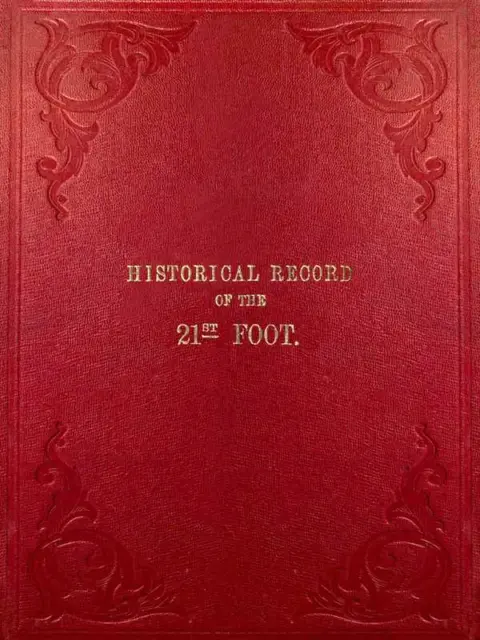
THE CLASSIC COLLECTION · 1849
"Historical Record of the Twenty-first Regiment, or the Royal North British Fusiliers" by Richard Cannon is a historical account written in the mid-19th century. The work provides a detailed chronicle of the formation and military history of the Twenty-first Regiment from its inception in 1678 through its actions up to 1849. The focus is on the regiment's contributions and achievements in various significant conflicts, emphasizing the valor and dedication of the British soldiers. The opening of the historical record outlines the establishment of the Twenty-first Regiment during a tumultuous period in Scotland, where political and religious conflicts prevailed. It discusses the regiment's origins under the command of Charles, Earl of Mar, and its initial armament with light muskets as "Fusiliers." The narrative provides context about the political landscape of the time, mentioning key events such as the murder of Archbishop Sharp and the subsequent battle at Bothwell Bridge, setting the stage for the regiment's evolving role in military campaigns over the centuries. The text establishes a foundation for understanding the regiment’s storied history, detailing both significant battles and changes in military tactics as they relate to the regiment's experiences.
Introduction adapted from the source catalogue; source summaries may be automatically generated.
Free to read · English · 24,201 words · No account needed
MAKE TIME FOR A GOOD BOOK
On by default. Untick to stop anonymous reading totals. Each page counts after 10 seconds in view. How this works.
Anonymous counting is on unless you have switched it off.
+------------------------------+--------+--------------+-----------+ | |Year in |Returned to |Rejoined | | |which |Great Britain |the Army in| | |embarked|in consequence|Flanders, | | CAVALRY. |for |of the |after the | | |Flanders|Rebellion in |suppression| | | |favor of the |of the | | | |Pretender. |Rebellion. | +-----------------+------------+--------+--------------+-----------+ | REGIMENTS. | COLONELS. | | | | | | | | | | | 3rd Troop | Earl of | 1742 | 1746 | | | Horse Guards | Albemarle | | | | | | | | | | | 4th ditto | Earl of | | | | | ditto | Effingham | 1742 | 1746 | | | | | | | | | 2nd ditto | | | | | | Horse Grenadier | Earl of | | | | | Guards | Craufurd | 1742 | 1746 | | | | | | | | | Royal Regiment | Earl of | | | | | Horse Guards | Hertford | 1742 | 1746 | | | | | | | | | 1st Horse (1st | Earl of | | | | | Dragoon Guards) | Pembroke | 1742 | 1746 | | | | | | | | | 4th Irish Horse | | | | | | (7th Dragoon | Sir John | | | | | Guards) | Ligonier | 1742 | 1746 | | | | | | | | | 1st Dragoons | Hawley | 1742 | 1746 | | | | | | | | | 2nd ditto | Campbell | 1742 | Remd. in | | | | | | Flanders | | | | | | | | | 3rd ditto | Honeywood | 1742 | 1746 | | | | | | | | | 4th ditto | Rich | 1742 | 1746 | 1747 | | | | | | | | 6th ditto | | | | | | (Inniskilling) |Lord Cadogan| 1742 |} Remained | | | | | |} in | | | 7th ditto | Cope | 1742 |} Flanders. | | | | | | | | | FOOT GUARDS. | | | | | | | | | | | | 1st Foot Guards | Duke of | | | | | 1st Battalion | Cumberland | 1742 | 1746 | 1747 | | | | | | | | 2nd ditto ditto | Duke of | | | | | | Marlborough| 1742 | 1746 | | | | | | | | | 3rd ditto ditto | Earl of | | | | | | Dunmore | 1742 | 1746 | 1747 | | | | | | | | INFANTRY. | | | | | | | | | | | | 1st Foot | | | | | | 1st Batt. | St. Clair | 1744 | 1746 | | | | | | | | | 3rd ditto | | | | | | (Buffs) | Howard | 1742 | 1746 | 1747 | | | | | | | | 4th ditto | Barrel | 1744 | 1746 | | | | | | | | | 8th ditto | Onslow | 1742 | 1746 | 1747 | | | | | | | | 11th ditto | Cornwallis | 1742 | Remd. in | | | | | | Flanders | | | | | | | | | 12th ditto | Duroure | 1742 | 1746 | | | | | | | | | 13th ditto | Pulteney | 1742 | 1746 | 1747 | | | | | | | | 18th ditto | Mordaunt | 1743 | 1746 | | | | | | | | | 19th ditto | | | Remd. in | | | (Green) | Howard | 1744 | Flanders | | | | | | | | | 20th ditto | Bligh | 1742 | 1746 | 1747 | | | | | | | | 21st ditto, | | | | | | Royal Nth. | | | | | | British | | | | | | Fusiliers | Campbell | 1742 | 1746 | 1747 | | | | | | | | 23rd ditto, | | | | | | Royal Welsh | | | | | | Fusiliers | Peers | 1742 | 1746 | 1747 | | | | | | | | 25th ditto | Earl of | | | | | | Rothes | 1744 | 1746 | 1747 | | | | | | | | 28th ditto | Bragg | 1744 | 1746 | | | | | | | | | 31st ditto | Handasyd | 1742 | 1746 | | | | | | | | | 32nd ditto | Skelton | 1742 |} Remained | | | | | |} in | | | 33rd ditto | Johnson | 1742 |} Flanders. | | | | | | | | | 34th ditto |Cholmondeley| 1744 | 1746 | | | | | | | | | 36th ditto | Fleming | 1744 | 1746 | 1747 | | | | | | | | 37th ditto | Ponsonby | 1742 | 1746 | 1747 | | | | | | | | 42nd ditto | Lord | | | | | | Semphill | 1744 | 1746 | | | | | | | | | 48th ditto | Lord Harry | | | | | | Beauclerk | 1744 | 1746 | 1747 | +-----------------+------------+--------+--------------+-----------+
LONDON:--Printed by WILLIAM CLOWES and SONS, Stamford Street, For Her Majesty's Stationery Office.
[6] This nobleman was John (sixth) Earl of Mar, the son of Charles (fifth) Earl of Mar, who raised the TWENTY-FIRST regiment, and was the first colonel of that regiment. On his decease, on the 23rd of April, 1689, his son John became Earl of Mar, and was honored with several appointments by Queen Anne. Upon the arrival of King George I., he was informed that his services were no longer required as Third Secretary of State, and he retired to his estates in Scotland where he raised a rebellion, and proclaimed the Pretender at Kirk-Michael, in Perthshire, on the 11th of September, 1715. After the defeat of the rebels at Sheriff-muir, he escaped from Scotland, and in 1716, was attainted of high treason. He followed the Pretender to Rome, and remained in his service until 1721, when he removed to Paris where he remained until 1729. From Paris he retired to Aix-la-Chapelle, where he died, in May, 1732. His son, Thomas, Lord Erskine, enjoyed his father's forfeited estates, which were conveyed to him in 1739 by his uncle, Mr. Erskine of Grange, who bought them of the Commissioners for the benefit of his nephew.
Your reading position is saved on this browser. Take it to another device with a library code. Reading pages adapt to text, rather than matching a printed edition.
Richard Cannon
Richard Cannon

Richard Cannon
Richard Cannon
BEHIND THE BOOK
This eBook is for the use of anyone anywhere in the United States and most other parts of the world at no cost and with almost no restrictions whatsoever. You may copy it, give it away or re-use it under the terms of the Project Gutenberg License included with this eBook or online at www.gutenberg.org. If you are not located in the United States, you will have to check the laws of the country where you are located before using this eBook. Read the source licence.
The original source file, including credits and licence, is retained by this library. Request an original-format copy at no charge. Please include the book title and Project Gutenberg identifier #54029.
KEEP YOUR CURIOSITY GOING
Cécile Tormay

Moritz Busch
John L. Ransom
Frances Wright
Cécile Tormay

Mabel Potter Daggett