
Historical record of the Ninety-second Regiment, originally termed “The Gordon Highlanders” and numbered the Hundredth Regiment
Richard Cannon
THE CLASSIC COLLECTION · 1848
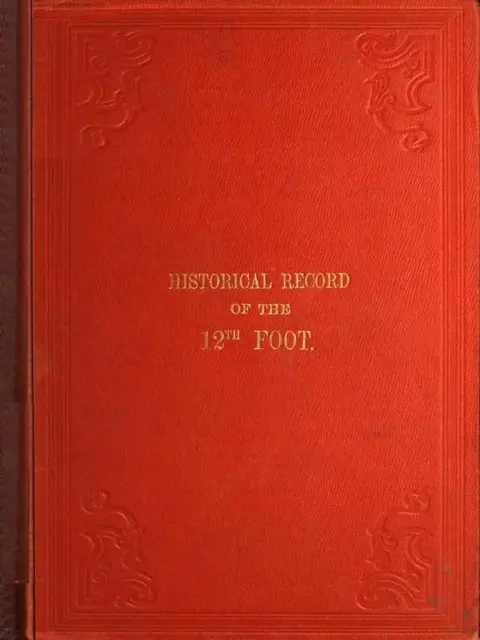
"Historical Record of the Twelfth, or the East Suffolk, Regiment of Foot" by Richard Cannon is a historical account written in the mid-19th century. This work provides a detailed narrative of the formation and military activities of this specific regiment from its inception in 1685 through to 1847. The book likely covers various battles, notable officers, and significant achievements, showcasing the regiment's service over many decades. The opening of the book lays out the premise for documenting the distinguished record of the Twelfth Regiment and emphasizes the importance of such records in preserving military history. It explains how the regiment was formed in response to the political climate in England during the late 17th century, particularly due to the Monmouth Rebellion. Cannon introduces readers to the rigorous service and the key roles that members of the regiment played in various military engagements, setting the stage for a comprehensive exploration of their exploits throughout its history. This establishes a foundational context for readers interested in military history and the specific legacy of this regiment within the British Army.
Introduction adapted from the source catalogue; source summaries may be automatically generated.
Free to read · English · 34,158 words · No account needed
MAKE TIME FOR A GOOD BOOK
On by default. Untick to stop anonymous reading totals. Each page counts after 10 seconds in view. How this works.
Anonymous counting is on unless you have switched it off.
2 Batt. 3rd Foot, constituted 61 reg.
" 4th " " 62 "
" 8th " " 63 "
" 11th " " 64 "
" 12th " " 65 "
" 19th " " 66 "
" 20th " " 67 "
" 23rd " " 68 "
2 Batt. 24th Foot, constituted 69 reg.
" 31st " " 70 "
" 32nd " " 71 "
" 33rd " " 72 "
" 34th " " 73 "
" 36th " " 74 "
" 37th " " 75 "
The above 71st, 72nd, 73rd, 74th, and 75th regiments were disbanded in the Year 1763, after the peace of Fontainbleau.
[10] 'Notwithstanding the loss they sustained before they could get up to the enemy; notwithstanding the repeated attacks of the enemy's cavalry; notwithstanding a fire of musketry well kept up by the enemy's infantry; notwithstanding their being exposed in front and flank, such was the unshaken firmness of those troops (12th, 20th, 23rd, 25th, 37th, 51st, and brigade of Hanoverians) that nothing could stop them, and the whole body of French cavalry was totally routed.'--Campaigns of Prince Ferdinand of Brunswick.
[11] 'The brunt of the battle was almost wholly sustained by the English infantry and some corps of Hanoverians, who stood the reiterated charges of so many bodies of horse, the strength and glory of the French armies, with a resolution, steadiness, and expertness in their manœuvres, which was never exceeded, perhaps never equalled: they cut to pieces, or entirely routed those bodies. Two brigades of foot attempted to support them; but they vanished before the English infantry.'--Annual Register.
'Six regiments of English infantry, and two battalions of Hanoverian guards, not only bore the whole brunt of the French carabineers and gendarmerie, but absolutely broke every body of horse and foot that advanced to attack them on the left and in the centre.'--Smollett.
[12] The six British regiments of infantry, which took part in the glorious battle of MINDEN, were the 12th, 20th, 23rd, 25th, 37th, and 51st regiments.
[13] London Gazette.
[14] Strength of the Garrison of Gibraltar at the commencement of the Blockade, 21st June, 1779:--
British. Officers. Men.
Royal Artillery 25 460
Royal Engineers 8 114
12th Foot 29 570
39th " 29 557
56th " 27 560
58th " 28 577
72nd " (Royal Manchester
Volunteers,) disbanded in 1783 33 1013
---- ---- 4030
Hanoverian.
Hardenberg's Regiment 29 423
Reden's " 27 417
De La Motte's " 33 423
---- ---- 1352
Total ---- 5382
[15] The Siege of Gibraltar, by Captain Drinkwater, of the late seventy-second regiment, who was in garrison at the time.
[16] It is a remarkable circumstance that the TWELFTH foot, and the Hanoverian regiment of Hardenberg, fought alongside each other at the battle of Minden, and they were the only two entire regiments employed in the sortie from Gibraltar.
[17] Vide the Record of the Third Foot, or the Buffs, from page
69 to 74.
Your reading position is saved on this browser. Take it to another device with a library code. Reading pages adapt to text, rather than matching a printed edition.
Richard Cannon
Richard Cannon

Richard Cannon
Richard Cannon
BEHIND THE BOOK
This eBook is for the use of anyone anywhere in the United States and most other parts of the world at no cost and with almost no restrictions whatsoever. You may copy it, give it away or re-use it under the terms of the Project Gutenberg License included with this eBook or online at www.gutenberg.org. If you are not located in the United States, you will have to check the laws of the country where you are located before using this eBook. Read the source licence.
The original source file, including credits and licence, is retained by this library. Request an original-format copy at no charge. Please include the book title and Project Gutenberg identifier #54054.
KEEP YOUR CURIOSITY GOING
Cécile Tormay

Moritz Busch
John L. Ransom
Frances Wright
Cécile Tormay

Mabel Potter Daggett