
Historical record of the Ninety-second Regiment, originally termed “The Gordon Highlanders” and numbered the Hundredth Regiment
Richard Cannon
THE CLASSIC COLLECTION · 1848
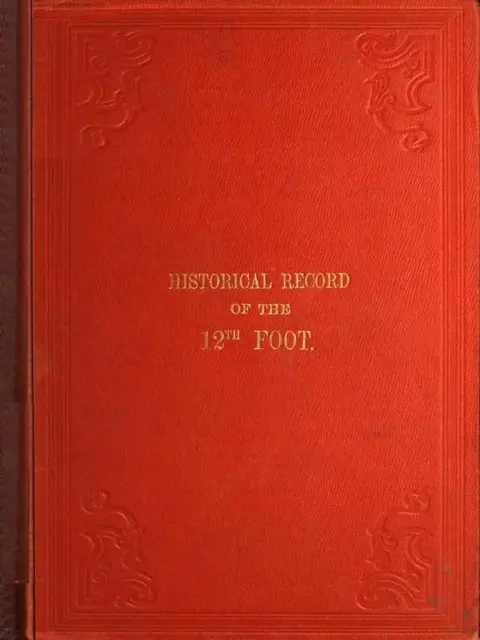
"Historical Record of the Twelfth, or the East Suffolk, Regiment of Foot" by Richard Cannon is a historical account written in the mid-19th century. This work provides a detailed narrative of the formation and military activities of this specific regiment from its inception in 1685 through to 1847. The book likely covers various battles, notable officers, and significant achievements, showcasing the regiment's service over many decades. The opening of the book lays out the premise for documenting the distinguished record of the Twelfth Regiment and emphasizes the importance of such records in preserving military history. It explains how the regiment was formed in response to the political climate in England during the late 17th century, particularly due to the Monmouth Rebellion. Cannon introduces readers to the rigorous service and the key roles that members of the regiment played in various military engagements, setting the stage for a comprehensive exploration of their exploits throughout its history. This establishes a foundational context for readers interested in military history and the specific legacy of this regiment within the British Army.
Introduction adapted from the source catalogue; source summaries may be automatically generated.
Free to read · English · 34,158 words · No account needed
MAKE TIME FOR A GOOD BOOK
On by default. Untick to stop anonymous reading totals. Each page counts after 10 seconds in view. How this works.
Anonymous counting is on unless you have switched it off.
In 1828 the garrison of Gibraltar was afflicted with a severe epidemic fever, which occasioned the death of upwards of five hundred soldiers; the inhabitants suffered much more severely than the troops. During the prevalence of the disease, the TWELFTH were encamped for four months on the neutral ground, where they were reviewed on the 27th of December, by the Lieut.-Governor Sir George Don, who expressed to Lieut.-Colonel Bayley, his entire approbation of the appearance of the corps, of its discipline, and interior economy. Eight officers, and two hundred and eighteen non-commissioned officers and soldiers, had been afflicted with the fever, of which number, two officers (Lieutenant Forssteen and Ensign Werge) and fifty-three soldiers had died.
[Sidenote: 1834]
The regiment remained at Gibraltar until the spring of 1834, when it embarked for England, and landed at Portsmouth, from whence it marched to Winchester, and during the winter into Lancashire.
[Sidenote: 1835]
[Sidenote: 1836]
In November 1835, the regiment embarked at Liverpool for Ireland; it landed at Dublin, and was quartered in that city until October 1836, when it proceeded to Athlone.
[Sidenote: 1837]
The regiment was again divided into six service and four depôt companies in the summer of 1837; and in August, the service companies embarked at Cork for the Mauritius, where they arrived in December, and landed at Port Louis.
[Sidenote: 1838]
During the year 1838 the depôt companies were stationed at Kinsale
and Tralee.
[Sidenote: 1839]
On the augmentation of the army in August, 1839, the establishment of the TWELFTH was increased to forty-seven serjeants, fourteen drummers, and eight hundred rank and file.
[Sidenote: 1840]
[Sidenote: 1841]
In May, 1839, the depôt companies embarked at Cork for Wales, and continued to be stationed at Newtown, Builth, and Brecon, until May, 1840, when they proceeded to Scotland and occupied the barracks at Paisley until May, 1841, when they returned to South Britain and were stationed at Sunderland.
[Sidenote: 1842]
In April, 1842, the TWELFTH Regiment having been augmented to an establishment of one lieut.-colonel, twelve captains, fourteen lieutenants, ten ensigns, six staff officers, sixty-seven serjeants, twenty-five drummers, and twelve hundred rank and file, was ordered to be separated into two battalions; the six service companies abroad being termed the First battalion, and the depôt, augmented to six companies, being styled the Reserve battalion.
[Sidenote: 1843]
The depôt was consequently removed from Sunderland to Weedon in May, 1842, and receiving 255 volunteers from other corps, was there organised for foreign service. The reserve battalion embarked from Portsmouth in the "Java" transport for the Mauritius in November, 1842, under the command of Major Sir Robert Douglas, Bart., but was disembarked at the Cape of Good Hope, and remained there until May, 1843, when it proceeded to its original destination.
[Sidenote: 1847]
Your reading position is saved on this browser. Take it to another device with a library code. Reading pages adapt to text, rather than matching a printed edition.
Richard Cannon
Richard Cannon

Richard Cannon
Richard Cannon
BEHIND THE BOOK
This eBook is for the use of anyone anywhere in the United States and most other parts of the world at no cost and with almost no restrictions whatsoever. You may copy it, give it away or re-use it under the terms of the Project Gutenberg License included with this eBook or online at www.gutenberg.org. If you are not located in the United States, you will have to check the laws of the country where you are located before using this eBook. Read the source licence.
The original source file, including credits and licence, is retained by this library. Request an original-format copy at no charge. Please include the book title and Project Gutenberg identifier #54054.
KEEP YOUR CURIOSITY GOING
Cécile Tormay

Moritz Busch
John L. Ransom
Frances Wright
Cécile Tormay

Mabel Potter Daggett