
Historical record of the Ninety-second Regiment, originally termed “The Gordon Highlanders” and numbered the Hundredth Regiment
Richard Cannon
THE CLASSIC COLLECTION · 1853
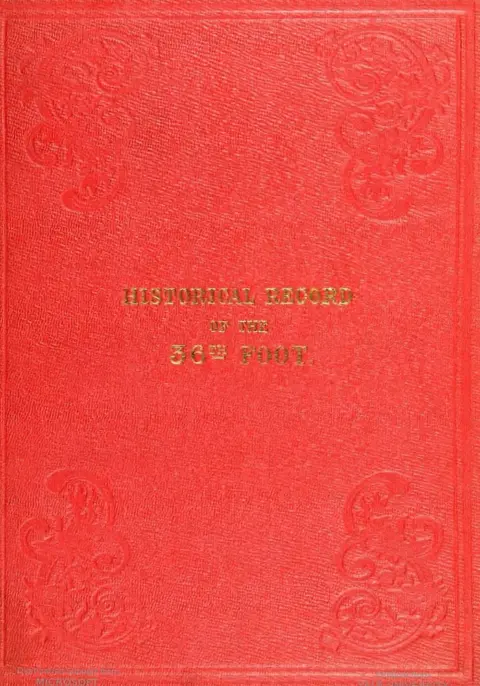
"Historical Record of the Thirty-sixth, or the Herefordshire Regiment of Foot" by Richard Cannon is a historical account written in the mid-19th century. This record details the formation and service history of the Thirty-sixth Regiment, highlighting its notable operations from its inception in the early 18th century to the mid-19th century. The book likely explores military campaigns, battles, and the evolution of the regiment over time, focusing on the valor and achievements of its soldiers." "The opening of the book begins with a transcriber's note indicating the formatting conventions used throughout the text. Following this, there’s a general order detailing the command by the British monarchy for comprehensive accounts of each regiment's service in the military, emphasizing the importance of recording bravery and achievements for historical reference. The preface articulates the rationale for chronicling the regiment's history, which serves to inspire future soldiers by showcasing their predecessors' valor and dedication. The introduction sets the stage for the regiment’s history, referencing significant historical contexts such as the War of the Spanish Succession and the intrinsic military values of British infantry, thereby framing the subsequent detailed accounts of the Thirty-sixth's engagements in various military operations."
Introduction adapted from the source catalogue; source summaries may be automatically generated.
Free to read · English · 45,807 words · No account needed
MAKE TIME FOR A GOOD BOOK
On by default. Untick to stop anonymous reading totals. Each page counts after 10 seconds in view. How this works.
Anonymous counting is on unless you have switched it off.
“These have all been surmounted by the conduct of the troops themselves; and the enemy has been taught, that whatever advantages of position or of numbers he may employ, there is inherent in the British officers and soldiers a bravery that knows not how to yield, that no circumstances can appal, and that will ensure victory when it is to be obtained by the exertion of any human means.
“The Lieut.-General has the greatest satisfaction in distinguishing such meritorious services as came within his observation, or have been brought to his knowledge.
“His acknowledgments are, in a peculiar manner, due to Lieut.-General Lord William Bentinck, and the brigade under his command, consisting of the fourth, forty-second, and fiftieth regiments, and which sustained the weight of the attack.
“Major-General Manningham, with his brigade, consisting of the Royals, the twenty-sixth and eighty-first regiments, and Major-General Warde, with the brigade of Guards, will also be pleased to accept his best thanks for their steady and gallant conduct during the action.
“To Major-General Paget, who, by a judicious movement of the reserve, effectually contributed to check the progress of the enemy on the right; and to the first battalion of the fifty-second and ninety-fifth regiments, which were thereby engaged, the greatest praise is justly due.
“That part of Major-General Leith’s brigade which was engaged, consisting of the fifty-ninth regiment, under the conduct of the Major-General, also claims marked approbation.
“The enemy not having rendered the attack on the left a serious one, did not afford to the troops stationed in that quarter an opportunity of displaying that gallantry which must have made him repent the attempt.
“The piquets and advanced posts, however, of the brigades under the command of Major-Generals Hill and Leith, and Colonel Catlin Craufurd, conducted themselves with determined resolution, and were ably supported by the officers commanding these brigades, and by the troops of which they were composed.
“It is peculiarly incumbent upon the Lieut.-General to notice the vigorous attack made by the second battalion of the fourteenth regiment under Lieut.-Colonel Nicolls, which drove the enemy out of the village, of the left of which he had possessed himself.
“The exertions of Lieut.-Colonel Murray, Quartermaster-General, and of the other officers of the General Staff, during the action, were unremitted, and deserve every degree of approbation.
“The illness of Brigadier-General Clinton, Adjutant-General, unfortunately deprived the army of the benefit of his services.
“The Lieut.-General hopes the loss in point of numbers is not so considerable as might have been expected; he laments, however, the fall of the gallant soldiers and valuable officers who have suffered.
Your reading position is saved on this browser. Take it to another device with a library code. Reading pages adapt to text, rather than matching a printed edition.
Richard Cannon
Richard Cannon

Richard Cannon
Richard Cannon
BEHIND THE BOOK
This eBook is for the use of anyone anywhere in the United States and most other parts of the world at no cost and with almost no restrictions whatsoever. You may copy it, give it away or re-use it under the terms of the Project Gutenberg License included with this eBook or online at www.gutenberg.org. If you are not located in the United States, you will have to check the laws of the country where you are located before using this eBook. Read the source licence.
The original source file, including credits and licence, is retained by this library. Request an original-format copy at no charge. Please include the book title and Project Gutenberg identifier #66598.
KEEP YOUR CURIOSITY GOING
Cécile Tormay

Moritz Busch
John L. Ransom
Frances Wright
Cécile Tormay

Mabel Potter Daggett