
Historical record of the Ninety-second Regiment, originally termed “The Gordon Highlanders” and numbered the Hundredth Regiment
Richard Cannon
THE CLASSIC COLLECTION · 1847
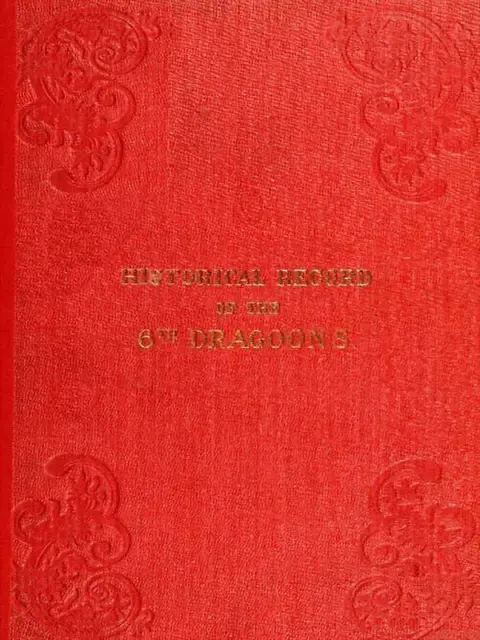
"Historical Record of the Sixth, or Inniskilling Regiment of Dragoons" by Richard Cannon is a historical account written in the mid-19th century. This detailed narrative chronicles the formation of the Sixth, or Inniskilling Regiment of Dragoons, beginning in 1689 and including significant military engagements through to 1846. The book focuses on the regiment's notable actions, bravery, and the evolution of cavalry in the British Army, reflecting the political and military dynamics of the time. The opening portion of the book sets the stage by discussing the historical background leading to the establishment of the Inniskilling Dragoons amidst the political turmoil of King James II's reign. It highlights the resistance of Protestant communities in Ireland against oppressive forces, particularly emphasizing the critical events at Londonderry and Inniskilling. The narrative details the formation of military units to protect against these threats and the evolution of these forces into the recognized regiment, characterized by its valiant contributions and transformative role in the conflicts of the time. This introductory context outlines the regiment's significance and establishes a foundation for the ensuing detailed accounts of their engagements and heroic feats.
Introduction adapted from the source catalogue; source summaries may be automatically generated.
Free to read · English · 26,744 words · No account needed
MAKE TIME FOR A GOOD BOOK
On by default. Untick to stop anonymous reading totals. Each page counts after 10 seconds in view. How this works.
Anonymous counting is on unless you have switched it off.
Leaving Dublin in May, 1823, the regiment proceeded to Donaghadee, where it embarked for Scotland on the 6th of June, landed on the same day, and proceeded to Glasgow, where it passed the succeeding twelve months.
[Sidenote: 1824]
[Sidenote: 1825]
[Sidenote: 1826]
[Sidenote: 1827]
From Glasgow the regiment marched in July, 1824, for York; in the summer of 1825 the head-quarters were removed to Manchester; in April, 1826, to Dorchester; and in the following year to Nottingham.
The Earl of Pembroke died in the autumn, and was succeeded in the colonelcy by the Hon. Sir William Lumley, G.C.B., by commission dated the 3rd of November, 1827.
[Sidenote: 1828]
[Sidenote: 1829]
Leaving Nottingham in March, 1828, the regiment proceeded to Ipswich, but returned to Nottingham in October following; and in the summer of 1829 proceeded to Liverpool and embarked for Ireland. After landing at Dublin, it proceeded to Dundalk, where it passed the winter.
[Sidenote: 1830]
[Sidenote: 1831]
[Sidenote: 1832]
In the summer of 1830 the regiment proceeded to Dublin; in July, 1831, the head-quarters were at Longford; and in 1832 at Cahir, many detachments being furnished in aid of the civil power during these years.
[Sidenote: 1833]
The Regiment proceeded, in March, 1833, to Dublin, where it embarked for England, and after landing at Liverpool, marched to Scotland, and was stationed at Edinburgh.
[Sidenote: 1834]
[Sidenote: 1835]
[Sidenote: 1836]
[Sidenote: 1837]
From Scotland the regiment marched in the summer of 1834 to England, the head-quarters, proceeding to Nottingham; in 1835 to Ipswich; in 1836 to Brighton; and in 1837 to Dorchester.
[Sidenote: 1838]
[Sidenote: 1839]
In the summer of 1838 the regiment marched to Bristol and embarked for Ireland; it landed at Cork on the 4th of June, and proceeded from thence to Cahir. In April, 1839, it was removed to Newbridge, and in July to Dublin.
[Sidenote: 1840]
In April, 1840, General the Honourable Sir William Lumley, G.C.B., was removed to the first dragoon guards, and was succeeded in the colonelcy of the SIXTH dragoons by Lieutenant-General Sir Joseph Straton, K.C.H., from the eighth hussars; and this officer dying in October following, the colonelcy was conferred on Lieutenant-General Sir George Pownall Adams, K.C.H., by commission dated the 26th of October, 1840.
In the summer of this year the head-quarters were removed to
Newbridge, and several detachments were furnished in aid of the
civil power.
[Sidenote: 1841]
The regiment proceeded to Dublin in the spring of 1841, embarked
for Liverpool, and the head-quarters were afterwards established at
Birmingham.
[Sidenote: 1842]
In May, 1842, the regiment commenced its march for Scotland, and was quartered at Glasgow and Edinburgh; the whole assembling at Edinburgh in August.
Your reading position is saved on this browser. Take it to another device with a library code. Reading pages adapt to text, rather than matching a printed edition.
Richard Cannon
Richard Cannon

Richard Cannon
Richard Cannon
BEHIND THE BOOK
This eBook is for the use of anyone anywhere in the United States and most other parts of the world at no cost and with almost no restrictions whatsoever. You may copy it, give it away or re-use it under the terms of the Project Gutenberg License included with this eBook or online at www.gutenberg.org. If you are not located in the United States, you will have to check the laws of the country where you are located before using this eBook. Read the source licence.
The original source file, including credits and licence, is retained by this library. Request an original-format copy at no charge. Please include the book title and Project Gutenberg identifier #55536.
KEEP YOUR CURIOSITY GOING
Cécile Tormay

Moritz Busch
John L. Ransom
Frances Wright
Cécile Tormay

Mabel Potter Daggett