
Historical record of the Ninety-second Regiment, originally termed “The Gordon Highlanders” and numbered the Hundredth Regiment
Richard Cannon
THE CLASSIC COLLECTION · 1847
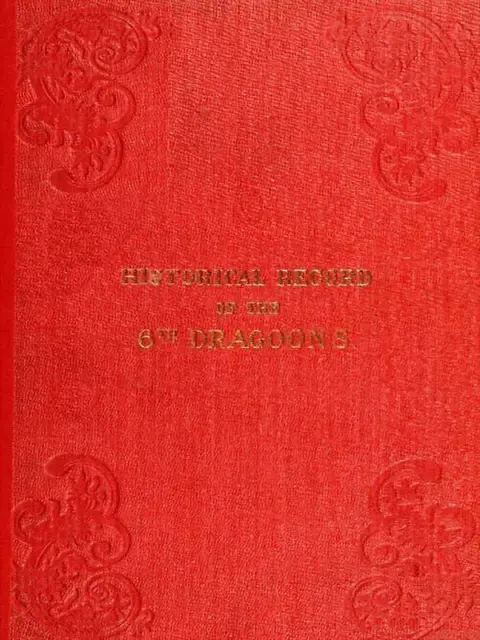
"Historical Record of the Sixth, or Inniskilling Regiment of Dragoons" by Richard Cannon is a historical account written in the mid-19th century. This detailed narrative chronicles the formation of the Sixth, or Inniskilling Regiment of Dragoons, beginning in 1689 and including significant military engagements through to 1846. The book focuses on the regiment's notable actions, bravery, and the evolution of cavalry in the British Army, reflecting the political and military dynamics of the time. The opening portion of the book sets the stage by discussing the historical background leading to the establishment of the Inniskilling Dragoons amidst the political turmoil of King James II's reign. It highlights the resistance of Protestant communities in Ireland against oppressive forces, particularly emphasizing the critical events at Londonderry and Inniskilling. The narrative details the formation of military units to protect against these threats and the evolution of these forces into the recognized regiment, characterized by its valiant contributions and transformative role in the conflicts of the time. This introductory context outlines the regiment's significance and establishes a foundation for the ensuing detailed accounts of their engagements and heroic feats.
Introduction adapted from the source catalogue; source summaries may be automatically generated.
Free to read · English · 26,744 words · No account needed
MAKE TIME FOR A GOOD BOOK
On by default. Untick to stop anonymous reading totals. Each page counts after 10 seconds in view. How this works.
Anonymous counting is on unless you have switched it off.
In the spring of 1733, the regiment was ordered to march for England, and in June furnished detachments on coast duty in Essex, on which service it was employed during the following year.
[Sidenote: 1734]
The Earl of Stair having joined the opposition against Sir Robert Walpole was removed from the regiment, and was succeeded in the colonelcy by Charles Lord Cadogan from the Fourth foot, by commission dated the 19th of June, 1734.
[Sidenote: 1735]
[Sidenote: 1736]
[Sidenote: 1737]
[Sidenote: 1738]
The regiment remained in the south of England, and was employed on coast duty during the years 1735 and 1736; in May, 1737, it marched to Nottingham and Derby; and in April, 1738, into Lincolnshire, and furnished detachments for the prevention of smuggling along the coast.
[Sidenote: 1739]
At this period the establishment was six troops of three officers, one quarter-master, two sergeants, three corporals, two drummers, one hautboy, and forty-nine private men per troop; but on the breaking out of the war with Spain, in 1739, an augmentation of one sergeant and ten men per troop was ordered, making a total of four hundred and thirty-five officers and men, including the staff.
[Sidenote: 1740]
The regiment continued to occupy quarters in Lincolnshire in 1740.
[Sidenote: 1741]
In the summer of 1741, when the Elector of Bavaria, aided by the French monarch, attempted to deprive the Archduchess Maria Theresa, of Hungary and Bohemia, the INNISKILLING dragoons were directed to hold themselves in readiness to proceed on foreign service, and were encamped on Lexden Heath, with six other regiments of cavalry and seven of infantry; but no embarkation took place, and in the autumn they went into quarters.
[Sidenote: 1742]
In 1742 King George II. sent sixteen thousand men to Flanders, under Field-Marshal the Earl of Stair, to support the interests of the house of Austria; and the INNISKILLING dragoons were selected for this service. After landing at Ostend, the regiment marched to Ghent, where it was quartered several weeks, and subsequently proceeded to Brussels.
[Sidenote: 1743]
From Brabant, the INNISKILLING dragoons marched, in the beginning of 1743, for Germany, and in May they formed, with the Third dragoons, three battalions of foot guards, and two regiments of the line, a detached camp below the town of Hochst.
While in Germany, the lieutenant-colonel, JAMES GARDINER, was promoted to the colonelcy of the Thirteenth dragoons[13].
Lord Cadogan, having been removed to the second troop (now second regiment) of life guards, was succeeded in the colonelcy by Field-marshal the Earl of Stair, by commission dated the 25th of April, 1743.
In the early part of June the INNISKILLING dragoons crossed the Maine and encamped at Aschaffenberg, where King George II. and His Royal Highness the Duke of Cumberland joined the army.
Your reading position is saved on this browser. Take it to another device with a library code. Reading pages adapt to text, rather than matching a printed edition.
Richard Cannon
Richard Cannon

Richard Cannon
Richard Cannon
BEHIND THE BOOK
This eBook is for the use of anyone anywhere in the United States and most other parts of the world at no cost and with almost no restrictions whatsoever. You may copy it, give it away or re-use it under the terms of the Project Gutenberg License included with this eBook or online at www.gutenberg.org. If you are not located in the United States, you will have to check the laws of the country where you are located before using this eBook. Read the source licence.
The original source file, including credits and licence, is retained by this library. Request an original-format copy at no charge. Please include the book title and Project Gutenberg identifier #55536.
KEEP YOUR CURIOSITY GOING
Cécile Tormay

Moritz Busch
John L. Ransom
Frances Wright
Cécile Tormay

Mabel Potter Daggett