
Historical record of the Ninety-second Regiment, originally termed “The Gordon Highlanders” and numbered the Hundredth Regiment
Richard Cannon
THE CLASSIC COLLECTION · 1847
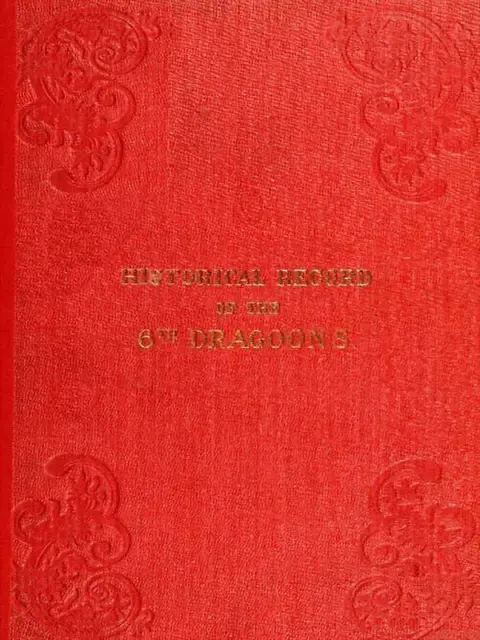
"Historical Record of the Sixth, or Inniskilling Regiment of Dragoons" by Richard Cannon is a historical account written in the mid-19th century. This detailed narrative chronicles the formation of the Sixth, or Inniskilling Regiment of Dragoons, beginning in 1689 and including significant military engagements through to 1846. The book focuses on the regiment's notable actions, bravery, and the evolution of cavalry in the British Army, reflecting the political and military dynamics of the time. The opening portion of the book sets the stage by discussing the historical background leading to the establishment of the Inniskilling Dragoons amidst the political turmoil of King James II's reign. It highlights the resistance of Protestant communities in Ireland against oppressive forces, particularly emphasizing the critical events at Londonderry and Inniskilling. The narrative details the formation of military units to protect against these threats and the evolution of these forces into the recognized regiment, characterized by its valiant contributions and transformative role in the conflicts of the time. This introductory context outlines the regiment's significance and establishes a foundation for the ensuing detailed accounts of their engagements and heroic feats.
Introduction adapted from the source catalogue; source summaries may be automatically generated.
Free to read · English · 26,744 words · No account needed
MAKE TIME FOR A GOOD BOOK
On by default. Untick to stop anonymous reading totals. Each page counts after 10 seconds in view. How this works.
Anonymous counting is on unless you have switched it off.
The King of France having made preparations, in the spring of 1708, for landing the Pretender with a body of troops in Scotland, to aid him in his projected attempt to ascend the British throne, the INNISKILLING dragoons were held in readiness to embark for Scotland; but the French fleet having been chased from the British shores, the regiment remained in Ireland until the following autumn, when it landed on the English coast, and was stationed, during the winter, in Yorkshire and Lancashire.
[Sidenote: 1709]
[Sidenote: 1710]
[Sidenote: 1711]
[Sidenote: 1712]
The regiment was withdrawn from its cantonments in the early part of 1709, and proceeded to Scotland, where it remained during the three following years.
[Sidenote: 1713]
Returning to England after the peace of Utrecht, the regiment was
stationed in Cumberland.
[Sidenote: 1714]
In September, 1714, the regiment again occupied quarters in Scotland, and the officers, with those of Brigadier-General Hans Hamilton's (now Sixteenth foot), celebrated at Stirling the arrival of King George I. from Hanover, with public rejoicings.
[Sidenote: 1715]
Lieut.-General Echlin retired from the regiment in March, 1715, and was succeeded by JOHN EARL OF STAIR, who had been removed from the Scots Greys, by Queen Anne's ministry, in April of the preceding year.
The regiment was stationed in Lancashire in the spring of 1715, and in June one squadron was employed in suppressing riots at Manchester. Soon afterwards the Regiment marched to Scotland, and in the autumn, it was encamped at Stirling, under Major-General Wightman.
Encouraged by promises of aid from the Continent, the Earl of Mar raised the standard of the Pretender in the Highlands, and assembled an army of ten thousand men. The camp at Stirling was afterwards augmented by additional forces, and the Duke of Argyle assumed the command; but the rebels exceeded in numbers the king's troops.
Ten thousand rebels, headed by the Earl of Mar, were on the march to cross the Forth and penetrate towards England, when the Duke of Argyle quitted the camp at Stirling, with a body of troops of less than four thousand men, to oppose the progress of the rebels, and on the morning of Sunday the 13th of November the two armies confronted each other on Sheriffmuir near Dumblain. The Inniskilling dragoons formed two strong squadrons; the first squadron was posted, with the Royal North British (second) and Evans' (fourth) dragoons, on the right of the king's army; and the second squadron, with Carpenter's (third) and Kerr's (seventh) dragoons, was stationed on the left. The rebels attempting to turn the right, the dragoons on that flank dashed forward sword in hand, and commenced the action by a furious charge on the left wing of the rebel army. A sharp conflict ensued; but soon the clash of swords and report of pistols ceased, and the insurgent bands were seen falling back in confusion; while the Greys, Evans', and INNISKILLING dragoons, resolute men on powerful horses, rode onward, sabring the astonished Highlanders, who fled in dismay, and the Buffs (third foot) and other infantry corps on the right, followed the victorious dragoons in their triumphant career. The rebels, having great superiority of numbers, attempted to rally several times; but the dragoons galloped forward with admirable courage, and breaking through every opposition, pursued their adversaries to the banks of the river Allan, where they were ordered to halt.
Your reading position is saved on this browser. Take it to another device with a library code. Reading pages adapt to text, rather than matching a printed edition.
Richard Cannon
Richard Cannon

Richard Cannon
Richard Cannon
BEHIND THE BOOK
This eBook is for the use of anyone anywhere in the United States and most other parts of the world at no cost and with almost no restrictions whatsoever. You may copy it, give it away or re-use it under the terms of the Project Gutenberg License included with this eBook or online at www.gutenberg.org. If you are not located in the United States, you will have to check the laws of the country where you are located before using this eBook. Read the source licence.
The original source file, including credits and licence, is retained by this library. Request an original-format copy at no charge. Please include the book title and Project Gutenberg identifier #55536.
KEEP YOUR CURIOSITY GOING
Cécile Tormay

Moritz Busch
John L. Ransom
Frances Wright
Cécile Tormay

Mabel Potter Daggett