THE CLASSIC COLLECTION✦An outlaw’s diary: the CommuneCLASSIC FREE BOOKS
An outlaw’s diary: the Commune
Cécile Tormay
THE CLASSIC COLLECTION · 1922
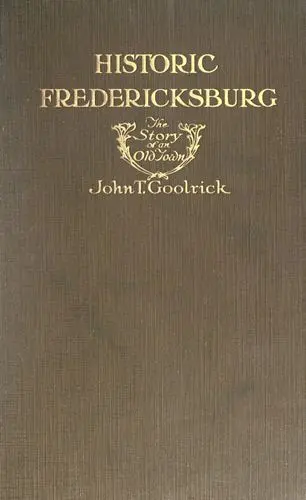
"HISTORIC FREDERICKSBURG: The Story of an Old Town" by John T. Goolrick is a historical account written in the early 20th century. The book explores the rich history of Fredericksburg, Virginia, tracing its significance from its colonial origins through its involvement in major conflicts such as the Revolutionary War and the Civil War. The author focuses on the town's resilience and the stories of its inhabitants, showcasing the cultural and historical tapestry that defines Fredericksburg. The opening of the narrative sets the stage by painting a vivid picture of Fredericksburg's geographical beauty and its layered past. Goolrick reminisces about the town's atmosphere, illustrating how it embodies both history and modern life. He emphasizes the town's sacrifices during the Revolutionary War and its role during the Civil Wars, reflecting on how Fredericksburg has remained loyal and resilient despite the hardships it encountered. This introductory portion reveals Goolrick's deep personal connection to the town and his intention to convey its narrative in a way that highlights the human experiences woven into the historical events.
Introduction adapted from the source catalogue; source summaries may be automatically generated.
Free to read · English · 62,241 words · No account needed
MAKE TIME FOR A GOOD BOOK
On by default. Untick to stop anonymous reading totals. Each page counts after 10 seconds in view. How this works.
Anonymous counting is on unless you have switched it off.
His return to his old home! His death! We see this also, but with this is the knowledge that he lived greatly, and in his ears, while dying, sounded again, the shout of victory, while his heart held the dream of the old romance.
Among the first men in America to "fan the flames of sedition," as an English traveler said of him long before the war, was Mine Host George Weedon, keeper of the Rising Sun Tavern, Postmaster, and an Irish immigrant. At his place gathered all the great of his day, spending hours dicing and drinking punch.
Over and over among these men--Washington, Mason, Henry, the Lees, Jefferson and every Virginia gentleman of that section, George Weedon heard discussion of the Colonies' problems, and he forcibly gave vent to his opinions.
Time and again he expressed the idea of freedom before others had thought of more than protest. His wild Irish talk in the old Rising Sun Tavern helped to light the torch of liberty in America.
When war came, Weedon was elected Lieutenant-Colonel of the First Virginia, of which Hugh Mercer was chosen Colonel. August 17, 1776, he became its Colonel, and on February 24, 1777, he was made a Brigadier-General.
In the Battle of Brandywine, General Weedon's division rendered conspicuous service, when they checked the pursuit of the British and saved our army from rout. He commanded brilliantly at Germantown. Wherever he fought, his great figure and stentorian voice were prominent in the conflict.
He admired Washington and his fellow-generals. It was not because of these, but because he thought Congress to have treated him unfairly about rank, that he left the Army at Valley Forge. He re-entered in 1780, and in 1781 was given command of the Virginia troops, which he held until the surrender of Yorktown, where he played an important part.
George Weedon was the first President of the Virginia Society of the Cincinnati, a fraternity of Revolutionary officers which General Washington helped to organize, and this was, indeed, a singular honor. He was a member of the Fredericksburg Masonic Lodge, of which Washington was also a member. After the war, he lived at "The Sentry Box," the former home of his gallant brother-in-law, General Mercer.
[Sidenote: A Song For the Yuletide]
General Weedon was a man of exuberant spirits, loud of voice and full of Irish humor. He wrote a song called "Christmas Day in '76," and on each Yuletide he assembled at his board his old comrades and friends, and, while two negro boys stood sentinel at the door, drank punch and roared out the verses:
Your reading position is saved on this browser. Take it to another device with a library code. Reading pages adapt to text, rather than matching a printed edition.
BEHIND THE BOOK
This eBook is for the use of anyone anywhere in the United States and most other parts of the world at no cost and with almost no restrictions whatsoever. You may copy it, give it away or re-use it under the terms of the Project Gutenberg License included with this eBook or online at www.gutenberg.org. If you are not located in the United States, you will have to check the laws of the country where you are located before using this eBook. Read the source licence.
The original source file, including credits and licence, is retained by this library. Request an original-format copy at no charge. Please include the book title and Project Gutenberg identifier #39403.
KEEP YOUR CURIOSITY GOING
Cécile Tormay

Moritz Busch
John L. Ransom
Frances Wright
Cécile Tormay

Mabel Potter Daggett