THE CLASSIC COLLECTION✦Journal of a tour in Marocco and the Great AtlasCLASSIC FREE BOOKS
Journal of a tour in Marocco and the Great Atlas
Joseph Dalton Hooker & John Ball
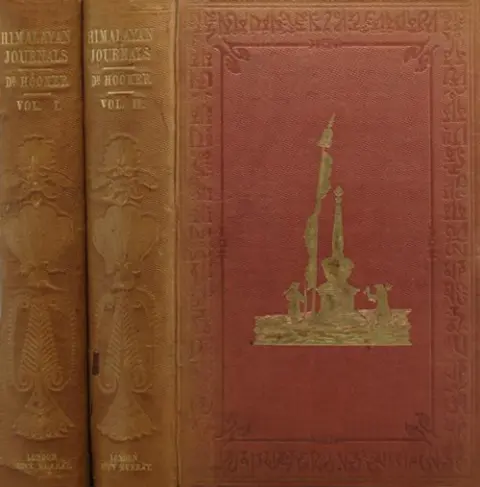
THE CLASSIC COLLECTION · 1854
"Himalayan Journals — Complete" by Joseph Dalton Hooker is a travel and scientific exploration narrative written during the late 19th century. The work details Hooker's extensive travels through the Himalayan region, particularly Sikkim, Nepal, and the surrounding mountains, focusing on botany and geology. It serves as both a personal account of his adventures and an important scientific observation, providing insights into the flora, fauna, and cultures of the areas he explored. The opening of the book introduces Hooker's journey to India and outlines his initial explorations, starting with the Sunderbunds and moving towards the Himalayan foothills. He describes the geography, the challenges he faced while traveling, and his experiences at different camps. Hooker shares his observations of the vegetation and wildlife, the local cultures, and the geological formations he encounters. His keen interest in botany is evident as he meticulously records various plant species, along with their characteristics and uses, setting the stage for the detailed natural history that unfolds in the subsequent chapters.
Introduction adapted from the source catalogue; source summaries may be automatically generated.
Free to read · English · 270,303 words · No account needed
MAKE TIME FOR A GOOD BOOK
On by default. Untick to stop anonymous reading totals. Each page counts after 10 seconds in view. How this works.
Anonymous counting is on unless you have switched it off.
Number
of Obs. Name of Locality Elevation
Feet
27
38
36
24
12
10
72
8
2
16
3
12
4
17
10 Silhet (Mr. Stainforth’s)
Soormah river, between Silhet and Megna
Silchar
Megna river
Noacolly (Dr. Baker’s)
Noacolly on voyage to Chittagong
Chittagong (Mr. Sconce’s)
Chittagong flagstaff-hill at south head of harbour
Seetakoond hill
Seetakoond bungalow
Hat-Hazaree
Hattiah
Sidhee
Chittagong to Megua
Eastern Sunderbunds 133
46
116
+ ·020*
– ·039
0†
191
151
1,136
– ·069*
– ·039
– ·049
– ·039
– ·014†
+ ·002
* Difference between barometer at station and Calcutta barometer.
† The observations were taken only when the boat was high and dry, and above the mean level of the waters.
Abies, Brunoniana, i. 206, 209, 272, 274, 342, ii. 25, 32, 44, 108;
Smithiana, ii. 25, 32, 45; Webbiana, i. 191, 272, 307, 342, ii. 44,
108.
Abrus precatorius (note), i. 16.
Acacia Arabica, i. 60, 80; Catechu, i. 31, 52, 393, 395; Serissa,
i. 193.
Acarus, ii. 173.
Aconitum, Himalayan, ii. 108; palmatum, i. 168; Napellus, i. 168;
variegatum (note), ii. 107.
Acorns, abundance of, i. 373.
Acorus Calamusa, i. 286.
Actinolites, ii. 146.
Adamia cyanea, i. 112.
Adenanthera pavonina, ii. 328.
Ægle Marmelos, i. 25, 50, (note) i. 16.
Agates, i. 33, 91.
Ailurua ochraceus, ii. 108.
Akshobya, image of, i. 322.
Alligator, i. 51, 54; droppings of in river banks, ii. 251.
Alluvium, Gangetic, i. 88, 379.
Alsophila gigantea, i. 110, 142; (note), ii. 13; spinulosa (note),
ii. 13.
Amber used in Sikkim, ii. 194.
Ameletia Indica, i. 386.
American plants in Himalaya, ii. 39.
Amherstia, ii. 245.
Amlah, Sikkim, ii. 192; examination by, ii. 211.
Amulet, Tibetan, i. 166.
Amwee, ii. 315.
Andromeda, ii. 22, 39; fastigiata, i. 343.
Andropogon acicularis, i. 385; muricatus, i. 42.
Animals at Tungu, ii. 92.
Antelope, ii. 132.
Antilope Hodgsoni, ii. 157.
Ants’ hills, white, i. 20.
Aponogeton, i. 62.
Apoplexy, symptoms of at great elevations, ii. 178.
Apple, crab, ii. 32; wild, i. 205; ii. 148.
Aquilaria Agallocha, ii. 328.
Aralia used for fodder, i. 359; pith yielding rice-paper, i. 359.
Ararat, Mount, ii. 3.
Areca gracilis, ii. 10; (note) i. 143.
Arenaria rupifraga, ii. 89.
Argemone Mexicana, i. 30.
Arisœma, i. 49.
Aristolochia saccata, ii. 6.
Arrat, name of Lepchas, i. 127.
Arrow-root, i. 93.
Artemisia, headache produced by, ii. 20; Indica (note), ii. 20.
Arums, food prepared from, ii. 49; poisoning by, ii. 75.
Arun river, i. 224; ii. 124, 143; sources of, ii. 167.
Asarum, ii. 48.
Assam valley, view of, ii. 290.
Ass, wild, ii. 172. (See Equus Hemionus and Kiang).
Astragalus, used for making paper, ii. 162; Tibetan (note), ii. 165.
Atmosphere, dry, i. 65; transparency of, ii. 127, 169.
Atmospheric vapours, strata of, i. 188, 310.
Attar of roses, i. 78.
Aucuba, i. 126; ii. 39.
Aurora Borealis, i. 37; Appendix, 384.
Your reading position is saved on this browser. Take it to another device with a library code. Reading pages adapt to text, rather than matching a printed edition.
Joseph Dalton Hooker & John Ball
Joseph Dalton Hooker
Joseph Dalton Hooker
BEHIND THE BOOK
This eBook is for the use of anyone anywhere in the United States and most other parts of the world at no cost and with almost no restrictions whatsoever. You may copy it, give it away or re-use it under the terms of the Project Gutenberg License included with this eBook or online at www.gutenberg.org. If you are not located in the United States, you will have to check the laws of the country where you are located before using this eBook. Read the source licence.
The original source file, including credits and licence, is retained by this library. Request an original-format copy at no charge. Please include the book title and Project Gutenberg identifier #6478.
KEEP YOUR CURIOSITY GOING
Wilfrid Scawen Blunt
Wilfrid Scawen Blunt

E. W. (Edgar Watson) Howe
Cécile Tormay

Moritz Busch
John L. Ransom