His Little World: The Story of Hunch Badeau
Samuel Merwin
THE CLASSIC COLLECTION · 1920
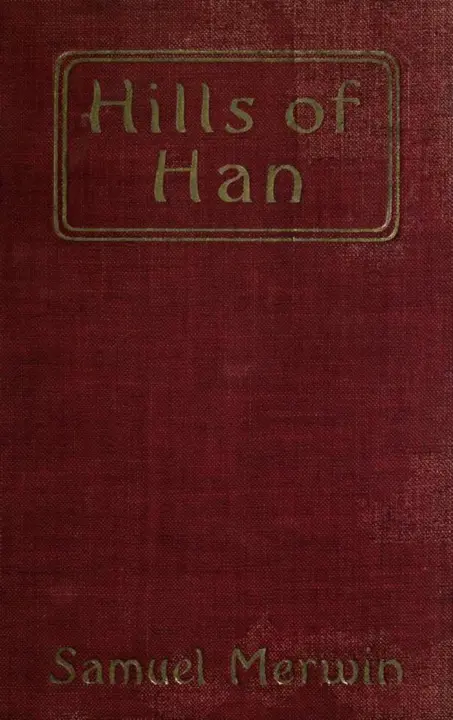
"Hills of Han: A Romantic Incident" by Samuel Merwin is a fictional novel written in the early 20th century. The story appears to delve into themes of youth, identity, and the complexities of budding romance against a backdrop of cultural exploration in Japan and China. The main character, Betty Doane, navigates her evolving feelings and experiences as she travels with her companions, including the enigmatic journalist Jonathan Brachey. The opening of the novel introduces the reader to Betty Doane, a young woman sketching the profile of a man named Jonathan Brachey in a dining room in Kyoto. As she observes the beauty of the cherry blossoms outside, Betty reflects on her affection for the culture while feeling increasingly anxious about her upcoming journey to China. The narrative touches on her experiences of feeling uprooted and how her interest in sketching intertwines with her complex emotions about her past life in China. The opening lays the groundwork for the developing interactions between Betty and Jonathan, hinting at deeper romantic possibilities amidst the tensions of travel and cultural shifts.
Introduction adapted from the source catalogue; source summaries may be automatically generated.
Free to read · English · 84,569 words · No account needed
MAKE TIME FOR A GOOD BOOK
On by default. Untick to stop anonymous reading totals. Each page counts after 10 seconds in view. How this works.
Anonymous counting is on unless you have switched it off.
Had he known where to turn for the money he would gladly have planned, at this moment, to send Betty back to the States, give her more of an education, even arrange for her to study drawing and painting. For on the train, during their silences, she had sketched the French conductor, the French-speaking Chinese porter, the sleepy, gray-brown, walled villages, the wide, desert-like flats of the Hoang-Ho, the tumbling hills. He was struck by her persistence at it; the girlish energy she put into it.
That night, late, long after the music had stopped and the last guests had left for their dwellings about the large compound, she came across the corridor and tapped at his door. She wore a kimono of Japan; her abundant brown hair rippled about her shoulders.
“Just one more good night, Daddy,” she murmured.
And then, turning away, she added this, softly:
“I never thought about the dancing until--well, we'd started...”
He stood a long moment in silence, then said:
“I'm glad you had a pleasant evening, dear. We--we're rather quiet at
T'ainan.”
Pao Ting Chuan was a man of great shrewdness and considerable distinction of appearance, skilled in ceremonial intercourse, a master of the intricate courses a prominent official must steer between beautifully phrased moral and ethical maxims on the one hand and complicated political trickery on the other. But, as Doane had said, he knew the cost of indemnities. It was on his shrewdness, his really great intelligence, and on his firm control of the “gentry and people” of the province that Doane relied to prevent any such frightful slaughter of whites and destruction of their property as had occurred in 1900. Pao, unlike most of the higher mandarins, was Chinese, not Manchu.
The tao-tai of the city of T'ainan-fu, Chang Chih Ting, was an older man than Pao, less vigorous of body and mind, simpler and franker. He was of those who bewail the backwardness of China.
From the tao-tai's yamen, on the first day of the great April fair, set forth His Excellency in full panoply of state--a green official chair with many bearers, an escort of twenty footmen, with runners on ahead.
Behind this caravan, hidden from view in the depths of a blue Peking cart, with the conventional extra servant dangling his heels over the foreboard, rode Griggsby Doane.
The principal feature of the opening day was a theatrical performance. The play, naturally, was an historical satire, shouted and occasionally sung by the heavily-costumed actors, to a continuous accompaniment of wailing strings. The stage was a platform in the open air, under a tree hung with bannerets inscribed to the particular spirit supposed to dwell within its encircling bark.
Your reading position is saved on this browser. Take it to another device with a library code. Reading pages adapt to text, rather than matching a printed edition.
Samuel Merwin
Samuel Merwin
Samuel Merwin
Samuel Merwin
BEHIND THE BOOK
This eBook is for the use of anyone anywhere in the United States and most other parts of the world at no cost and with almost no restrictions whatsoever. You may copy it, give it away or re-use it under the terms of the Project Gutenberg License included with this eBook or online at www.gutenberg.org. If you are not located in the United States, you will have to check the laws of the country where you are located before using this eBook. Read the source licence.
The original source file, including credits and licence, is retained by this library. Request an original-format copy at no charge. Please include the book title and Project Gutenberg identifier #53997.
KEEP YOUR CURIOSITY GOING
Coulson Kernahan

Maurice Baring
Frances Wright
Cécile Tormay

Frederic Jesup Stimson

W. H. P. (William Henry Pope) Jarvis