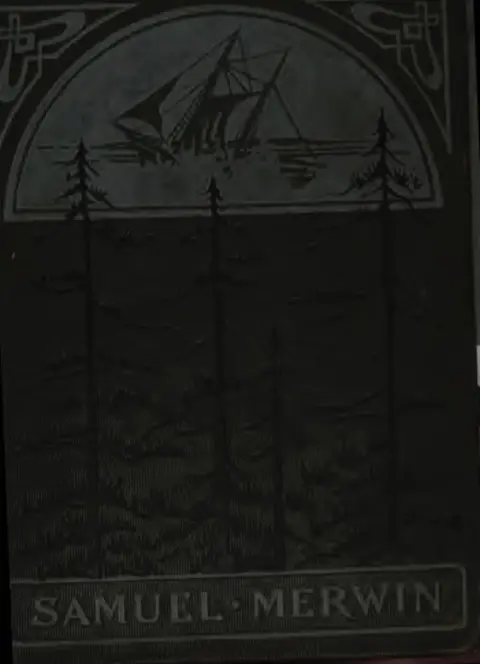
His Little World: The Story of Hunch Badeau
Samuel Merwin
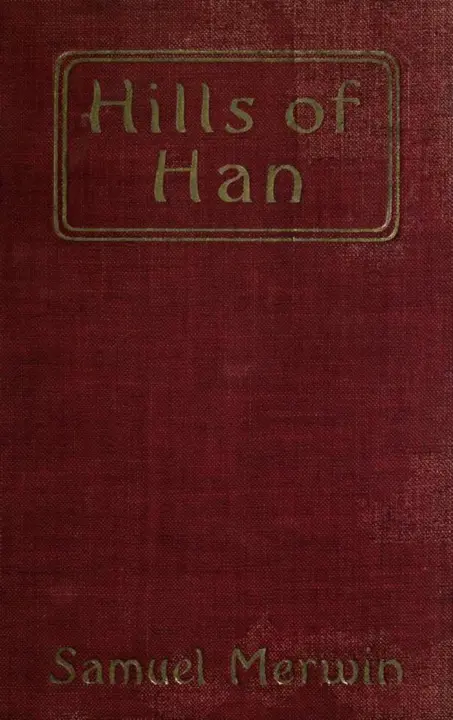
THE CLASSIC COLLECTION · 1920
"Hills of Han: A Romantic Incident" by Samuel Merwin is a fictional novel written in the early 20th century. The story appears to delve into themes of youth, identity, and the complexities of budding romance against a backdrop of cultural exploration in Japan and China. The main character, Betty Doane, navigates her evolving feelings and experiences as she travels with her companions, including the enigmatic journalist Jonathan Brachey. The opening of the novel introduces the reader to Betty Doane, a young woman sketching the profile of a man named Jonathan Brachey in a dining room in Kyoto. As she observes the beauty of the cherry blossoms outside, Betty reflects on her affection for the culture while feeling increasingly anxious about her upcoming journey to China. The narrative touches on her experiences of feeling uprooted and how her interest in sketching intertwines with her complex emotions about her past life in China. The opening lays the groundwork for the developing interactions between Betty and Jonathan, hinting at deeper romantic possibilities amidst the tensions of travel and cultural shifts.
Introduction adapted from the source catalogue; source summaries may be automatically generated.
Free to read · English · 84,569 words · No account needed
MAKE TIME FOR A GOOD BOOK
On by default. Untick to stop anonymous reading totals. Each page counts after 10 seconds in view. How this works.
Anonymous counting is on unless you have switched it off.
He was shown into a little cubicle of a room. Here was the huge man, rising from an absurdly small work table that had been crowded in by the window, between the wall and the foot of the bed. He was writing, apparently, a long letter.
Brachey, an odd figure to Doane's eyes, in his well-made suit and stiff white collar, stood on the sill, as rigid as a soldier at attent ion.
“I am interrupting you,” he said, almost curtly,
For the first time Griggsby Doane caught a glimpse of the man Brachey behind that all but forbidding front; and he hesitated, turning for a moment, stacking his papers together, and with a glance at the open window laying a book across them.
He had said, kindly enough, “Oh, no, indeed! Come right in.” But his thoughts were afield, or else he was busily, quickly, rearranging them.
Brachey stepped within, and closed the door. Here they were, these two, at last, shut together in a room. It was a moment of high tension.
“Sit down,” said Doane, still busying himself at the table, but waving an immense hand toward the other small chair.
But Brachey stood... waiting... in his hand a folded paper.
Finally Doane lifted his head, with a brusk but not unpleasant, “Yes,
sir?”
Brachey, for a moment, pressed his lips tightly together.
“Mr. Doane,” he said then, clipping his words off short, “may I first ask you to read this cablegram?”
Doane took the paper, started to unfold it, but then dropped it on the table and stepped forward.
And now for the first time Brachey sensed, behind this great frame and the weary, haggard face, the real Griggsby Doane; and stood very still, fighting for control over the confusion in his aching head. This was, he saw now, a strong man; a great deal more of a personality than he had supposed he would find. Even before the next words, he felt something of what was coming, something of the vigorous honesty of the man. Doane had been through recent suffering, that was clear Something---and even then, in one of his keen mental dashes, Brachey suspected that it was a much more personal experience than the Looker attack--something had upset him. This wasn't a man to turn baby over a wound, or to lose his head in a little fighting. No, it was an illness of the soul that had hollowed the eyes and deepened the grooves between them. But it didn't matter. What did matter was that he was now, in this gentle mood, surprisingly like Betty. For she had a curious vein of honesty; and she said, at times, just such unexpectedly frank, wholly open things as he felt (with an opening heart) that the father was about to say now.
Your reading position is saved on this browser. Take it to another device with a library code. Reading pages adapt to text, rather than matching a printed edition.
Samuel Merwin
Samuel Merwin
Samuel Merwin
Samuel Merwin
BEHIND THE BOOK
This eBook is for the use of anyone anywhere in the United States and most other parts of the world at no cost and with almost no restrictions whatsoever. You may copy it, give it away or re-use it under the terms of the Project Gutenberg License included with this eBook or online at www.gutenberg.org. If you are not located in the United States, you will have to check the laws of the country where you are located before using this eBook. Read the source licence.
The original source file, including credits and licence, is retained by this library. Request an original-format copy at no charge. Please include the book title and Project Gutenberg identifier #53997.
KEEP YOUR CURIOSITY GOING
Coulson Kernahan

Maurice Baring
Frances Wright
Cécile Tormay

Frederic Jesup Stimson

W. H. P. (William Henry Pope) Jarvis