His Little World: The Story of Hunch Badeau
Samuel Merwin
THE CLASSIC COLLECTION · 1920
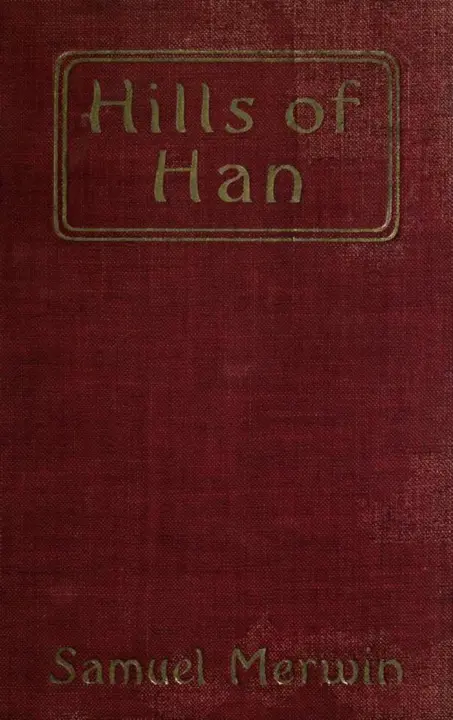
"Hills of Han: A Romantic Incident" by Samuel Merwin is a fictional novel written in the early 20th century. The story appears to delve into themes of youth, identity, and the complexities of budding romance against a backdrop of cultural exploration in Japan and China. The main character, Betty Doane, navigates her evolving feelings and experiences as she travels with her companions, including the enigmatic journalist Jonathan Brachey. The opening of the novel introduces the reader to Betty Doane, a young woman sketching the profile of a man named Jonathan Brachey in a dining room in Kyoto. As she observes the beauty of the cherry blossoms outside, Betty reflects on her affection for the culture while feeling increasingly anxious about her upcoming journey to China. The narrative touches on her experiences of feeling uprooted and how her interest in sketching intertwines with her complex emotions about her past life in China. The opening lays the groundwork for the developing interactions between Betty and Jonathan, hinting at deeper romantic possibilities amidst the tensions of travel and cultural shifts.
Introduction adapted from the source catalogue; source summaries may be automatically generated.
Free to read · English · 84,569 words · No account needed
MAKE TIME FOR A GOOD BOOK
On by default. Untick to stop anonymous reading totals. Each page counts after 10 seconds in view. How this works.
Anonymous counting is on unless you have switched it off.
Mrs. Hasmer had tried to construct a little speech that, however final, would meet the forms of courtesy. It left her now. She said with blank firmness:
“Come, Betty!”
“One moment!” protested Mr. Brachey. “Will you please ask him, Miss Duane, whether he believes that the general use of opium has appreciably lowered the vitality of the Chinese people? That is, to put it conversely, whether the curtailment of production is going to leave a people too weakened to act strongly in a military or even political way? Surveying the empire as a whole, of course.”
Betty's thoughts, which had wandered hopelessly afield, came struggling
back.
“I--I'm sorry,” she said. “I'm afraid I didn't quite hear.”
“I must ask you to come with me, Betty,” said Mrs. Hasmer.
At this, looking heavily disappointed, Mr. Brachey rose; ran a long bony hand through his thick hair.
“We could take it up in the morning,” he said, turning from the bland young Chinaman to the plainly confused girl. “That is, if Miss Doane wouldn't mind staying on the ship. I presume she has seen Nagasaki.”
His perturbed eyes moved at last to the little elderly lady who had seemed so colorless and mild; met hers, which were, of a sudden, snapping coals.
“You will not take it up again, sir!” cried Mrs. Hasmer; and left with
the girl.
The Chinaman smiled, clasped his hands, bowed with impenetrable courtesy, and withdrew' to his quarters.
Mr. Brachey, alone, looked over his notes with a frown; shook his head; went down to dress for dinner.
Late that night Betty sat in her tiny stateroom, indulging rebellious thoughts. It was time, after an awkwardly silent evening, to go to bed. But instead she now slipped into her heavy traveling coat, pulled on her tam-o'-shanter, tiptoed past the Hasmers' door and went out on deck.
It was dim and peaceful there. The throb of the engines and the wash of water along the hull were the only sounds. They were in the strait now, heading out to sea.
She walked around the deck, and around. It was her first free moment since they left the Pacific ship at Yokohama. After that very quietly--sweetly, even--the chaperonage of Mrs. Hasmer had tightened. For Betty the experience was new and difficult. She felt that she ought to submit. But the rebellion in her breast, if wrong, was real. She would walk it off.
Then she met Mr. Brachey coming out of the smoking-room. Both stopped.
“Oh!” said he.
“I was just getting a breath of air,” said she.
Then they moved to the rail and leaned there, gazing off at the faintly
moonlit land.
Your reading position is saved on this browser. Take it to another device with a library code. Reading pages adapt to text, rather than matching a printed edition.
Samuel Merwin
Samuel Merwin
Samuel Merwin
Samuel Merwin
BEHIND THE BOOK
This eBook is for the use of anyone anywhere in the United States and most other parts of the world at no cost and with almost no restrictions whatsoever. You may copy it, give it away or re-use it under the terms of the Project Gutenberg License included with this eBook or online at www.gutenberg.org. If you are not located in the United States, you will have to check the laws of the country where you are located before using this eBook. Read the source licence.
The original source file, including credits and licence, is retained by this library. Request an original-format copy at no charge. Please include the book title and Project Gutenberg identifier #53997.
KEEP YOUR CURIOSITY GOING
Coulson Kernahan

Maurice Baring
Frances Wright
Cécile Tormay

Frederic Jesup Stimson

W. H. P. (William Henry Pope) Jarvis