THE CLASSIC COLLECTION✦When I was your ageCLASSIC FREE BOOKS
When I was your age
Laura Elizabeth Howe Richards
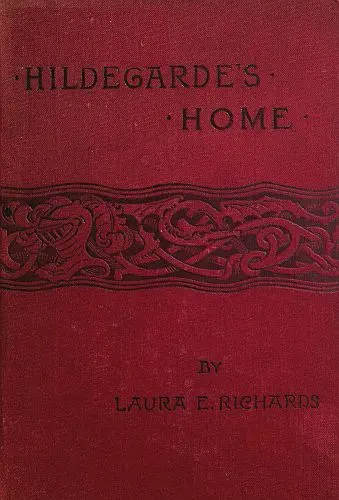
THE CLASSIC COLLECTION · 1892
"Hildegarde's Home" by Laura Elizabeth Howe Richards is a novel written in the late 19th century. The story centers around Hildegarde Grahame, a young girl who, along with her mother, moves to an old family home in the countryside after the death of her father. This change marks a new chapter in their lives, where they must adapt to a different lifestyle away from their past wealth and embrace the charm of their new rural setting. The opening of the novel introduces Hildegarde as she arrives at her new home, described as a large old-fashioned house with a wide verandah and an air of eccentricity. As she explores the home, she discovers a variety of quaint and delightful items that belonged to her relatives, evoking her curiosity and imagination. With her mother’s arrival imminent, Hildegarde takes pleasure in arranging their new living space, hinting at her enthusiasm for decorating and making a home. The first chapter sets up their transition from city life to a simpler existence, combining elements of nostalgia, exploration, and familial bonds that promise an engaging read as the story unfolds.
Introduction adapted from the source catalogue; source summaries may be automatically generated.
Free to read · English · 42,992 words · No account needed
MAKE TIME FOR A GOOD BOOK
On by default. Untick to stop anonymous reading totals. Each page counts after 10 seconds in view. How this works.
Anonymous counting is on unless you have switched it off.
Jack, greatly wondering, ran off none the less, his long legs scampering with irreverent haste through the Ladies' Garden. Returning with the screen, which auntie gave him without question, being well used to the sudden frenzies of a moth-collector, he found Hildegarde on her knees, holding her handkerchief over the great moth, which fortunately had remained quiet, being indeed stupid in the strong light. The girl's face was all aglow with triumph and delight.
"A perfect specimen," she cried, as she skilfully conveyed the great moth under the screen. "I have two, but the tails are a little broken. Isn't he glorious, Jack? Oh, happy day! Come, good cousin, and let us take him home in a triumphal procession."
Jack looked rather blank. "Are you going home now?" he asked.
"Of course, to put my beauty in the ammonia jar."
"What is it?" she added, seeing that her cousin looked really vexed.
"Oh--nothing!" said Jack. "Nothing of any consequence. I am ready."
"But what is it?" Hildegarde repeated. "You would a great deal better tell me than look like that, for I know I have done something to vex you."
"Well--I am not used to girls, you know, Hildegarde, and perhaps I am stupid. Only--well, I was going to ask you seriously what you thought about--my music, and all that; and first you tell me to look in the glass, and then you go to catching moths and forget all about me. I suppose it's all right, only--"
He blushed, and evidently did not think it was all right. Hildegarde blushed, too, in real distress.
"My dear Jack," she cried, "how shall I tell you how sorry I am?"
She looked about for a suitable place, and then carefully set down the fly-screen with its precious contents.
"Sit down again," she cried, motioning her cousin to take his place on the fallen tree, while she did the same. "And you will not believe now how interested I really am," she said. "Mamma would never have been so stupid, nor Rose either. But you must believe me. I was thinking about you till--till I saw the Luna, and you don't know what a Luna means when one hasn't a perfect specimen. But now, tell me, do you think it would be quite impossible to persuade your uncle? Why, you must go to Leipsic, of course you must. He--has he ever heard you play, Jack?"
Jack laughed rather bitterly. "Once," he said. "He cried out that when he wanted to listen to cats with their tails tied together, he would tie them himself. Since then I always go up into the garret to practise, and shut all the doors and windows."
Your reading position is saved on this browser. Take it to another device with a library code. Reading pages adapt to text, rather than matching a printed edition.
Laura Elizabeth Howe Richards
Laura Elizabeth Howe Richards
Laura Elizabeth Howe Richards
Laura Elizabeth Howe Richards
BEHIND THE BOOK
This eBook is for the use of anyone anywhere in the United States and most other parts of the world at no cost and with almost no restrictions whatsoever. You may copy it, give it away or re-use it under the terms of the Project Gutenberg License included with this eBook or online at www.gutenberg.org. If you are not located in the United States, you will have to check the laws of the country where you are located before using this eBook. Read the source licence.
The original source file, including credits and licence, is retained by this library. Request an original-format copy at no charge. Please include the book title and Project Gutenberg identifier #34218.
KEEP YOUR CURIOSITY GOING
Coulson Kernahan

Maurice Baring
Frances Wright
Cécile Tormay

Frederic Jesup Stimson

W. H. P. (William Henry Pope) Jarvis