THE CLASSIC COLLECTION✦Andersonville diaryCLASSIC FREE BOOKS
Andersonville diary
John L. Ransom
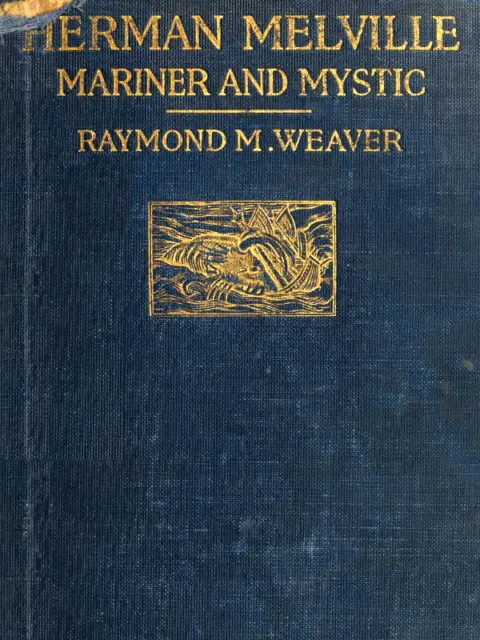
THE CLASSIC COLLECTION · 1921
"Herman Melville, Mariner and Mystic" by Raymond M. Weaver is a biographical account written in the early 20th century. The book examines the life, experiences, and literary contributions of Herman Melville, an influential American author best known for his novel "Moby-Dick." The focus is on Melville's tumultuous career, reflecting on his early successes and the subsequent obscurity he faced, as well as offering insights into the personal and cultural contexts of his life, including his rich lineage and struggles with recognition. The opening of this biography sets the stage for Melville's complex character and multifaceted life experiences. It starts with a letter from Melville to his friend Nathaniel Hawthorne, hinting at his sense of melancholy and the burdens of literary fame. Weaver portrays Melville as a "gentleman adventurer" who immersed himself in the harsh realities of life at sea and the cultural richness of the Pacific, which informed his later writings. The narrative delves into themes of ambition and despair, underscoring Melville's ironic relationship with fame and the literary establishment, as well as exploring his inner conflicts and philosophical leanings.
Introduction adapted from the source catalogue; source summaries may be automatically generated.
Free to read · English · 134,431 words · No account needed
MAKE TIME FOR A GOOD BOOK
On by default. Untick to stop anonymous reading totals. Each page counts after 10 seconds in view. How this works.
Anonymous counting is on unless you have switched it off.
At that time, and indeed until as recently as thirty years ago, the water front of a great sea-port town like New York showed a towering forest of tall and tapering masts reaching high up above the roofs of the water-side buildings, crossed with slender spars hung with snowy canvas, and braced with a maze of cordage: a brave sight that Melville passes over in morose silence. He postpones until his arrival in Liverpool the spicing of his account with the blended smells of pitch, and tar, and old-ropes, and wet-wood, and resin and the sharp cool tang of brine. Nor does Melville pause to conjure up the great bowsprits and jib-booms that stretched across the street that passed the foot of the slips. Though Melville has left a detailed description of the Liverpool docks--not failing to paint in with a dripping brush the blackest shadows of the low life framing that picturesque scene--it was outside his purpose to give any hint of the maritime achievement of the merchant service in which he was such an insignificant unit.
The maritime achievement of the United States was then almost at the pinnacle of its glory. At that time, the topsails of the United States flecked every ocean, and their captains courageous left no lands unvisited, no sea unexplored. From New England in particular sailed ships where no other ships dared to go, anchoring where no one else ever dreamed of looking for trade. And so it happened, as Ralph D. Paine in his The Old Merchant Marine has pointed out, that “in the spicy warehouses that overlooked Salem Harbour there came to be stored hemp from Luzon, gum copal from Zanzibar, palm oil from Africa, coffee from Arabia, tallow from Madagascar, whale oil from the Antarctic, hides and wool from the Rio de la Plata, nutmeg and cloves from Malaysia.” With New England originality and audacity, Boston shipped cargoes of ice to Calcutta. And for thirty years a regular trade in Massachusetts ice remained active and lucrative: such perishable freight out upon a four or five months’ voyage across the fiery Equator, doubling Da Gama’s cape and steering through the furnace heat of the Indian Ocean. In those days the people of the Atlantic seacoast from Maryland northward found their interests vitally allied with maritime adventure. There was a generous scattering of sea-faring folk among Melville’s forebears of our early national era; and Melville’s father, an importing merchant, owed his fortunes in important part, to the chances of the sea. The United States, without railroads, and with only the most wretched excuses for post-roads, were linked together by coasting ships. And thousands of miles of ocean separated Americans from the markets in which they must sell their produce and buy their luxuries. Down to the middle of the last century, one of the most vital interests of the United States was in the sea: an interest that deeply influenced the thought, the legislature and the literature of our people. And during this period, as Willis J. Abbott, in his American Merchant Ships and Sailors has noted, “the sea was a favourite career, not only for American boys with their way to make in the world, but for the sons of wealthy men as well. That classic of New England seamanship Two Years Before the Mast was not written until the middle of the 19th century, and its author went to sea, not in search of wealth, but of health. But before the time of Richard Henry Dana, many a young man of good family and education--a Harvard graduate, like him, perhaps--bade farewell to a home of comfort and refinement and made his berth in a smoky, fetid forecastle to learn the sailor’s calling. There was at that time less to engage the activities and arouse the ambitions of youth than now, and the sea offered a most promising career.... Ships were multiplying fast, and no really lively and alert seaman need stay long in the forecastle.” The brilliant maritime growth of the United States, after a steady development for two hundred years, was, when Melville sailed in 1837, within twenty-five years of its climax. It was to reach its peak in 1861, when the aggregate tonnage belonging to the United States was but a little smaller than that of Great Britain and her dependencies, and nearly as large as the combined tonnage of all other nations of the world, Great Britain excepted. Vanished fleets and brave memories--a chronicle of America which had written its closing chapters before the Civil War!
Your reading position is saved on this browser. Take it to another device with a library code. Reading pages adapt to text, rather than matching a printed edition.
BEHIND THE BOOK
This eBook is for the use of anyone anywhere in the United States and most other parts of the world at no cost and with almost no restrictions whatsoever. You may copy it, give it away or re-use it under the terms of the Project Gutenberg License included with this eBook or online at www.gutenberg.org. If you are not located in the United States, you will have to check the laws of the country where you are located before using this eBook. Read the source licence.
The original source file, including credits and licence, is retained by this library. Request an original-format copy at no charge. Please include the book title and Project Gutenberg identifier #50461.
KEEP YOUR CURIOSITY GOING
John L. Ransom

Herman W. Mudgett

Harriet Monroe
Daniel Dulany Addison
Charles Lanman

Harold Rosher