THE CLASSIC COLLECTION✦Andersonville diaryCLASSIC FREE BOOKS
Andersonville diary
John L. Ransom
THE CLASSIC COLLECTION · 1921
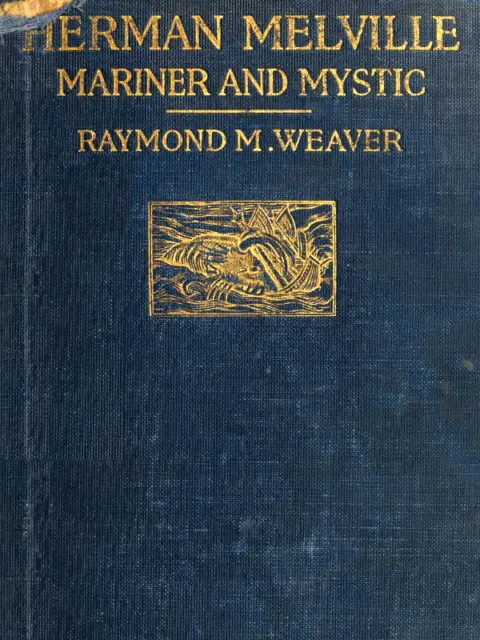
"Herman Melville, Mariner and Mystic" by Raymond M. Weaver is a biographical account written in the early 20th century. The book examines the life, experiences, and literary contributions of Herman Melville, an influential American author best known for his novel "Moby-Dick." The focus is on Melville's tumultuous career, reflecting on his early successes and the subsequent obscurity he faced, as well as offering insights into the personal and cultural contexts of his life, including his rich lineage and struggles with recognition. The opening of this biography sets the stage for Melville's complex character and multifaceted life experiences. It starts with a letter from Melville to his friend Nathaniel Hawthorne, hinting at his sense of melancholy and the burdens of literary fame. Weaver portrays Melville as a "gentleman adventurer" who immersed himself in the harsh realities of life at sea and the cultural richness of the Pacific, which informed his later writings. The narrative delves into themes of ambition and despair, underscoring Melville's ironic relationship with fame and the literary establishment, as well as exploring his inner conflicts and philosophical leanings.
Introduction adapted from the source catalogue; source summaries may be automatically generated.
Free to read · English · 134,431 words · No account needed
MAKE TIME FOR A GOOD BOOK
On by default. Untick to stop anonymous reading totals. Each page counts after 10 seconds in view. How this works.
Anonymous counting is on unless you have switched it off.
“Affectionately and ever faithfully
“Your sincere friend
After his return from the Holy Land, Melville tried to eke out the small income from his books and his farm by lecturing. J. E. A. Smith says: “Between 1857 and 1861, a rage for lyceum lectures prevailed all over the northern and western states. In Pittsfield the Burbank hall, now Mead’s carriage repository, was filled at least once every week to its full capacity of over a thousand seats, with eager and intelligent listeners to the most brilliant orators in the country. Some of the most noted authors, as well as orators, were induced to mount the platform partly by the liberal pay which they received directly--and also for the increased sale which it gave their books. Among these was Herman Melville, who lectured in Burbank hall, and in Boston, New York, Philadelphia, Montreal, St. Louis, San Francisco as well as intermediate cities and towns. He did not take very kindly to the lecture platform, but had large and well pleased audiences.”
If his audiences were composed of people of the jaunty and shallow provincialism of J. E. A. Smith--and J. E. A. Smith is a very fair product of his country and his time--Melville’s distaste for their prim, bland receptivity does not pass understanding. The place and date of Melville’s lectures, together with the “liberal pay directly received” follows.
November 24 Concord, Mass. $30.00
December 2 Boston, Mass. 40.00
„ 10 Montreal 50.00
„ 30 New Haven, Conn. 50.00
January 5 Auburn, N. Y. 40.00
„ 7 Ithaca, N. Y. 50.00
„ 10 Cleveland, Ohio 50.00
„ 22 Clarksville 75.00
Chillicothe, Ohio 40.00
n. d. Cincinnati, Ohio 50.00
Feb. 10 Charleston, Mass. 20.00
„ 23 Rochester, N. Y. 50.00
n. d. New Bedford, Mass. 50.00
------
645.00
Travelling expenses 221.30
------
423.70
Dec. 6, 1858 Yonkers, N. Y. $30.00 „ 14, „ Pittsfield, Mass. 50.00 Jan. 31, 1859 Boston, Mass. 50.00 Feb. 7, „ New York, N. Y. 55.00 „ 8, „ Baltimore, Md. 100.00 „ 24, „ Chicago, Ill. 50.00 „ 25, „ Milwaukee, Wisc. 50.00 „ 28, „ Rockford, Ill. 50.00 Mar. 2, „ Quincy, Ill. 23.50 „ 16, „ Lynn, Mass. (2 lec) 60.00 ------ 518.50
November 7, Flushing, L. I. $30.
February 14, Danvers, Mass. 25.
„ 21, Cambridgeport, Mass. 55.
----
110.
For these lyceum gatherings, Melville prepared two lectures: one on the South Seas, one on Statuary in Rome.
On December 2, 1857, in competition with another Melville, a bareback rider, who at the circus at Bingo “nightly performed before the élite and respectability of the city,” Melville lectured on Statuary in Rome. On December 3, 1857, the Boston Journal thus reported Melville’s lecture:
Your reading position is saved on this browser. Take it to another device with a library code. Reading pages adapt to text, rather than matching a printed edition.
BEHIND THE BOOK
This eBook is for the use of anyone anywhere in the United States and most other parts of the world at no cost and with almost no restrictions whatsoever. You may copy it, give it away or re-use it under the terms of the Project Gutenberg License included with this eBook or online at www.gutenberg.org. If you are not located in the United States, you will have to check the laws of the country where you are located before using this eBook. Read the source licence.
The original source file, including credits and licence, is retained by this library. Request an original-format copy at no charge. Please include the book title and Project Gutenberg identifier #50461.
KEEP YOUR CURIOSITY GOING
John L. Ransom

Herman W. Mudgett

Harriet Monroe
Daniel Dulany Addison
Charles Lanman

Harold Rosher